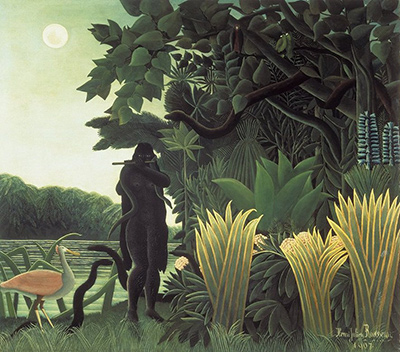
Henri Rousseau's Madame de Pompadour stands as a singular anomaly in the history of naive art, a work where the brushstrokes seem to vibrate with a life that defies the rigid conventions of academic realism. Despite being created decades after the historical figure it purportedly depicts, this painting has consistently captured the lens of photographers and the gaze of audiences worldwide, becoming one of the most photographed images in the global art repertoire. Its enduring popularity suggests that the photograph captures not merely a likeness, but a specific, frozen moment of romantic melancholy that transcends time and cultural boundaries.
The Illusion of Realism
At first glance, the painting appears to be a straightforward portrait study, yet the technique employed by the artist introduces a surreal layer that immediately demands visual attention. Rousseau, known for his jungle scenes and nocturnal landscapes, applied a similar approach to portraiture, utilizing thick, impasto brushstrokes that create a texture almost tangible to the eye. The light hitting the subject's face is rendered with an impossible clarity, as if captured in a single, perfect flash of sunlight that has been frozen in oil and canvas. This juxtaposition of a soft, dreamlike background with a sharply defined, glowing figure creates a visual tension that draws the viewer in. When a camera captures this image, it freezes this tension, preserving the illusion of a moment that never truly existed, which is perhaps why the photograph feels so more vivid than the reality it claims to show.
The Color Palette and Emotional Resonance
The choice of colors in Madame de Pompadour is as significant to its photographic appeal as the composition itself. The painting relies heavily on warm, golden hues for the skin tones, contrasting against the cool, shadowy blues and greens of the foliage behind her. This color theory creates a natural focal point, guiding the eye directly to the subject's face, which remains the anchor of the entire composition. In a photographic context, this lighting scheme translates remarkably well; the high contrast between light and dark ensures that the subject pops against the background, making for a striking image even when reproduced in black and white. The emotional resonance of the painting lies in the subject's expression, which conveys a complex mix of curiosity, weariness, and hidden strength. Photographers are drawn to this ambiguity, seeking to capture the narrative within the glance, knowing that the image will evoke a specific mood in the viewer upon viewing.
The Role of the Camera in Interpreting Naive Art
When considering why this specific painting is photographed so frequently, one must look at the unique relationship between the camera and naive art. Unlike traditional fine art, where precision and idealism are paramount, Rousseau's work embraces a certain clumsiness or rawness that the camera can amplify. The lens flattens the depth of field, turning the thick layers of paint into a two-dimensional surface that interacts with the light in unexpected ways. This transformation reveals details that might be missed during a casual viewing, such as the texture of the brushwork on the hair or the subtle variations in the pigment. The photograph thus becomes a new medium of interpretation, offering a fresh perspective on the original artwork that feels both intimate and distant simultaneously. It allows the viewer to engage with the painting as if they are looking through a window into a private, secret world, enhancing the mystery that surrounds the subject.
The Myth of the Historical Figure
Behind the image lies a fascinating web of speculation and fiction that fuels its photographic allure. The "Madame de Pompadour" in the painting is not a literal depiction of the famous 18th-century French mistress of King Louis XV, whose actual portrait paintings differ significantly in style and tone. Instead, Rousseau seems to have created a composite figure, perhaps influenced by a variety of models and historical accounts, blending them into a new, fictional entity. This disconnect between the historical reality and the artistic fantasy adds a layer of intrigue that photographers love to exploit. Every photograph of the painting invites the viewer to ask questions about the identity of the woman, the truth of the story, and the motives of the artist. The image becomes a portal to a story that was never written, encouraging a continuous cycle of interpretation and re-interpretation that keeps the subject fresh and relevant across generations.
The Enduring Visual Impact
Ultimately, the reason Madame de Pompadour remains the most photographed painting lies in its perfect equilibrium of mystery, color, and composition. It is a work that speaks to the human desire for the extraordinary and the romantic, offering a glimpse into a world that feels just out of reach. The painting invites the viewer to participate in an endless dialogue with the image, each photograph serving as a new entry point into this conversation. Whether viewed on a small screen or a large gallery wall, the image retains its power to transport the viewer, proving that the magic of Henri Rousseau's naive style lies not just in what is seen, but in the infinite possibilities of what remains unseen.
To understand the specific mechanics behind this phenomenon, here are the key factors that contribute to its ubiquity in photography:
- The high-contrast lighting creates a silhouette effect that photographs exceptionally well in monochrome.
- The impasto texture adds a tactile quality that is preserved and often enhanced by the grain of film or digital sensors.
- The subject's direct yet vacant gaze creates an immediate emotional connection for the viewer.
- The fictional nature of the model sparks endless storytelling and speculative photography.
- The composition is balanced in a way that feels organic yet deliberately staged for visual perfection.
- The juxtaposition of the formal dress against the chaotic jungle background creates a dynamic visual conflict.
- The painting's lack of a clear, definitive historical context allows it to be re-imagined in countless photographic contexts.