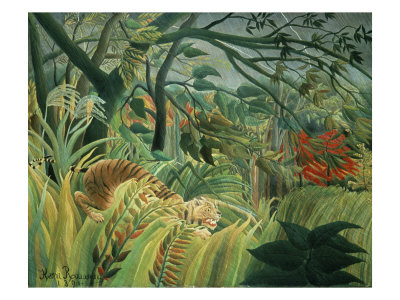
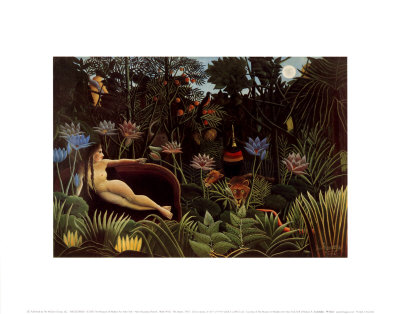
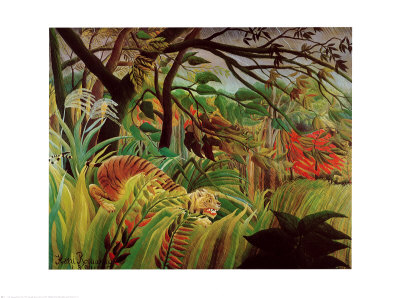
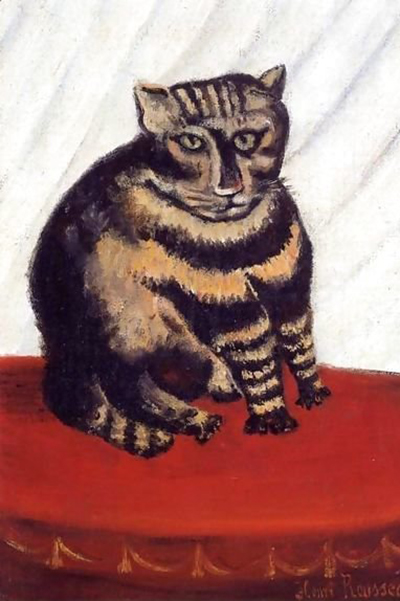
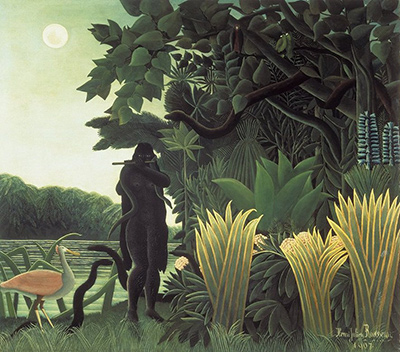
Capturing the essence of a dream within a canvas is not merely about technique; it is about dismantling the rigid structures of reality to reveal the fluid, illogical, and vibrant world that exists only in the mind's eye. To emulate the style of a master like Henri Rousseau, one must learn to bypass the critical eye of reason and embrace the surreal freedom of imagination. This journey into painting requires a shift in perspective where the rules of physics and perspective are secondary to the rules of emotion and association.
Surrendering to the Illogical
The first step in rendering a scene that feels dreamlike is the deliberate abandonment of standard perspective. In a waking state, we expect objects to recede linearly toward a single vanishing point, but in a dream, space bends, stretches, and overlaps without regard for depth or distance. When sketching your subject, do not force the trees to converge on a horizon line if your intuition tells them to tower above the viewer. Instead, allow the elements to exist in a flat plane where they might be close together in reality yet appear simultaneously distant, or where a small flower in the foreground might seem larger than a massive oak tree behind it. This spatial confusion is not a mistake; it is the very definition of the dream state you wish to capture.
The Power of the Clashing Palette
Color in the realm of dreams is not bound by the laws of natural lighting or the physics of reflection. While a real sunset might blend oranges and purples, a dream might explode with electric blues against burning magentas, creating a jarring yet harmonious visual shock. To achieve this, select colors that do not naturally belong together in the subject matter but resonate with your internal feeling of the scene. If you are painting a night scene, do not fear using bright yellows or greens that would be impossible under a moonlit sky. The goal is to evoke the mood rather than replicate the light. Use bold, saturated hues that seem to vibrate with energy, ignoring the need for tonal subtlety or atmospheric haze that usually softens the edges of objects in the real world.
Techniques for Displacing Perspective
There are specific compositional strategies that can effectively break the viewer out of their reality and into your narrative. One of the most potent methods involves the manipulation of scale and placement. By placing a small, insignificant object in the immediate foreground and juxtaposing it with a colossal figure or landscape element, you create a disorienting sense of scale that defies logic. This technique forces the eye to navigate a space where size is determined by importance rather than distance. Additionally, you can flatten the image entirely by removing the horizon line, turning your canvas into a surface where everything exists on the same level. This two-dimensional approach mimics the way we see objects when our depth perception is suspended, allowing for a more direct, almost graphic connection between the paint and the viewer's mind.
To truly master this displacement, consider implementing the following specific strategies in your composition:
- Place a tiny, insignificant object directly in front of a giant tree trunk to confuse the viewer's sense of scale.
- Arrange trees so their trunks cross each other in impossible ways without any logical ground to support them.
- Position a distant animal as if it is standing on top of a closer, smaller bush in the same plane.
- Use a single, bright light source that illuminates objects that should logically be in deep shadow.
- Flatten the background details so they appear as sharp, graphic shapes rather than fading into atmospheric distance.
Layering with Unconventional Depth
Dreams often possess a strange, immediate depth where layers of reality overlap in ways that make no sense to the waking mind. In your painting, do not hesitate to have foreground elements obscure background elements that should logically be further away, or to have the background intrude upon the foreground with impossible detail. Think of the dream as a series of memories or impressions stacking upon one another rather than a single, coherent moment in time. You might paint a distant mountain range that is rendered with the same sharp detail and vibrant color as a flower in the front, blurring the distinction between near and far. This creates a visual texture that feels both intricate and chaotic, much like the rush of a dream where details are simultaneously clear and muddled.
Embracing the Imperfect Stroke
Finally, the act of application itself should reflect the dream's lack of refinement. Dreams are formed in the fleeting moments of sleep, often with a rush or a clarity that bypasses the careful planning of the waking mind. Do not worry about smooth blending or uniform strokes. Use bold, sweeping gestures and visible brushwork to convey the energy and movement of the subconscious. Leave areas of the canvas raw and unblended, or apply thick impasto that catches the light in a way that feels physical and tangible. The texture of the paint should feel as alive and unpredictable as the events within the dream. By accepting the imperfections and the raw energy of the application, you allow the work to breathe and transform, ensuring that the final piece feels less like a photograph of a scene and more like a memory of a feeling that no one else will ever truly understand.