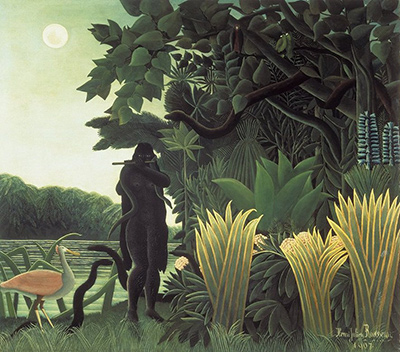
True artistic mastery often lies not in adhering strictly to established rules, but in understanding how to break them intentionally to create a fresh perspective. Naive art, with its distinct visual language and unfiltered vision, frequently challenges traditional compositional theories, yet this very defiance is what gives these works their unique charm and emotional power. By examining how these artists bypass conventional geometry and perspective, we can better appreciate the deliberate logic that drives their compositions.
The Flatness of the Surface
One of the most striking characteristics of naive composition is the abandonment of deep three-dimensional illusion. While academic painting strives to create the perfect window onto reality through complex layering and atmospheric perspective, naive artists often flatten the picture plane to emphasize the two-dimensional nature of the canvas itself. This approach forces the viewer to engage with the image as a constructed arrangement of shapes and colors rather than a realistic depiction of a scene. The background often recedes less dramatically than the foreground, creating a sense of simultaneity where elements exist in the same visual space.
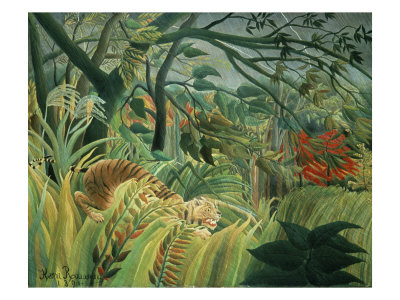
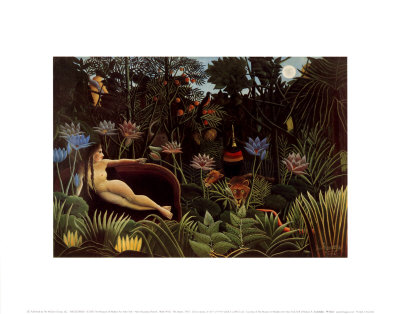
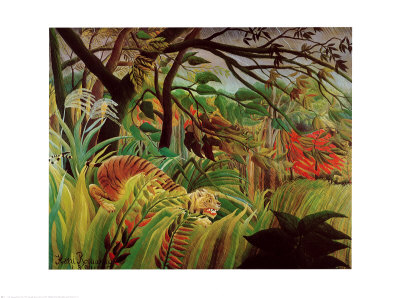
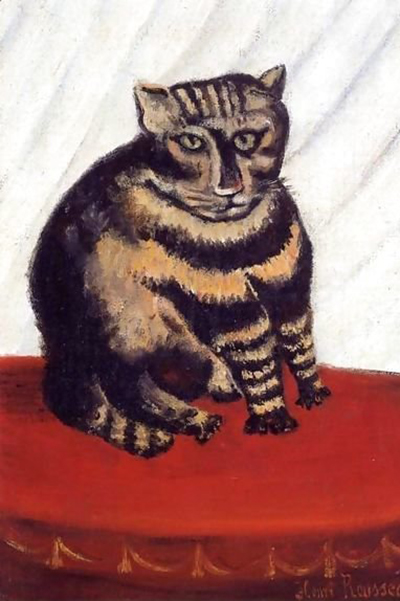
This flattening is not a mistake but a conscious choice that prioritizes pattern and color over spatial depth. Artists like Henri Rousseau frequently used bold outlines and uniform coloring to define forms, ensuring that the visual weight remained balanced across the entire surface. By reducing the illusion of depth, the composition gains a graphic quality that is immediately readable and striking. The eye travels across the surface in a direct path, following the contours of the subjects without being distracted by the fading air of the distance. This creates a dynamic tension between the flatness of the canvas and the rich, often chaotic energy contained within the painted world.
Narrative Over Geometry
In traditional art education, geometry serves as the backbone of composition, guiding the placement of subjects to achieve harmony and balance. However, in naive art, the narrative content often takes precedence over geometric perfection. An artist might place a central figure slightly off-center, or include an object in the corner that disrupts the rule of thirds, simply because it tells a necessary part of the story. The composition becomes a map of the artist's imagination rather than a blueprint of mathematical precision.
This freedom allows for a more immediate connection between the viewer and the subject. When the composition bends to serve the narrative, it creates a sense of intimacy and immediacy that rigid structures cannot achieve. The layout feels spontaneous, as if the artist is capturing a moment exactly as it happened in their mind's eye, unmediated by the filters of formal training. This results in compositions that feel alive and breathing, with every element contributing to the emotional resonance of the piece.
The Power of Juxtaposition
A unique feature of naive composition is the frequent juxtaposition of contrasting elements that would traditionally clash. In academic art, a small bird in a vast sky might be made smaller to emphasize the scale of the landscape. In naive art, the bird might be painted with equal size and detail to the trees and grass, creating a playful, almost cartoonish relationship between the elements. This technique draws the eye back and forth across the canvas, preventing the composition from settling into a static equilibrium.
This deliberate disruption of scale creates a rhythmic quality to the image. The viewer's eye jumps from the tiny insect to the giant flower, then back to the human figure, creating a dynamic flow that keeps the mind engaged. It is a form of visual storytelling where size does not dictate importance, but rather the artist's intent does. This juxtaposition invites the viewer to look closer and interpret the relationships between objects in their own way, transforming the viewing experience from passive observation to active participation.
Color as Structural Element
Color in naive art often functions as a structural element, helping to define the composition just as lines do in traditional art. Instead of using color to mimic the natural world, these artists use it to create emotional atmosphere and visual rhythm. A bright, saturated blue might be used for the sky not because it is the actual color of that day, but because it feels right for the mood of the piece.
This reliance on color creates a distinct visual hierarchy. Certain hues may be used to anchor the composition, while others are used to draw attention to focal points. The lack of subtle blending means that color transitions are sharp and distinct, adding to the graphic quality of the work. This approach allows the artist to manipulate the viewer's focus with great precision, using color blocks to guide the eye through the composition in a specific, intentional path.
Practical Takeaways for the Viewer
Understanding these compositional choices helps the viewer appreciate the skill involved in naive art. It is not a lack of technique, but a different application of artistic principles.
- Recognize that the "mistakes" in perspective are often deliberate choices to flatten the space and emphasize pattern.
- Notice how the narrative content often dictates the layout more than geometric rules.
- Observe how contrasting sizes and colors are used to create rhythm and visual interest.
- Understand that the emotional impact often comes from the directness of the style rather than realistic representation.
- Appreciate the freedom these artists have to express their inner world without the constraints of academic training.
By embracing the logic of naive composition, we find a refreshing departure from the norm, one that celebrates the human spirit and the joy of creation.