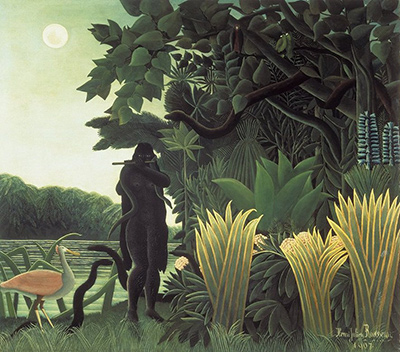
Diving into the world of Henri Rousseau is not merely about copying a style; it is about embracing a unique, childlike vision that transforms the mundane into a wild, dreamlike expedition. For beginners eager to channel the spirit of the French Post-Impressionist, understanding the specific pitfalls of his technique is the first step toward authentic creation. By avoiding common errors regarding line weight, color harmony, and composition, you can truly capture the enchanting, static beauty that defines his most celebrated works.
The Trap of Over-Refinement
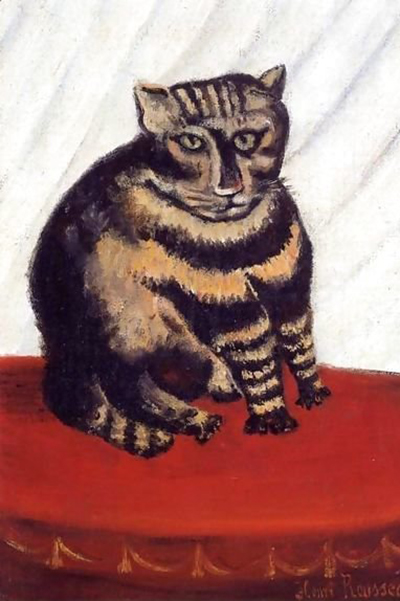
One of the most significant hurdles for aspiring artists attempting to emulate Rousseau is the instinct to over-polish their work. Rousseau's genius lay in his deliberate lack of technical perfection; he was a self-taught man who had never attended formal art school, yet he possessed a profound understanding of nature that formal training often stifles. His lines are often slightly shaky, his edges sometimes fuzzy, and his brushstrokes appear spontaneous rather than calculated. When a novice tries to make every contour perfectly smooth or every shadow mathematically precise, they inadvertently kill the dreamlike quality of the piece. The goal is to evoke the feeling of a memory or a hallucination rather than a documentary photograph. Embrace the roughness, the slight wobbles in the line, and the uneven application of paint. These imperfections are not flaws to be corrected but are the very essence of the "naïve" aesthetic that distinguishes Rousseau's jungle from a realistic botanical illustration. The more you strive for technical mastery in the traditional sense, the less you will capture the raw, unfiltered magic of his jungle.
Navigating the Color Palette
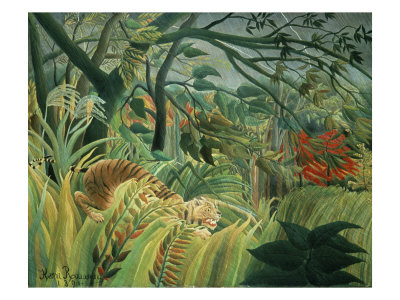
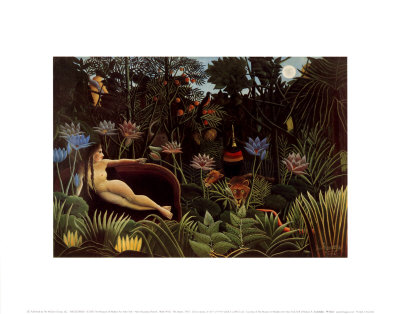
Rousseau's color choices were not derived from strict scientific theories of light and shadow as taught in the academies; instead, they came from his vivid imagination and a deep, intuitive connection to the flora and fauna he observed in his garden. A frequent mistake in his-inspired sketches is using a palette that is too harmonious or too naturalistic. Beginners often feel compelled to match the actual colors of the leaves and vines, resulting in images that feel flat and lifeless. Instead, one must look at how Rousseau manipulated color to create vibrancy and separation. He often used high-contrast combinations, such as deep, almost black greens against bright, electric yellows or electric blues, which pop off the canvas with an intensity that defies nature. Another common error is failing to separate the foreground from the background. In many of his paintings, the jungle seems to exist in a suspended state of time, where the depth is created through color blocks rather than atmospheric perspective.
The Art of Negative Space and Silhouettes
When working on a Rousseau sketch, pay close attention to the use of negative space. Rousseau did not fear empty space; he used it to frame his subjects and guide the viewer's eye through the composition. A major pitfall is overcrowding the canvas with too much detail, causing the image to become a muddy mess of textures. By intentionally leaving areas blank or using simplified shapes, the artist allows the subject to breathe. Furthermore, the use of silhouette is crucial. Rousseau often reduced complex forms to their darkest outlines, creating a graphic quality that is both mysterious and engaging. If your sketch lacks these strong, defined silhouettes, it may lack the dramatic tension found in his masterpieces. The interplay between the lit forms and the dark voids creates a sense of depth that is purely psychological, inviting the viewer to imagine what lies beyond the visible frame. This technique ensures that the viewer focuses on the emotional impact of the scene rather than getting lost in minute details.
Mastering the Composition of Chaos
The arrangement of elements in a Rousseau painting is a study in controlled chaos. He placed trees, vines, and animals in ways that seemed accidental yet were carefully orchestrated to create a sense of infinite extension. A common mistake in the initial sketch phase is creating a composition that feels too static or symmetrical. Rousseau's works often feel like frozen moments in a dream where nothing is moving, yet everything is present. To avoid this, one must avoid placing the main subject directly in the center unless it is a deliberate focal point. Instead, use leading lines created by vines or paths to draw the eye into the distance, suggesting a world that continues beyond the edge of the canvas. Another critical aspect is the layering of forms. In a true Rousseau-inspired sketch, elements should overlap in a way that suggests depth without relying solely on traditional shading techniques. The layers should feel distinct, almost like paper cutouts glued together, which enhances the two-dimensional, illustrative quality of the work. This approach prevents the sketch from looking like a traditional landscape painting and instead gives it the unique, collage-like quality that characterizes his style.
Avoiding the Copy-Paste Fallacy
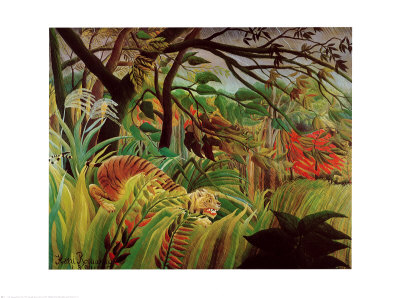
Finally, the most important mistake to avoid is treating Rousseau as a template to be filled in. His work is a collection of specific moments in time, each with its own unique character and atmosphere. Beginners often try to replicate the exact same pose of a tiger or the same arrangement of a bird's nest in every sketch, which leads to repetitive and uninspired results. To truly honor Rousseau, one must capture the spirit of his work—the curiosity, the wonder, and the slight detachment from reality—rather than his specific subjects. Whether the subject is a monkey, a snake, or a flower, the execution should reflect the unique voice of the artist creating the sketch. Do not simply draw what you see; draw what you feel the jungle might be doing.
Here are five critical steps to ensure your sketch remains authentic to the Rousseau spirit:
- Resist the urge to blend colors smoothly, instead keeping them distinct and flat.
- Allow your lines to wobble slightly rather than forcing them into perfect geometric shapes.
- Use dark silhouettes to frame your subjects and create mystery.
- Leave significant areas of negative space to let the composition breathe.
- Focus on the emotional atmosphere rather than replicating specific botanical details.
By combining these practical tips and embracing the unconventional nature of his style, you can create sketches that feel distinctly like they belong to the great man from Montmartre, even if your own hands are doing the actual painting.
Related reading
- The Digital Brush: Reimagining the Dream World of Rousseau
- The Child in the Jungle: Cultivating the Spirit of Naïve Art
- Finding Your Own Wild Garden: A Guide to Choosing Subjects in Naïve Art
- The Artist's Canvas: Unveiling the Essentials of Naïve Creation
- Unlocking the Surreal Garden: A Guide to Finding Historical Naïve Art for Inspiration