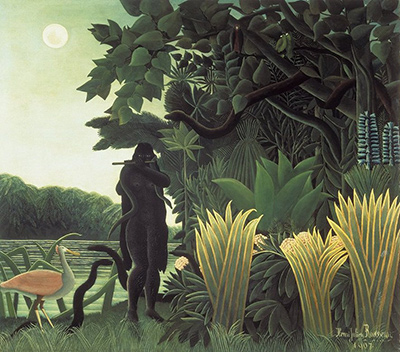
Teaching the unique visual language of Henri Rousseau offers young students a fascinating escape from rigid realism, inviting them to explore a world where imagination holds the brush and logic takes a backseat. By embracing the principles of naïve art, educators can foster creativity, encourage bold experimentation, and help children discover their own inner storytellers.
Understanding the Essence of the Naïve Style
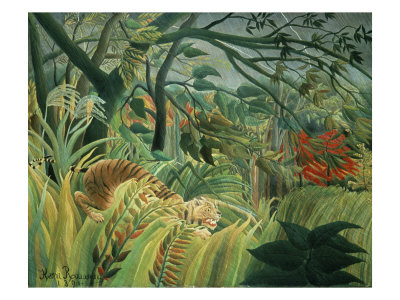
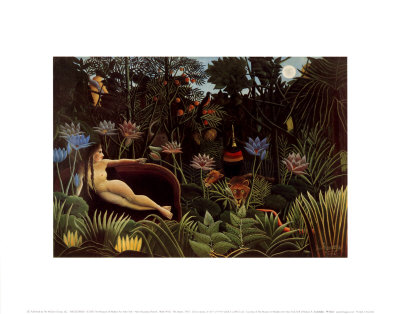
Before picking up a canvas, it is crucial to establish that naïve art is not a mistake or a lack of skill, but rather a deliberate artistic choice that prioritizes emotion and personal vision over technical perfection. When introducing Henri Rousseau's jungle scenes to students, emphasize that his trees often defy gravity and his animals possess human eyes, creating a dreamlike atmosphere that feels authentic to the artist's inner world. This mindset shift is the first step in guiding students away from simply copying what they see and toward expressing what they feel, encouraging them to create their own fantastical realms where the rules of nature are rewritten by their own whims.
Encouraging Bold and Unconventional Composition
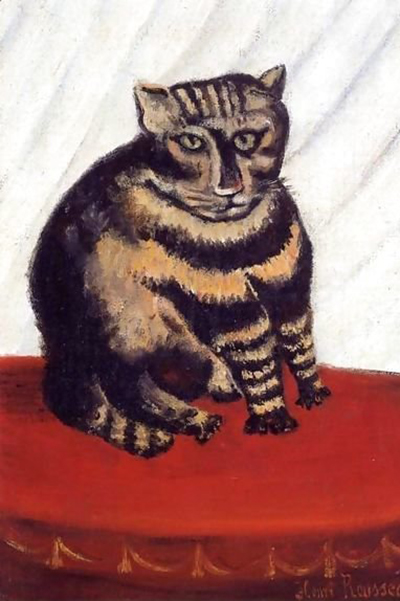
One of the most distinct characteristics of Rousseau's work is his fearless approach to composition. He often places figures and animals in the center of the canvas rather than adhering to traditional rules of perspective or balanced framing. To replicate this energy in the classroom, teachers should encourage students to experiment with placing their main subjects anywhere on the paper, even right in the middle, and to ignore the horizon line if it feels unnatural. This freedom allows children to break free from the constraints of geometry and focus on the emotional impact of their arrangement. Instead of worrying about creating a realistic perspective, students should ask themselves, "Where does this story want to happen?" and let their intuition guide the placement of every element, resulting in dynamic and engaging visuals that feel alive and spontaneous.
Mastering Color Without Fear
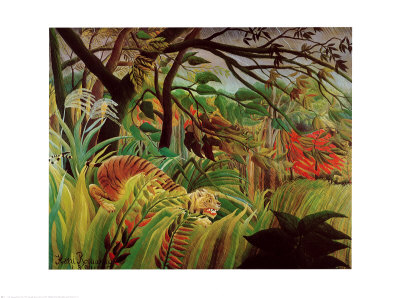
Rousseau's use of color was vibrant, flat, and often disconnected from the actual hues found in nature, yet it remained captivating and full of life. In the lesson plan, this translates to a session on color theory where students learn to mix their own pigments and ignore the "correct" shades of green or blue. Teachers can introduce the concept of flat areas of color, demonstrating how solid blocks of hue can create depth and texture without the use of shading or gradients. By having students apply thick layers of paint directly onto the surface, they mimic the texture of Rousseau's work, understanding that the vibrancy of the color comes from the purity of the pigment itself rather than the complexity of the application.
Breaking the Rules of Perspective
To truly capture the spirit of the jungle painter, students must learn to manipulate perspective in ways that feel natural to their imagination. This involves encouraging a "flat" perspective where objects do not necessarily get smaller as they recede into the distance, or conversely, where distant objects appear as large as the ones in the foreground. Students can practice drawing trees that seem to grow vertically out of the ground while animals interact freely in the space, ignoring the typical vanishing points found in academic drawing. This exercise helps them understand that art is a tool for storytelling, not just a scientific record of the world, allowing them to construct scenes that feel magical and unbound by physical laws.
Building Confidence Through Simple Forms
Finally, teaching naïve art involves simplifying complex forms into basic shapes, which paradoxically makes the art process more accessible and enjoyable for young learners. Rousseau often depicted complex flora and fauna using simple lines and solid shapes, which can be intimidating when rendered realistically but liberating when abstracted. By guiding students to draw trees as rough ovals, birds as simple circles with wings, and animals as expressive blobs, the focus shifts entirely to the personality and expression of the creature rather than its anatomical accuracy. This approach builds confidence, as children feel capable of representing their ideas quickly and effectively, knowing that there is no single "right" way to draw a tree or a bird, only their own unique interpretation.
Practical Strategies for Implementation
To ensure these concepts translate effectively into daily lessons, educators should integrate specific activities that reinforce the core tenets of the style. Here are five essential steps to guide your classroom practice:
- Provide students with pre-colored, watercolor-washed paper to encourage loose, spontaneous application.
- Supply a limited palette of bright, unmixed primary colors to force creative mixing.
- Display large prints of Rousseau's works specifically highlighting his flattened perspective techniques.
- Organize group discussions where students describe their "impossible" scenes in detail.
- Create a dedicated "dream corner" in the room where unfinished works can be displayed freely.
Incorporating these strategies into your curriculum will not only introduce your students to the fascinating world of Henri Rousseau but also empower them to find their own voice as artists. When children are freed from the shackles of perfection and encouraged to trust their own visions, the classroom transforms into a vibrant jungle of creativity where every child can become a painter of dreams.