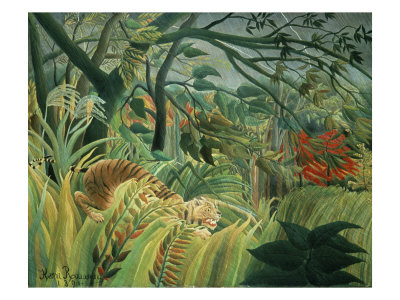
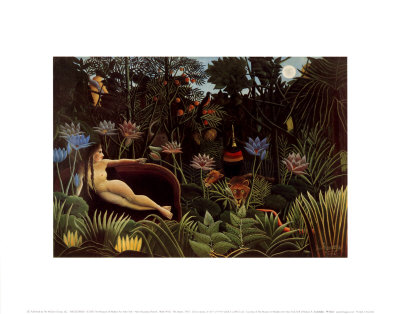
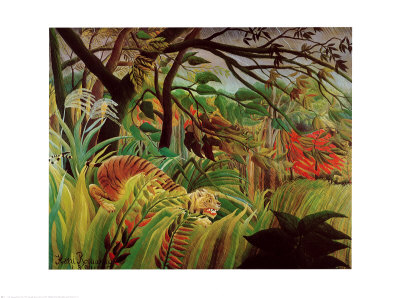
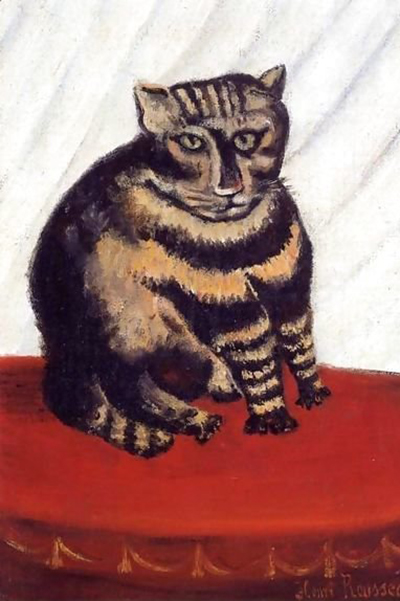
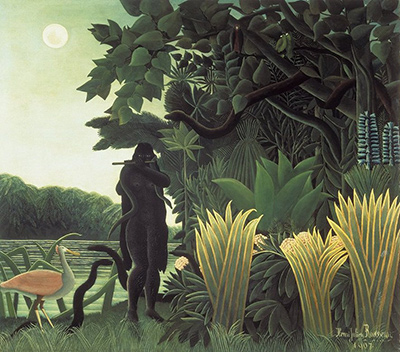
Henri Rousseau never claimed to be a master of biological taxonomy; instead, he was a visionary of the impossible, a painter who taught the world that reality is merely a suggestion waiting to be overwritten. His ability to conjure creatures from the mind's eye, placing them seamlessly within lush, dreamlike forests, remains a cornerstone of naive art that inspires artists today to look beyond the tangible and embrace the surreal. Mastering this skill requires more than just drawing skills; it demands a profound understanding of how light interacts with impossible forms and how to make the viewer believe in a story that has no logic.
Finding the Creature Within the Blank Space
Before a single brushstroke is applied to a creature, the artist must engage in a mental exercise of visualization. Rousseau did not start with a model; he started with a feeling of wonder. When you wish to cut out an imaginary animal, you must first decide exactly what you want to see. Is it a jagged, multi-legged beast lurking in the undergrowth? Or perhaps a gentle, floating leviathan swimming through the air? This initial conception is crucial because the shape of the creature dictates the placement of every subsequent element. If the animal is bulky, the background foliage must be pushed aside or painted around it with softer edges. If the creature is delicate and ethereal, the surrounding elements should be wispy and indistinct, allowing the form to emerge almost like a memory rather than a solid object.
Understanding the Illusion of Depth Without Perspective
One of the most challenging aspects of creating imaginary animals is maintaining the illusion of depth when there is no recognizable anatomy or standard perspective to guide the eye. Rousseau achieved this by relying heavily on atmospheric perspective and color temperature. The foreground elements, whether they are the imaginary claws of the beast or the ferns beneath it, should be rendered with bold, clear lines and richer, more saturated colors. As the eye travels back into the forest or the sky, the details of the imaginary animal should blur slightly, and the colors should shift toward cooler tones. This technique ensures that the creature feels embedded in a three-dimensional space, even though its form is entirely constructed by the artist's imagination.
Mastering the Edge: Where the Imagination Meets Reality
The most critical technical step in making an imaginary animal appear real is the treatment of the edges where the creature meets the background. In naturalistic painting, edges are often hard or soft based on the object's texture. In Rousseau's style, the edge of the imaginary being should often mimic the texture of the surrounding nature. A dragon's tail might merge imperceptibly into the bark of a tree, or a bird's wing might blend into a cloud formation. This is not a mistake; it is a deliberate choice to dissolve the boundary between the subject and the environment. By using loose brushwork and blending strokes at these junctions, the artist creates a sense of fluidity that convinces the viewer that the animal is part of the ecosystem, not just pasted onto it. This technique requires patience, as rushing to define a hard outline will instantly shatter the dreamlike quality of the piece.
Utilizing Light to Define the Impossible Form
Light acts as the sculptor's chisel, defining the volume of the imaginary creature without the need for accurate anatomy. Since the animal does not exist in nature, it may have unusual silhouettes or impossible angles. To make these believable, the light source must behave consistently. If the sun is low in the sky, casting long shadows, the imaginary beast should have deep shadows on its lower side and bright highlights on top, regardless of how twisted its limbs are. The interplay of light and shadow gives the creature weight and presence. Additionally, consider how the animal interacts with the light of the environment. Does it reflect the green of the forest floor on its scales? Does it cast a shadow that seems to move independently of its actual motion? These subtle interactions anchor the fantasy in the laws of physics, making the impossible feel inevitable.
A Practical Guide to Execution
To bring your own imaginary creatures to life, follow this structured approach to ensure the final result feels cohesive and breathing:
- Sketch the basic silhouette of your creature first, keeping the lines loose and abstract, focusing on the overall shape rather than anatomical correctness.
- Block in the primary colors of the creature, ensuring they harmonize with the color palette of your background environment.
- Begin painting the edges of the creature, deliberately blurring the lines where the form meets the background to create a seamless transition.
- Apply the light source across the entire composition, highlighting the creature and adjusting the shadows to give it volume and presence.
- Review the finished piece, checking that no part of the imaginary animal feels too rigid or disconnected from the surrounding natural elements.
By following these principles, you can replicate the magic of Rousseau's work, creating scenes where the impossible becomes possible through the power of paint and the freedom of the artist's mind.