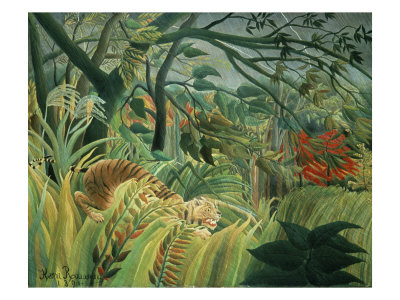
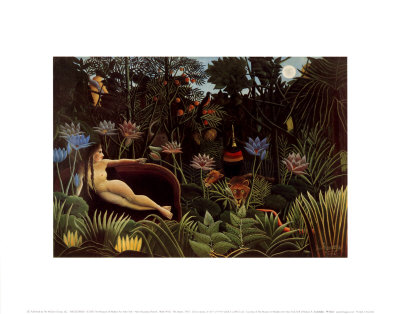
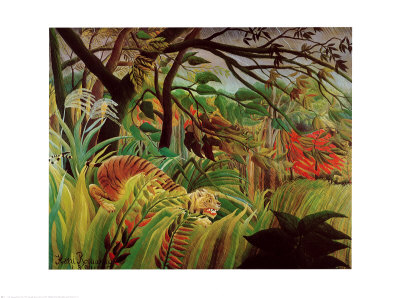
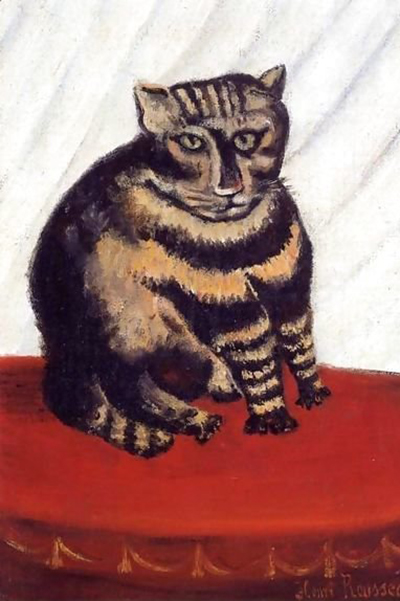
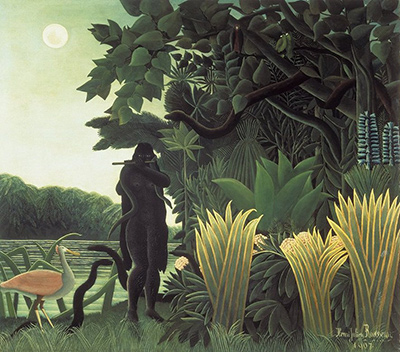
Henri Rousseau did not simply paint; he constructed entire worlds from the quiet observation of his own garden and the distant, imagined forests of the Congo. His success lay not in technical perfectionism, but in the unwavering consistency of his unique perspective, a style that feels almost childlike yet carries the weight of profound mystery. If you aspire to create a series of naïve art that resonates with this same spirit, your journey begins not with a single masterpiece, but with the deliberate curation of a visual language that speaks with a single, clear voice.
Finding Your Inner Zoo
To master the creation of a consistent visual identity, one must first understand that naïve art is defined by its honesty and its refusal to adhere to rigid academic rules. Rousseau taught us that the artist is a storyteller, not a technician. The first step in building your series is to identify the specific "voice" that you wish to project. Are you an observer who captures the quiet stillness of afternoon light, or perhaps a dreamer who renders shapes that float and twist in the air? You must decide on a core emotional tone that will permeate every canvas, from your smallest sketch to your largest mural. This internal compass ensures that even when your subjects change—a cat versus a tree, a village versus a storm—the underlying feeling remains recognizable as your own. Without this foundational emotional anchor, your work risks becoming a scattered collection of pretty pictures rather than a cohesive body of art.
Mastering the Brush of Inconsistency
The hallmark of the naïve style is often an "imperfect" technique that feels deliberate rather than accidental. However, within that deliberate imperfection, there must be a thread of consistency. You do not need to copy Rousseau's specific brushstrokes exactly, but you must decide what kind of marks make you feel. Do you use long, sweeping strokes that mimic the movement of wind, or do you prefer short, staccato dots that create a sense of texture? Once you establish your preferred stroke, you must apply it with faith to every surface. If you choose to blur edges to suggest depth, do not switch to sharp, defined lines halfway through a series. This discipline is what transforms a hobbyist's output into a recognizable brand of art. The viewer should be able to spot your work instantly, even before they read the title, simply by seeing the unique rhythm of your hand.
The Power of Repetition and Variation
While consistency is vital, it does not mean monotony. The secret to a strong visual identity lies in the relationship between repetition and subtle variation. Think of this as a musical theme; the melody remains the same, but the tempo and instrumentation shift slightly with each movement. In your art series, you might repeat a specific color palette or a particular way of rendering foliage, but allow the composition and lighting to evolve with each new piece. This approach creates a sense of familiarity that comforts the viewer while still providing enough novelty to keep them engaged. You are building a dialogue with your audience, where their recognition of your style invites them to expect the next chapter of your visual story. To successfully balance this tension, consider the following strategies:
- Adopt a recurring motif, such as a specific animal or plant, that appears in varying contexts across your work.
- Maintain a fixed angle of view for a subset of your paintings to create a sense of spatial uniformity.
- Use a signature texture, like a specific type of canvas weave or a particular kind of impasto application.
- Limit your palette to a core set of three to five colors that act as the structural backbone of your series.
- Keep the framing of your subjects consistent, whether it is a tight close-up or a wide environmental shot.
- Vary the scale of your works only when the narrative requires a shift in intimacy or grandeur.
- Establish a signature mark, such as a specific way of signing the bottom corner or a unique symbol in the background.
The Palette of the Soul
Color is perhaps the most powerful tool in your arsenal for defining a consistent identity. In naïve art, color often takes precedence over anatomical correctness or perspective. You must decide on a "family" of colors that will serve as the foundation for your entire body of work. Perhaps your series is defined by the deep, saturated greens of the jungle and the warm, golden hues of the sun, or maybe it is built around cool blues and stark whites to evoke a sense of isolation. Once you select your primary color scheme, resist the urge to let the moment dictate your choices. If you are painting a sunset, choose the colors you know define your series, even if the actual light outside is different. This control over color ensures that your work feels unified, creating a harmonic environment where every element supports the next, much like the lush, layered landscapes Rousseau brought to life.
Curating the Canvas and Composition
Finally, consider how the physical canvas and the arrangement of elements contribute to your visual signature. Does your work feel crowded and busy, or open and airy? Does it favor verticality to suggest towering trees, or horizontal lines to mimic the horizon? These structural choices should be made consciously before the first stroke is applied. By deciding on a preferred framing style or a specific way of placing the focal point, you create a template that your subconscious will follow. This reduces decision fatigue during the creative process and allows your energy to focus on the emotional content. When you commit to a specific composition style, your art becomes a cohesive collection of experiences rather than a series of isolated events. The viewer walks away with a complete impression of a world you have created, one that feels distinctively and unmistakably yours.
Related reading
- The Digital Brush: Reimagining the Dream World of Rousseau
- The Child in the Jungle: Cultivating the Spirit of Naïve Art
- Finding Your Own Wild Garden: A Guide to Choosing Subjects in Naïve Art
- The Artist's Canvas: Unveiling the Essentials of Naïve Creation
- Unlocking the Surreal Garden: A Guide to Finding Historical Naïve Art for Inspiration