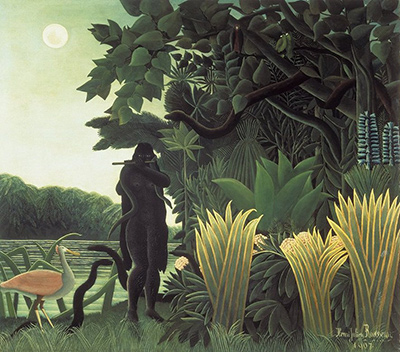
Henri Rousseau, the French artist famously known for his nocturnal forests and exotic jungles, once turned his unique, dreamlike vision toward the terrifying majesty of the feline. While he is most celebrated for works like The Night Watch or his endless series of tigers, the specific subject of "Tiger in Tropical Storm" represents a fascinating intersection of violence, nature, and his signature naive style. This painting stands as a testament to his ability to capture the chaotic energy of a storm while maintaining the distinct, flat planes of color that define his oeuvre. For art enthusiasts, collectors, and those simply captivated by the weird and wonderful, understanding the composition, color palette, and emotional weight of this piece offers a deeper appreciation of the man behind the brush.
The Clash of Elements: Nature's Fury
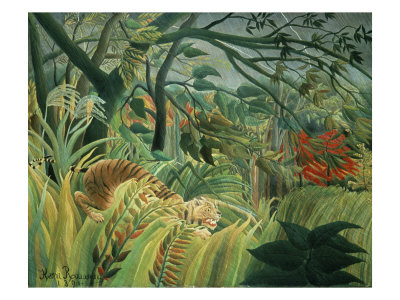
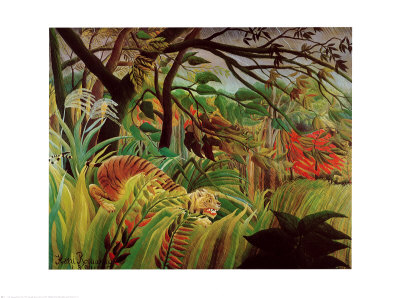
The central theme of this masterpiece is the dramatic confrontation between a solitary tiger and the overwhelming force of a tropical storm. Unlike many of Rousseau's earlier works where animals roam peacefully through dense undergrowth, this scene is defined by movement and turbulence. The storm is not merely a background element; it is an active participant in the narrative, battering against the foliage and threatening to engulf the beast. Rousseau captures the moment of suspension, where the tiger appears to be struggling against the wind and rain, yet remains a powerful, immovable force in its own right. The juxtaposition of the stillness required to be a predator and the chaos of the weather creates a dynamic tension that is palpable to the viewer. The storm acts as a catalyst, stripping away any pretense of calm and forcing the viewer to confront the raw power of both nature and the animal kingdom.
The Signature Naive Style in Motion
To understand the painting's impact, one must look closely at how Rousseau's unique "naive" style handles such a dramatic scene. Despite the intensity of the subject matter, the painting does not rely on realistic perspective or dramatic chiaroscuro lighting typical of academic artists of the time. Instead, Rousseau employs broad, unmodulated blocks of color and a lack of atmospheric perspective. The leaves of the jungle, even those tossed by the wind, retain a distinct, almost geometric quality. This flatness is intentional; it creates a sense of immediacy and dreamlike quality, as if the viewer is looking through a glass of water or at a memory. The tiger itself is rendered with thick, impasto brushstrokes that give the fur a tactile texture, contrasting with the smoother, wind-swept foliage. This stylistic choice prevents the storm from becoming too terrifying, instead creating a surreal, almost fairy-tale atmosphere where the violence feels stylized and eternal rather than fleeting and destructive.
Analyzing the Color Palette
The visual narrative of the tiger in tropical storm is driven heavily by its specific and deliberate use of color. Rousseau utilizes a palette dominated by deep, saturated greens and ochres, which represent the dense, humid jungle environment. However, the presence of the storm introduces cooler tones of grey and blue, particularly in the sky and the rain falling on the leaves. The tiger serves as the focal point, often highlighted with touches of gold or lighter brown that make it pop against the darker background. This contrast ensures that the animal remains the anchor of the composition, even as the surrounding elements swirl and darken. The interplay between the warm, earthy tones of the jungle and the cool, wet tones of the storm creates a visual rhythm that guides the eye across the canvas. It is this careful balance of warm and cool hues that gives the painting its emotional depth, evoking a sense of warmth despite the encroaching cold of the weather.
Composition and Narrative Tension
The arrangement of elements within the canvas is crucial to the story being told. Rousseau likely positions the tiger in the foreground or mid-ground, allowing the viewer to feel a sense of proximity to the action. The branches and leaves are scattered dynamically, suggesting the force of the wind without needing to depict every single gust. This loose, almost careless scattering of vegetation is a hallmark of his style, mimicking the randomness of nature itself. The storm clouds, likely occupying the upper portion of the canvas, loom over the scene, creating a sense of impending doom or release. The narrative tension lies in the uncertainty of the outcome: is the tiger safe in its den, is it being carried away by the current, or is it preparing to strike amidst the chaos? This ambiguity invites the viewer to project their own fears and hopes onto the scene, making the painting a mirror for our own relationship with the wild forces of nature.
Collecting and Appreciating the Work
For those interested in acquiring or studying this specific painting or similar works by Henri Rousseau, the process involves looking beyond the obvious fame of the artist. While the price of a signed original can be exorbitant, even unsigned works by Rousseau, particularly those depicting his famous tigers, command respect in the market of naive art. When evaluating a piece for collection or display, focus on the integrity of the brushwork and the vibrancy of the colors. Look for signs of restoration or overpainting that might obscure the original naive intent. The beauty of Rousseau's work lies in its unpretentious nature; it does not try to be a perfect representation of reality but rather a perfect representation of the artist's inner vision. Whether displayed in a private home or a museum, a work like "Tiger in Tropical Storm" brings a unique, untamed energy to any space, reminding us that nature is both beautiful and terrifying. By understanding the context of the storm and the style of the artist, collectors and viewers alike can fully engage with the wild spirit that Rousseau so masterfully captured on canvas.
- The tiger's fur is often described as having a velvety texture that contrasts sharply with the jagged, angular leaves surrounding it.
- Rousseau's lack of foreshortening creates a sense of flatness that allows the viewer to focus on the emotional impact rather than anatomical precision.
- The composition often feels crowded, yet the empty space around the tiger provides a necessary breath of air amidst the chaos.
- Critics often note that the painting feels timeless, as if the storm could occur at any moment in history.
- The emotional resonance of the piece comes from the juxtaposition of the calm, predatory eye of the tiger against the violent turbulence of the weather.
- Many collectors seek these works for their ability to bring a sense of wild freedom into interior, quiet spaces.
- The use of oil paints in thick layers allows the light to interact with the surface in a way that mimics the dappled sunlight of a jungle canopy.