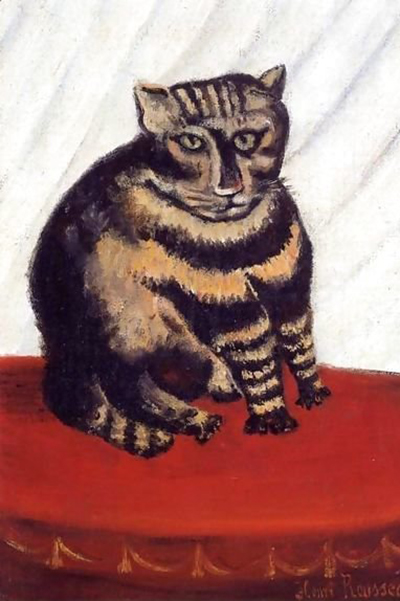
The mysterious vanishing of a masterpiece that bears a striking resemblance to Henri Rousseau's famous Girl with a Pearl Necklace has captivated art historians and collectors alike for decades. This specific work, often confused with the original due to its thematic similarity and naive style, serves as a cautionary tale about the fragility of provenance in the art world. Understanding the nuances of its history requires diving deep into the often opaque archives of private collections and auction houses.
The Nature of Naive Art Forgery
Henri Rousseau was a master of illusion, creating scenes that seemed too perfect to be true, filled with impossible birds and impossible architecture. However, his influence extended far beyond his own studio. The "naive art" movement, which includes works that mimic Rousseau's style without being created by him, has produced numerous forgeries over the centuries. These copies often enter the market with a degree of confidence that belies their true origin. When a painting lacks a clear chain of custody or specific documentation linking it directly to the artist's hand, it becomes a prime candidate for speculation. The visual similarity between a forgery and the original can be deceiving, leading to long periods of uncertainty regarding the true creator.
The Mechanics of Theft in Private Collections
Unlike public museums where security measures are robust, private collections are often hidden away in estates, bank vaults, or family homes. This lack of public scrutiny makes them vulnerable to opportunistic thieves who know how to move quickly. In the case of the missing emerald gown, the absence of an immediate public outcry suggests that the theft was likely premeditated or that the painting was moved without notice. Theft of art in this manner is often driven by the desire to secure a high-value asset before it can be identified as stolen. Without a registry of the item's location at the time of the loss, tracing the painting becomes a logistical nightmare for law enforcement and insurance companies.
Identifying Key Artifacts
To navigate the complex web of missing artworks, experts rely on a specific set of criteria to determine if a piece is truly lost or merely unaccounted for. The following factors are critical in analyzing any disappearance:
- The existence of a detailed provenance record that documents every owner and location since the painting's creation.
- The condition of the canvas and varnish, which can reveal if the painting was moved during transit or if it has been altered.
- The presence of insurance claims or police reports filed shortly after the painting went missing from a specific address.
- The involvement of known art dealers or auction houses in the recent sale or storage of the item.
- The physical characteristics of the frame and the painting itself, which can indicate whether it was hidden within a larger shipment or a secure container.
The Role of Auction Houses and Dealers
The art market is a vast ecosystem where paintings change hands frequently, sometimes without the owner's full knowledge. Auction houses and dealers play a pivotal role in the circulation of art, but they can also be blind spots in the investigation of lost masterpieces. When a painting disappears from a dealer's inventory, the lack of transparency can hinder recovery efforts. Many dealers operate on a first-come, first-served basis, and once a painting is sold, the buyer assumes ownership and responsibility for its safekeeping. If that buyer is also absent or uncooperative, the trail goes cold. The reputation of the dealer involved is often the only tangible lead remaining for investigators trying to reconstruct the timeline of the theft.
The Future of Art Recovery
Recovering a stolen painting like the missing Girl with a Pearl Necklace variant requires a coordinated effort between police, art experts, and international databases. While the specific location of the original remains unknown, the methods used to track it down have evolved significantly. Modern technology, such as high-resolution imaging and database cross-referencing, allows experts to compare fragments of a painting against known collections globally. However, the human element remains crucial; it is the persistence of collectors, the cooperation of families, and the dedication of investigators that often turn a cold case into a solved mystery. The story behind the missing emerald gown reminds us that art is not just an object but a living history that can be lost, but with the right tools, it can often be found again.