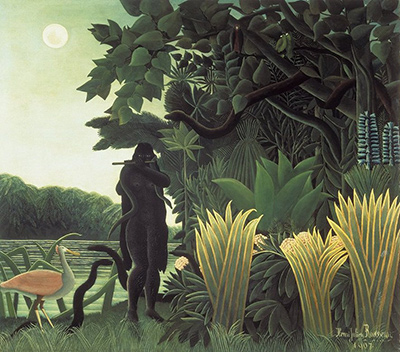
Understanding the spark behind naive art is often the most challenging hurdle for aspiring artists, yet it is precisely this unique lack of conventional instruction that defines the genre. When students ask where the inspiration comes from, they are often looking for a single source, only to discover that the wellspring is a complex mixture of observation, imagination, and a childlike desire to recreate the world as they see it.
The Power of Unfiltered Observation
One of the most frequent queries from students involves the role of direct observation in creating naive scenes. Unlike academic training which demands a specific way of seeing light and perspective, naive artists often look at the world with the eyes of a child, unburdened by the rules of linear perspective or atmospheric rendering. This perspective allows for a raw honesty in their work that feels startlingly authentic. The inspiration often stems from a genuine fascination with the immediate environment, where the most ordinary elements—such as a patch of clover, a flock of pigeons, or a garden hose—are elevated to subjects of profound importance.
The key here is to stop trying to copy reality perfectly and instead to interpret it through a lens of wonder. Students are often told to step back and look at their surroundings not as a collection of geometric forms to be measured, but as a story waiting to be told. This shift in mindset transforms mundane activities into vibrant narratives. Whether the artist is walking through a crowded market or sitting on a balcony watching the sunset, the act of simply observing becomes the catalyst for creation. The goal is not to reproduce the visual data exactly, but to capture the emotional resonance of the moment.
Finding Inspiration in the Everyday
While some naive artists draw from their own lives, others find their muse in the work of others, particularly in the realm of folk traditions and childhood memories. This section delves deeper into how external influences can fuel the creative fire without compromising the naive aesthetic.
- Childhood Memories: Many naive artists report that their strongest inspirations come from revisiting their own childhood. The world was simpler then, and the boundaries between the indoors and outdoors were more permeable. Recreating these memories allows the artist to bypass adult cynicism and rediscover that innate curiosity about how things work.
- Folklore and Myth: Stories passed down through generations provide a rich vein of inspiration. Creatures from folklore, like dragons, mermaids, or the talking animals of Grimm's fairy tales, are often rendered with a simplicity that belies their mythical nature. These stories offer a framework for the narrative that the artist can then visualize without needing complex anatomical studies.
- Music and Rhythm: Sometimes the inspiration is auditory. A melody, a dance, or even the rhythm of rain against a roof can dictate the composition of a painting. The visual elements are then arranged to match the cadence of the sound, creating a harmonious balance between the visual and the auditory.
The Role of Imagination and Fantasy
It is a common misconception that naive art is merely a record of reality, but in truth, the imagination plays a massive, often dominant, role. The most compelling naive paintings are those where the artist's internal world has collided with the external one. Students often wonder how to balance these two forces, but the answer lies in embracing the absurdity. In naive art, logic often takes a backseat to feeling. A sun might have a face, a house might float in the air, or the sky might stretch across the entire canvas.
The inspiration for these fantastical elements comes from a refusal to accept limitations. If the sky doesn't feel right, change it. If the perspective doesn't feel true to the artist's vision, adjust it. This freedom to break the rules of art history is what makes naive art so refreshing and engaging. The artist is essentially the director of their own reality, allowed to rearrange the furniture of the universe to suit their mood. This aspect of the art form encourages students to experiment with color, shape, and scale in ways that traditional art education often discourages.
The Influence of Popular Culture and Media
Another area of confusion for students is the source of imagery in modern naive art. With the proliferation of media, many artists today draw inspiration from comic books, cartoons, advertisements, and digital illustrations. This is a natural evolution of the style, as it reflects how contemporary children and adults consume visual information. The flatness of a cartoon or the vibrant, saturated colors of a comic strip can be directly translated into a painting, creating a style that feels instantly recognizable to a wide audience.
The inspiration here is often about capturing the essence of a pop culture icon rather than a literal representation. For instance, a character from a famous show might be painted with exaggerated features and bold outlines, capturing the spirit of the original while simplifying the details. This approach allows the artist to engage with current trends while maintaining the timeless quality of naive aesthetics. It is a way of bridging the gap between high art and mass media, proving that the naive style is not a relic of the past but a living, breathing form of expression that evolves with the times.
The Journey of Discovery
Finally, students often ask about the process of finding their own unique voice within this genre. The answer is that there is no single path to mastery; it is a journey of continuous discovery and experimentation. The inspiration is found in the willingness to try something new and the courage to make mistakes. Every stroke of the brush is an experiment, and every decision is a step closer to the artist's authentic self-expression. By staying open to the world around them and never afraid to question the status quo, the artist can continue to find endless sources of inspiration. The most important tool in the naive artist's arsenal is not a specific reference image, but the open mind to see beauty in everything, everywhere, all the time.