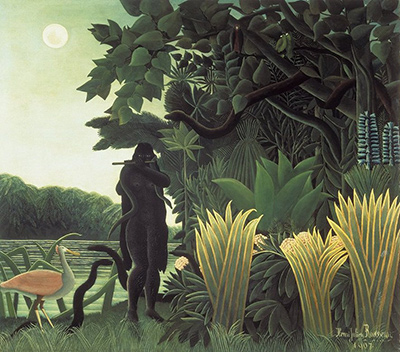
Henri Rousseau's mastery over the dream state lies not merely in his depiction of exotic landscapes and mysterious forests, but in his ability to translate the fluid, often illogical logic of our nightly visions into the rigid, enduring medium of oil paint. By examining how his brushwork mirrors the fragmentation of sleep, we can learn to decode the personal narratives hidden within his surrealist compositions. The following guide explores the mechanics of interpreting these dreamscapes to foster a deeper understanding of the human psyche.
The Architecture of the Unconscious Mind
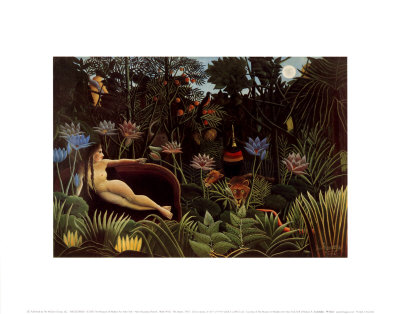
To analyze a dream painting like Rousseau's The Dream, one must first recognize that the artist did not simply illustrate a single event but captured the collective and individual unconscious in motion. Unlike the dreamer who experiences a narrative with a beginning, middle, and end, the painting freezes the moment of awakening, preserving the surreal juxtapositions that occur when the logical filter of the waking mind is lifted. In these works, familiar elements are displaced, scaled, or altered, creating a visual language that speaks directly to the viewer's own hidden fears and desires. The goal of this analysis is to move beyond identifying the subject matter to understanding the emotional undercurrent that drives every object within the frame.
Decoding the Symbols and Motifs
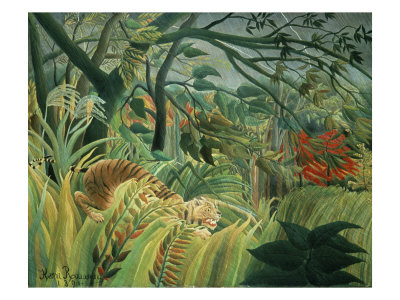
Every element in Rousseau's dream paintings serves as a potent symbol, acting as a vessel for repressed thoughts or archetypal fears. The jungle, for instance, is rarely just a botanical study; it represents the chaotic, overwhelming nature of the subconscious, a place where the rules of physics and biology do not apply. Similarly, the presence of animals, particularly the iconic elephant and lion, often signifies strength, power, or a confrontation with one's own inner wildness. To interpret these works effectively, one must treat the canvas as a puzzle where each piece requires careful observation to reveal its true significance in relation to the whole.
- Identify the Setting: Determine if the environment feels threatening, welcoming, or indifferent, as this sets the emotional tone for the dream.
- Locate the Central Figure: Who or what is the focal point of the action, and what is their posture or expression conveying?
- Observe the Interactions: How do the disparate elements within the scene relate to one another, or do they exist in a state of violent disconnection?
The Role of the Observer in Analysis
The act of analyzing a dream painting is inherently participatory. The viewer brings their own associations and psychological baggage to the interpretation, meaning that a single painting can yield multiple valid readings depending on the observer's life experiences. There is no single "correct" answer to what a dream signifies, nor is there a rigid key to unlock the artist's intent. Instead, the analysis becomes a dialogue between the static image and the moving mind of the interpreter. By engaging with the artwork, the viewer is invited to project their own dreams onto the canvas, thereby bridging the gap between Rousseau's personal visions and the universal human experience of sleep.
Navigating the Emotional Landscape
Once the visual components have been cataloged, the true analysis shifts to the emotional resonance of the scene. Does the dream evoke a sense of terror, as seen in the menacing shadows of his nocturnal forests, or a profound sense of calm and wonder in his daydreams of exotic gardens? Understanding this emotional core is crucial, as it reveals the underlying conflict or desire driving the imagery. The artist often uses color and composition to manipulate this emotion, using stark contrasts to heighten tension or softening edges to suggest tranquility. Recognizing these shifts allows the analyst to trace the emotional arc of the dream, transforming a static image into a dynamic narrative of internal struggle and resolution.
Practical Application for Personal Reflection
Applying the principles of dream analysis to personal life can be a therapeutic exercise in its own right. By reflecting on the recurring symbols found in one's own dreams and comparing them to the visual strategies Rousseau employed, individuals can gain insight into their own psychological state. This process encourages a willingness to confront the parts of oneself that are usually hidden or suppressed. Whether one is struggling with anxiety, exploring creative blocks, or simply seeking a deeper connection to the mysterious nature of sleep, the study of these paintings offers a structured yet open-ended framework for self-discovery. The ultimate value of such analysis lies in its ability to turn the invisible currents of the subconscious into tangible, shared human experiences.