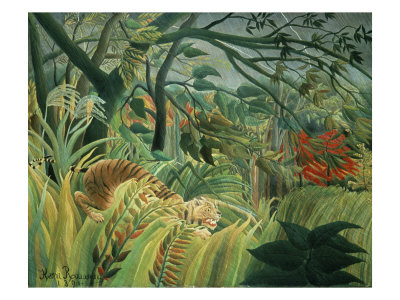
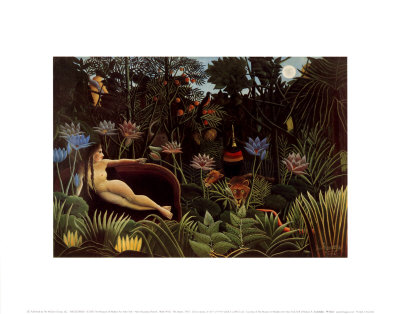
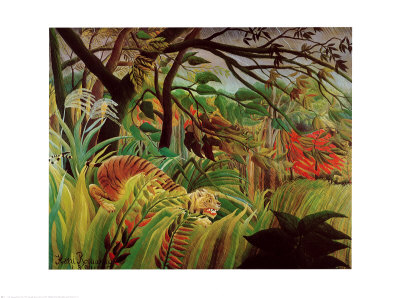
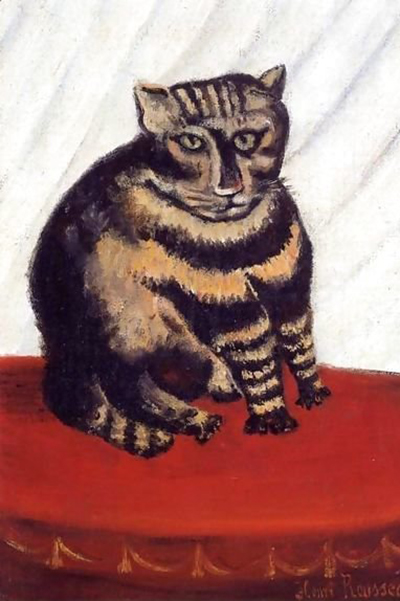
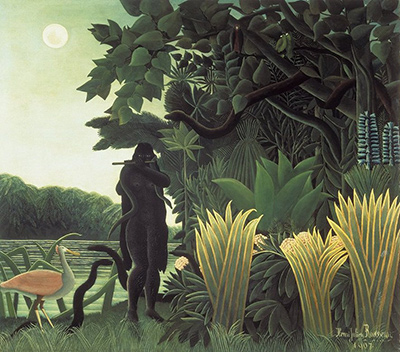
In the vibrant, jungle-like worlds of Henri Rousseau, one cannot simply look at what is painted; one must also look at what is left blank. The mastery of negative space—the intentional omission of detail to frame and define form—is a subtle yet powerful tool that transforms a crowded composition into a moment of focused revelation. When an artist dares to leave a patch of white or unblemished canvas near a subject, they are not creating emptiness, but rather a stage upon which the drama of the painting plays out. This technique forces the viewer's eye to pause, creating a rhythmic breathing that prevents visual fatigue and guides the gaze with an almost invisible hand.
The Rhythm of Visual Rest
Every great painting, from the bold strokes of the Impressionists to the whimsical forests of the French master, relies on a delicate balance between fullness and void. If a canvas is packed with every conceivable detail, the eye becomes overwhelmed, unable to find a resting place. By strategically leaving areas unpainted, the artist introduces a necessary pause in the visual rhythm. This is particularly effective in naive art, where the artist often simplifies complex forms into their essential shapes. The blank space acts as a filter, stripping away the non-essential so that the core subject emerges with greater clarity and impact. It is the difference between shouting a message and whispering it; the silence allows the words to resonate.
Framing the Unseen
Negative space does not merely sit beside a subject; it actively frames it, creating a natural boundary that isolates the focal point. In many Rousseau-inspired works, the dense foliage of the jungle often pushes inward, leaving a small, distinct circle of light or negative space where the main figure stands. This technique creates a psychological separation between the viewer and the painted world, making the subject feel both intimate and distant at the same time. The empty area acts as a visual tether, holding the composition together and preventing the eye from wandering aimlessly off the edge of the canvas. It turns the background from a passive backdrop into an active participant in the storytelling.
Techniques for Effective Exclusion
Implementing negative space requires a shift in mindset from "what to paint" to "what to leave out." Artists can employ several specific strategies to master this art of exclusion. First, consider the silhouette; by painting a solid dark shape against a lighter background, the space behind the shape becomes part of the form itself. Second, utilize the border; leaving a consistent margin of unpainted space around the entire image can create a sense of depth and separation from the viewer's reality. Finally, focus on the flow of energy; ensure that the empty spaces align with the direction of movement within the painting, guiding the eye along a specific path.
- Identify the focal point before applying any brushstroke.
- Sketch the surrounding forms loosely to see where they block the view.
- Erase or leave blank the areas that create visual clutter around the center.
- Check the balance of light and shadow in the remaining gaps.
- Step back frequently to assess the rhythm of the empty spaces.
Creating Depth Through Layering
Depth in painting is often achieved through layering, but it can also be achieved through the intelligent use of gaps. When an object floats against a background without being grounded by a shadow or a surface, the viewer's brain instinctively fills in that missing connection, perceiving space between the object and the backdrop. This perceived distance adds a layer of realism or surrealism, depending on the intent. In the context of naive art, this can be used to create dreamlike qualities where objects seem to hover in a timeless void. The absence of a connecting line or shadow does not weaken the image; rather, it enhances its mystery and invites the imagination to complete the picture.
Cultivating the Blank Slate
The decision to leave a space unpainted is often the hardest choice an artist faces, as it requires the confidence to trust the subject's form enough that it does not need every detail to be explained. It is an act of trust in the viewer's ability to understand the piece through implication rather than explicit description. To practice this, artists should start by blocking in the main subjects and then stepping back to identify areas that feel crowded or cluttered. These are the prime candidates for becoming negative space. By systematically removing details until the composition feels light and airy, one discovers the true power of the blank canvas. Ultimately, the art of leaving spaces unpainted is about understanding that sometimes, the most important part of a painting is what remains unseen.