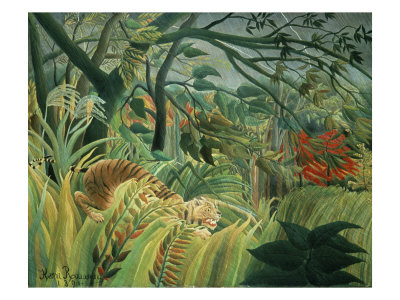
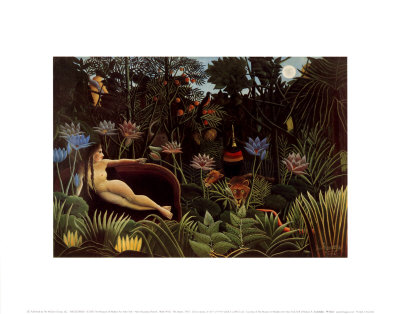
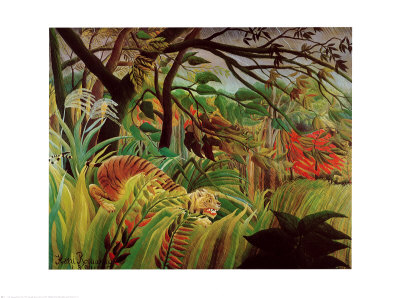
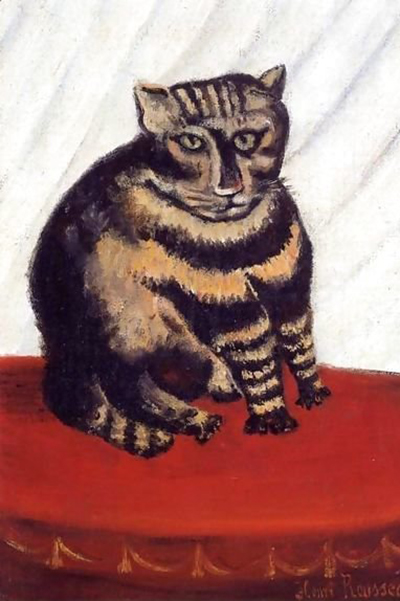
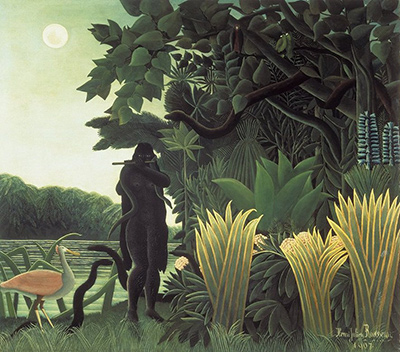
To capture the spirit of Henri Rousseau, one must first understand that his genius lay not in the photorealistic precision of the academic masters of his time, but in the vibrant, dreamlike texture of his foliage. He painted not what the eye saw clearly, but what the heart imagined, transforming everyday plants into enchanted forests that seemed to shimmer with an inner light. This article serves as a practical guide to unlocking that specific, naive aesthetic, allowing you to replicate the lush, textured foliage that defined his most celebrated works.
Establishing the Dreamlike Atmosphere
The foundation of Rousseau's style is the rejection of rigid perspective and harsh shadows. Instead of adhering to strict geometric rules, he created a sense of depth through color and pattern rather than linear perspective. Begin by selecting a palette dominated by rich, saturated greens, accented with touches of purple, yellow, and coral that suggest the dappled sunlight filtering through leaves. The goal is to evoke the feeling of stepping into a secret jungle that exists only in the mind, where the boundaries between reality and imagination blur seamlessly.
Capturing the Organic Flow
Rousseau's leaves never follow the same shape twice; they appear slightly distorted yet recognizable, as if seen through a misty lens. When painting these forms, avoid creating perfect, symmetrical shapes. Instead, use loose, sweeping brushstrokes to suggest the chaotic energy of a forest in full bloom. Think of the movement of wind through the canopy, or the organic growth of vines twisting around unseen structures. The edges of the leaves should be soft and undefined, lacking the sharp, clean lines one might expect from a botanical illustration. This "naive" quality is achieved by embracing the imperfection of the medium, allowing the paint to flow naturally without over-controlling the brush.
Building Layered Textures with Dry Brushing
The true magic of Rousseau's foliage lies in the texture, which gives the impression of thick, waxy leaves and intricate veining. To achieve this, you must employ a technique known as dry brushing. Start with a base layer of mid-tone green. Once dry, take a brush loaded with a small amount of opaque white or a lighter green mixed with water. Wipe the bristles thoroughly on a paper towel until they are almost dry; the brush should feel stiff and hold very little moisture. Drag this dry brush lightly over the surface of your base layer, focusing on the ridges and edges of the leaves. This process lifts the pigment slightly, creating a sense of roughness and depth that mimics the physical texture of real plant matter. Repeat this process with darker shadows and lighter highlights to build up the illusion of volume and three-dimensionality without using traditional shading techniques.
The Power of Negative Space
In many of his paintings, Rousseau left significant areas of the canvas unpainted, using the white of the paper or a light background to frame the foliage. This negative space is crucial for maintaining the dreamlike quality; it prevents the composition from feeling cluttered and allows the viewer's eye to rest. Do not fill every inch of the canvas with greenery. Instead, let the leaves emerge from the void, as if they are floating in a magical dimension. This technique reinforces the idea that the viewer is peering into a hidden world, untouched by the mundane constraints of the real world.
Finalizing the Magical Light
The final step involves adding a luminous quality to the composition. Rousseau often used a thin glaze of yellow ochre or lemon yellow over the entire painting, not just the highlights, to simulate the glow of a sunlit afternoon. This unifies the colors and gives the foliage a shimmering, almost electric appearance. Be careful not to make the light too harsh; it should feel soft and diffuse, wrapping around the leaves rather than casting dramatic, distinct shadows. By combining the textured dry brushwork with this ethereal luminosity, you can create a piece of art that honors the unique vision of the 19th-century French artist, capturing the essence of a forest that exists purely in the realm of imagination.
To truly master the naive aesthetic, consider incorporating the following steps into your workflow:
- Use a wide, flat brush for the initial wash to ensure even coverage.
- Allow each layer to dry completely before applying the next to prevent unwanted color mixing.
- Focus on the center of the leaf first, then move outward to the edges.
- Mix your pigments on a palette until they are perfectly saturated before application.
- Step back frequently to assess the overall composition and balance.
- Experiment with different shades of green to create subtle variations in tone.
- Resist the urge to refine every detail; the abstract nature is key to the style.
By following these guidelines, you will move beyond simple imitation and begin to express the same spiritual connection to nature that Rousseau cultivated in his studio. The result will be a painting that breathes with life, capturing the elusive magic of the hidden garden.
Related reading
- The Digital Brush: Reimagining the Dream World of Rousseau
- The Child in the Jungle: Cultivating the Spirit of Naïve Art
- Finding Your Own Wild Garden: A Guide to Choosing Subjects in Naïve Art
- The Artist's Canvas: Unveiling the Essentials of Naïve Creation
- Unlocking the Surreal Garden: A Guide to Finding Historical Naïve Art for Inspiration