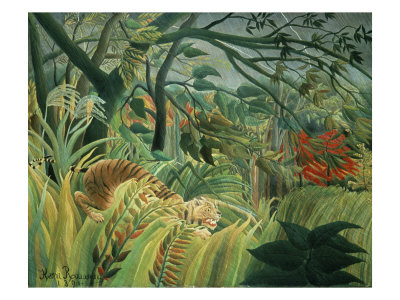
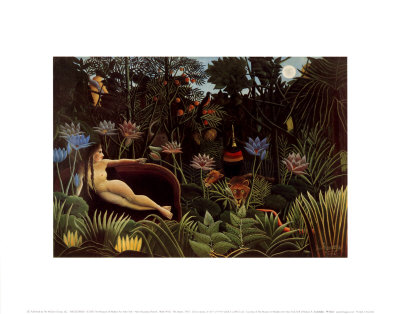
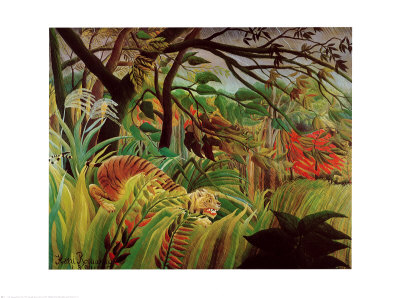
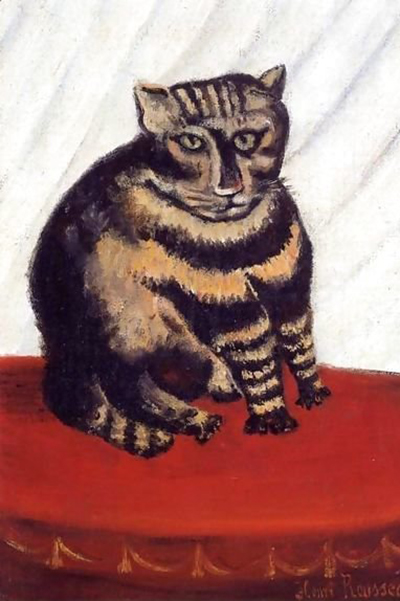
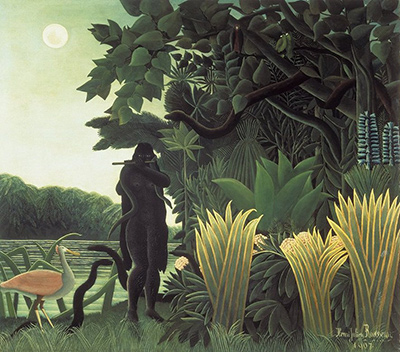
Henri Rousseau, the master of the "naive" style who deftly captured the mystery of the jungle, frequently used the canvas to explore his own inner world alongside his external subjects. His self-portraits from the late 1880s and early 1890s reveal a man who was increasingly detached from the chaotic reality of the French police and the medical community, retreating instead into a vivid, hallucinatory imagination. These works are not merely biographical documents; they are windows into the psyche of an artist who had mastered the technique of flat perspective and bold outlines to construct a private universe that existed entirely within his mind.
The Context of Isolation
To appreciate the specific nuances of Rousseau's self-portraits from 1890, one must understand the profound isolation that defined the latter part of his career. By this time, the artist had been institutionalized, a fact that would haunt the public perception of his life yet oddly fuel the creativity of his final works. While he suffered from periods of madness and was held in various asylums, including Sainte-Anne in Paris, his mental state often oscillated between lucidity and dreamlike confusion. This unique psychological landscape is where the seeds for his most famous scenes were sown, yet the self-portraits specifically offer a rare glimpse into his own perception of self during these turbulent years.
Visual Techniques and Composition
Rousseau did not simply paint a likeness of himself; he constructed a symbolic identity using the same tools he used to depict wolves, bears, and exotic birds. His brushwork became more direct and less refined, moving away from the detailed realism of his earlier work toward a more expressive, almost childlike application of paint. He utilized thick impasto, allowing the texture of the paint itself to become part of the image, creating a tactile quality that feels immediate and raw. In these self-portraits, the background often shifts dramatically, sometimes dissolving into the very jungles he became famous for, suggesting that his internal world was as vast and dangerous as the forests he painted.
The Psychology of the Artist in His Work
The psychological depth of these portraits cannot be overstated. Rousseau often depicted himself with a piercing gaze, sometimes appearing detached or looking directly out at the viewer as if challenging them. This direct engagement creates a powerful connection, forcing the observer to confront the artist's reality. The eyes in these paintings are often described as intelligent and searching, hinting at a mind that was constantly analyzing its own experiences and the nature of perception. Whether he was painting himself in his pajamas or surrounded by foliage, the expression remained consistent: a look of quiet intensity that belied the chaos of his surroundings.
Symbolism Within the Self-Image
In the self-portraits of 1890, various symbols take on new meanings, transforming the artist's physical appearance into a narrative of his inner struggle and triumph. He frequently included elements such as books, instruments, or specific flora that served as metaphors for his intellect and his connection to nature. For instance, holding a paintbrush or a palette could signify his role as a creator who constructs reality from nothing, whereas standing amidst vines or shadows might represent his entanglement with the subconscious. These details invite the viewer to look beyond the face and see the complex layers of his personality, including his fears, his dreams, and his enduring love for art despite the difficulties of his life.
Collecting and Studying the Works
For collectors, researchers, and students of art, acquiring or studying Rousseau's self-portraits requires a keen eye for the specific brushstrokes and the quality of the paper or canvas. It is essential to examine the condition of the work, as many of his pieces have survived the vicissitudes of his institutionalization and the subsequent history of the art market. When studying these works, one should focus on the consistency of his style and the subtle changes in expression that occurred over the years. The journey through his self-portraits is an educational experience that reveals the evolution of an artist who, despite his personal struggles, managed to produce some of the most enduring and imaginative works in the history of naive art.
- Focus on the eyes: They often convey the most emotion and the most telling part of his psyche.
- Observe the background: Notice how the jungle or room setting changes to reflect his mood or state of mind.
- Check the brushwork: Look for the shift from fine detail to bolder, more expressive strokes in later works.
- Consider the context: Remember that these paintings were made during periods of extreme isolation and mental health challenges.
- Look for recurring motifs: Identifying symbols like animals, books, or plants helps in understanding the narrative of the portrait.
Through these detailed self-portraits, Henri Rousseau continues to speak to us, offering a profound insight into the human condition and the power of the creative imagination to transcend even the darkest circumstances of life.