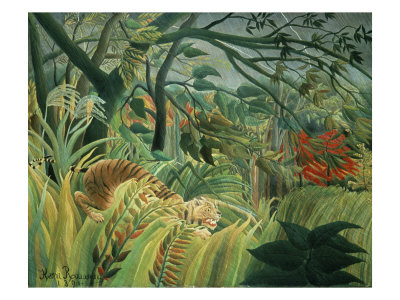
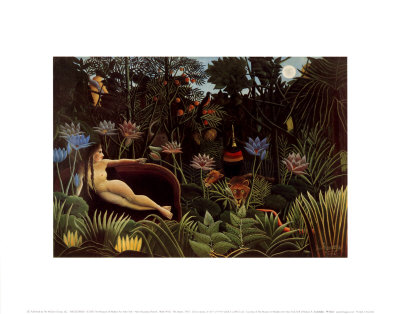
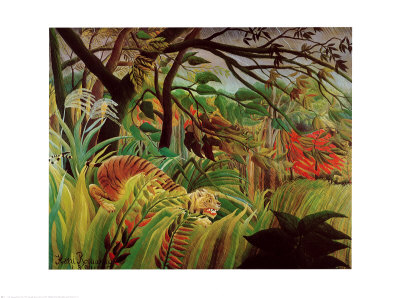
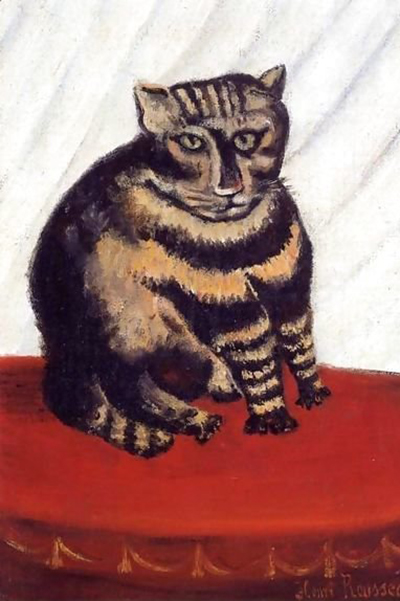
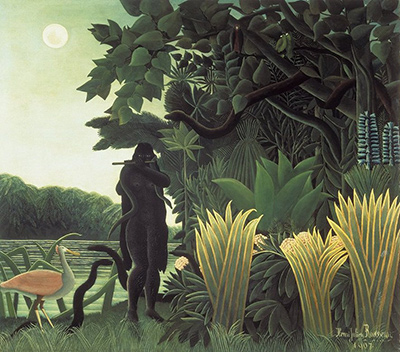
Embracing the spirit of Henri Rousseau, the "Sleepwalking" painter, requires a departure from rigorous realism toward a world where imagination reigns supreme. To depict summer fireworks in his distinctive naive and abstract style, one must prioritize emotional resonance over physical accuracy, allowing vibrant colors to dance across the surface like a nocturnal dream. This guide offers practical steps to channel that specific, childlike wonder into a composition that feels both chaotic and harmoniously strange.
Capturing the Essence of Night
The foundation of a Rousseau-esque firework display lies in establishing a deep, immersive night atmosphere that contrasts sharply with the brilliance of the explosions. Instead of trying to mimic the physics of light refracting through smoke, focus on the immediate visual impact of the colors against the darkness. The background should be a heavy, velvety expanse of deep indigo or almost black, perhaps with a few scattered, static stars that look more like smudged ink spots than celestial bodies. This darkness acts as a canvas upon which the artificial light of the fireworks burns with an intensity that feels almost dangerous and surreal. Avoid drawing the ground or a detailed horizon; Rousseau often placed his scenes in a void, allowing the viewer's eye to remain fixed on the luminous events occurring above.
The Color Palette of Fantasy
To achieve the naive quality associated with the artist, select a palette that prioritizes bold, unmixed hues over subtle gradients. Think of the vivid greens, electric purples, and burnt oranges that Rousseau utilized to create a sense of magic. Do not blend these colors softly into one another; instead, place them side-by-side with sharp, defined edges that might even touch, creating a jarring yet beautiful visual texture. The fireworks should appear to be made of pure pigment rather than real light. When rendering a green burst, do not add hints of yellow or blue; keep the green intense and flat, letting the white of the smoke trail be the only element of contrast. This approach strips away the complexity of reality, revealing the raw, joyful energy of a child watching the sky light up during a celebration.
Abstracting the Motion of Smoke
The true challenge in depicting fireworks naively is capturing the fluid motion of smoke without falling into the trap of realistic aerodynamics. In a Rousseau-inspired piece, smoke is not a natural phenomenon but an abstract extension of color. It should be suggested through broad, sweeping strokes that seem to drift upward or outward without a clear direction. You can use thick, textured brushwork to create a sense of weight and substance in the smoke, making it look as if it is physically occupying the space in the painting. These trails should not fade gradually; they should maintain their saturation until they merge with the dark background or explode into new bursts. The smoke becomes a secondary character in the scene, an ethereal cloud of color that dances independently of the firework that created it.
Composing the Scene
Arrange the elements of your composition to create a dynamic focal point that draws the viewer into the dream. Place the largest or most colorful firework near the center or slightly off-center to disrupt the vertical stability of the night sky. Surround this central explosion with smaller, scattered sparks and fading trails that lead the eye around the canvas, creating a sense of depth without using traditional perspective. Remember that in this style, the composition is about the feeling of the moment, not the spatial logic of the scene. You might include a silhouette of a tree, a bird, or a face in the foreground, but these elements should be simple shapes that do not compete with the brilliance of the fireworks. They serve only to frame the event and provide a tiny anchor of reality against the overwhelming fantasy.
Final Touches for Atmosphere
Once the main elements are in place, revisit the painting to enhance the magical atmosphere. Add small, irregular white specks across the dark sky to suggest distant stars or perhaps the residual glow of other explosions. These dots should vary in size and opacity, adding a layer of texture and mystery to the image. Do not be afraid to let some colors bleed slightly into the neighboring areas, mimicking the way light spreads in a dream. The goal is to create a surface that feels tactile and alive, inviting the viewer to step inside the painting and share in the wonder of the summer night. By following these principles, you can create a work that honors the naive spirit of Henri Rousseau while capturing the ephemeral beauty of fireworks in a uniquely abstract manner.
To ensure the composition feels complete, consider applying the following finishing strategies:
- Apply a matte varnish to mute the sheen and emphasize the flatness of the paint application.
- Add a single, large, unblended dot of white in the lower left corner to anchor the perspective without breaking the dream logic.
- Use a dry brush technique to create rough, jagged edges where the smoke meets the dark void.
- Include a subtle, wavy line near the bottom horizon that suggests a distant, ignored landscape rather than a realistic one.
- Leave a small area of raw canvas visible in a corner to suggest the texture of the support itself.
- Sketch a simple, elongated moon in the upper right that appears to be watching silently from a distance.
- Allow the white of the canvas to show through the edges of the paint pools, creating a sense of lightness and transparency.