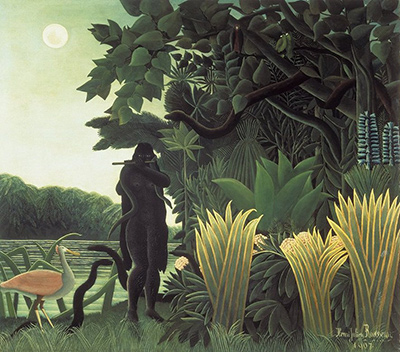
Capturing the silent, crystalline beauty of winter requires a shift in perspective, moving away from realistic observation toward a state of pure, unfiltered wonder that mirrors the naive style of Henri Rousseau. When the world is wrapped in ice, the eye seeks not just the form, but the vibrant, almost impossible colors of the spirit. This guide invites you to translate the cold, sharp geometry of frost and snow into a brushstroke that feels alive, strange, and delightfully imaginative, honoring the unique vision of the French master who saw the impossible as if it were the most natural thing in the world.
Finding the Light in the Chill
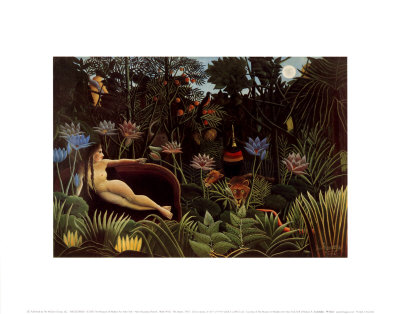
To begin, one must understand that naive art thrives on the interplay of light and the distinct separation of planes. In winter scenes, the light is often harsh and directional, casting deep shadows that contrast beautifully with the brilliant white of snow and ice. Instead of trying to blend these shadows softly as a realist might, embrace the starkness. Use a palette of cool blues, electric cyans, and stark whites, but never shy away from adding pops of warm color—a single red gourd, a yellow sun, or a green pine branch—to create a visual tension that mimics the dreamlike quality of Rousseau's nocturnal or frozen landscapes. The key is to treat the ice not as a transparent medium, but as a solid, glowing entity that refracts the light in magical, exaggerated ways.
Mastering the Brushwork of Frost
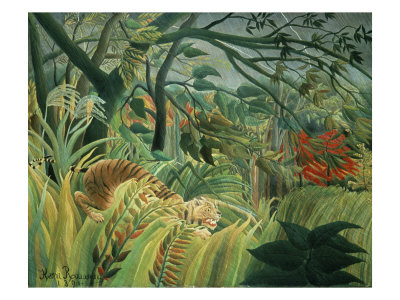
The texture of the painting is just as crucial as the color in this genre. Frost and ice formations should feel tactile, almost sculptural, rather than smooth and glassy. Think of the way Rousseau painted his exotic jungles; he would use thick impasto, allowing the paint to sit on the canvas and catch the light. For winter, use short, jagged strokes to suggest the crystalline structure of ice. Do not overwork the areas where the snow accumulates. Leave some texture bare or use a dry brush to create a dusty, powdery effect, then build up the icicles and frozen branches with heavy, textured layers. This technique creates a sense of depth and volume, making the ice appear to jingle and tremble even on a flat surface.
The Art of the Dreamy Perspective
Perhaps the most defining characteristic of the naive style is its departure from strict linear perspective. In a winter landscape, the ground may slope away at a 45-degree angle, or the trees may stand upright regardless of the wind. You are free to arrange the elements however your imagination dictates. Place the largest tree in the foreground and the smallest in the background, or stretch the branches into the sky with wild, sweeping energy. This distortion creates a feeling of childhood wonder and magical realism, inviting the viewer to enter a world where the laws of physics are suspended in favor of emotional truth. The ice should not just cover the world; it should transform the geometry of the scene itself.
A Palette of Cold and Contrast
Your color choices will define the mood of your winter study. While you will naturally gravitate toward whites and blues, remember that true vibrancy comes from contrast. Consider the use of ochre for the sun reflecting off the ice, or a deep, almost black charcoal for the shadows beneath the frozen ground. These dark areas provide a necessary anchor for the bright highlights. You can also introduce unexpected colors that do not belong in a winter scene, such as a purple sky or a fiery orange sunset, to enhance the surreal atmosphere. The goal is to create a visual experience that feels cold to the touch but warm to the spirit, much like the paradoxical nature of Rousseau's work.
Recording the Moment with Confidence
Finally, approach the canvas with the same confidence and lack of self-consciousness that a naive artist possesses. Do not worry about accuracy; worry about feeling. Watch the frost form on a windowpane or the way ice clings to a branch in the snow, and try to capture that specific feeling immediately. If an element looks wrong, correct it not by making it more realistic, but by making it more expressive. The most successful winter paintings in this style are those that feel spontaneous, as if the artist is rushing to record a fleeting moment of magical wonder before the sun melts it away. Embrace the chaos and the beauty of the frozen landscape, and let your brush become a conduit for the silent, crystalline magic of the winter season.
To ensure your winter composition feels truly alive, consider incorporating these specific naive techniques into your process:
- Use bold, flat areas of color rather than subtle gradients.
- Paint the sky with a gradient that defies natural atmospheric perspective.
- Add unexpected, oversized elements like birds or flowers that seem to float.
- Keep the composition unbalanced, leaving one side slightly chaotic.
- Focus on the emotional impact of the light rather than its physical accuracy.
- Allow the paint to dry before blending to maintain crisp edges.
- Use a palette of high contrast between the darkest shadows and brightest highlights.