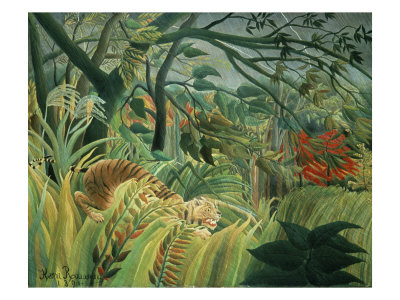
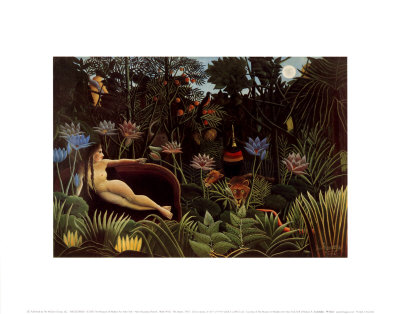
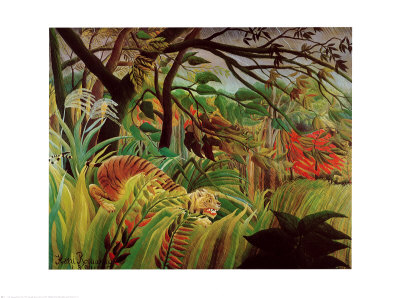
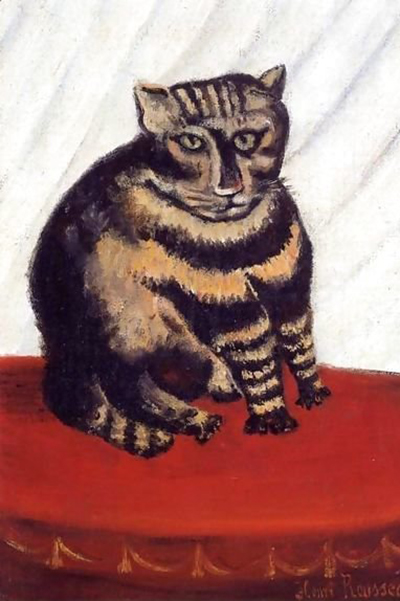
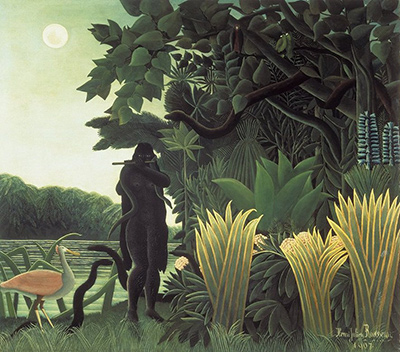
Henri Rousseau, the enigmatic French artist who became synonymous with the avant-garde movement of the late nineteenth century, lived a life far removed from the academic rigor expected of his peers. Despite his reputation as a "naive" artist, his path to recognition was marked by a unique blend of accidental genius, institutional rivalry, and a profound, solitary connection with nature. Tracing his life reveals not just a biography, but a compelling narrative of a man who found his true voice in the quiet woods of France while navigating the complex social hierarchies of Parisian salons.
Early Years and the School of Fine Arts
Born in Paris in 1844 to a family of wealthy but somewhat eccentric means, Rousseau's childhood was defined by a deep fascination with the natural world that would later color his entire oeuvre. While his father was a tax inspector who believed in order and structure, young Henri was always drawn to the chaotic beauty of the forest and the vibrant life of the street. This dichotomy between his family's bureaucratic world and his inner landscape set the stage for his future artistic rebellion. He attended the prestigious École des Beaux-Arts, where his unconventional style and lack of formal training initially caused concern among his instructors, who struggled to classify his work within traditional academic frameworks.
Despite these early hurdles, Rousseau developed a distinct vision that prioritized emotional expression and imaginative freedom over technical perfection. His sketches during these formative years show a growing mastery of composition and an intuitive understanding of light and shadow that would soon astonish the art world.
The Turning Point in Saint-Cloud
In 1865, Rousseau moved to Saint-Cloud, a town in the Île-de-France region, marking a pivotal shift in his life and career. It was here that he found the perfect sanctuary to pursue his passion for painting, away from the prying eyes of his father and the rigid expectations of his family. He spent his days sketching the surrounding forests and his evenings painting in his small attic studio, developing a technique that relied heavily on the use of prisms to capture the play of light and the mysterious atmosphere of the woods. This period allowed him to cultivate the dreamlike quality that would become his signature style, blending realistic details with fantastical elements.
His work began to gain notice during this time, though it was often met with confusion rather than immediate acclaim. Critics and fellow artists found his lack of perspective and his seemingly naive brushwork difficult to understand, yet the raw power of his imagery resonated deeply with those who could see beyond the surface.
A Life of Controversy and Legal Battles
As Rousseau's fame grew, so did the controversies surrounding his work and his personal conduct. His paintings often featured exotic animals, strange creatures, and scenes from the American Civil War, which were deemed inappropriate for a French artist of his standing. These themes, combined with his reputation as a man of questionable morals and a history of legal troubles, fueled public speculation and skepticism. In 1895, he was arrested for the attempted murder of a woman he believed to be his lover, an event that shook his reputation and forced him to confront the harsh realities of the legal system in France.
The Courtroom Sketches
Following his arrest, Rousseau found himself on trial, a dramatic event that would provide him with a new artistic inspiration. During his detention, he began to sketch scenes from the courtroom, capturing the tension and drama of the proceedings with the same vivid imagination he had used to paint his forests. These works, such as The Trial of Henri Rousseau, offer a fascinating glimpse into his mind during a time of great turmoil. They demonstrate his ability to transform personal tragedy into a powerful artistic statement, using the confines of a courtroom as a canvas for his internal struggles.
- The courtroom sketches serve as a unique bridge between his personal life and his artistic output, revealing the depth of his emotional response to the events of his life.
- These works challenge the notion that his "naive" style was merely a lack of skill, showing instead a sophisticated understanding of narrative and human drama.
- The juxtaposition of his legal troubles with his serene forest paintings highlights the duality of his character, oscillating between the chaotic real world and his idyllic inner world.
Legacy and Artistic Recognition
In the final years of his life, Rousseau continued to paint with renewed vigor, producing some of his most celebrated works just weeks before his death in 1910. Although he never fully reconciled with the art establishment, his influence on the modern art movement was undeniable. The post-impressionist movement and the Fauves, led by artists like Matisse and Derain, recognized his importance and began to champion his work, correcting the decades of misinformation regarding his style and intent. Today, he is celebrated not as a fool or a criminal, but as a visionary whose unique perspective forever changed the course of art history. His life story remains a testament to the power of individual expression and the enduring nature of creativity in the face of societal judgment.
Related reading
- The Digital Brush: Reimagining the Dream World of Rousseau
- The Child in the Jungle: Cultivating the Spirit of Naïve Art
- Finding Your Own Wild Garden: A Guide to Choosing Subjects in Naïve Art
- The Artist's Canvas: Unveiling the Essentials of Naïve Creation
- Unlocking the Surreal Garden: A Guide to Finding Historical Naïve Art for Inspiration