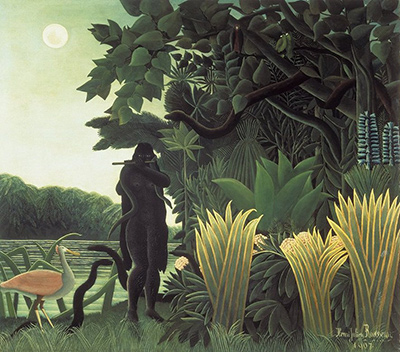
Henri Rousseau, the enigmatic painter whose jungle scenes defined a generation, lived a life that stood in stark contrast to the bustling intellectual fervor of Parisian salons. While the art world celebrated his dreamlike visions, the rigid social machinery of the time largely kept him on the periphery, yet his journey offers a profound lesson on the nature of artistic recognition. This exploration examines the invisible barriers he faced and the unique path he took to bypass them.
The Architecture of Exclusion
To truly understand Rousseau's relationship with the artistic elite, one must first grasp what a salon represented in 1880s Paris. These were not merely rooms for conversation; they were the exclusive gatekeepers of cultural legitimacy, dominated by Impressionists and Modernists who prized spontaneity over the classical rigor Rousseau often mimicked. For the average artist, success required social connections and adherence to prevailing tastes, whereas Rousseau, working with instinctual brushstrokes and little formal training, stood at the opposite end of the spectrum. The salons were places of theoretical debate where the conversation revolved around history and technique, while Rousseau's presence was defined by his direct observation of nature. This inherent barrier created a chasm between his intuitive approach and the polished discourse of the high society he could never fully enter.
The Illusion of Participation
There is a persistent myth that Rousseau was a regular visitor to literary salons, mingling with writers and critics over wine and debate. In reality, his interactions with salon culture were likely limited to the periphery or were entirely theoretical. Some accounts suggest he may have been seen briefly in public spaces where art was displayed, but true participation would have required a level of confidence and familiarity with etiquette codes that he never mastered. The idea of him debating the merits of a painting in a high-society setting is largely a romantic construct. Instead, he found his own kind of salon in his mind and his studio. The "salon" of his imagination was where he constructed his worlds, free from the judgment of a committee or the gaze of a critic. This internal space became more vital to him than any physical room in Paris, allowing him to bypass the very institutions he could not enter.
Navigating the Academic Gatekeepers
The academic institutions, particularly the École des Beaux-Arts, functioned as the formal equivalent of the salon gatekeepers. To gain acceptance there, an artist needed to follow strict rules regarding composition, color theory, and historical accuracy. Rousseau did not fit these criteria, yet he was occasionally accepted into certain classes, leading to a complex relationship with the establishment. He was tolerated because his work, while flawed by academic standards, possessed a unique charm that prevented total dismissal. However, this tolerance was fragile. The academic world viewed his work as a curiosity, almost a freak of nature, rather than a serious contribution to the canon. This sentiment mirrors the attitude of the salons towards the outsider artist. The gatekeepers saw him as a novelty, an amusement rather than a peer. This distinction is crucial; being present in a room does not mean being accepted by its culture. Rousseau understood this dynamic intuitively, which may explain his reluctance to fully engage in the social theater of Parisian high society.
The Unspoken Rules of the Parisian Scene
Navigating the unspoken social rules of Paris was a challenge for any artist, but especially for one like Rousseau who lacked the polish expected of the elite. There were specific behaviors that defined a true insider, such as the ability to speak fluently on art history, the etiquette of serving drinks, and the familiarity with the latest trends in fashion and literature. These rules formed an invisible wall that separated the insiders from the outsiders. Rousseau likely struggled with these nuances, which may have contributed to his isolation. Yet, it is important to recognize that his lack of participation in these specific social rituals did not stop his work from being celebrated. The market and the public had their own mechanisms for appreciation that existed outside the strict confines of the salon etiquette. His success came from a different kind of recognition, one that valued the authenticity of his vision over the sophistication of his social standing.
The Legacy of the Uninvited
Ultimately, the story of Henri Rousseau and the Paris salons is a story of separation and eventual transcendence. He never broke into the inner circles of the literary and artistic elite, nor did he ever feel the need to. His work stood apart from the conversations of the day, speaking a different language that would only be fully understood by the future. The lessons we can draw from his journey regarding the salons are not about how to get invited, but about how to create a world that does not require an invitation. In a way, Rousseau taught us that the most profound art often comes from those who remain outside the rooms of power, observing and creating from a place of innocence and direct experience. His life reminds us that true mastery can exist independently of the social structures that seek to define it, proving that the inner world of the artist is the most significant salon of all.
To summarize the key takeaways from this analysis of Rousseau's life and the salon system:
- The salons of 1880s Paris were exclusive gatekeepers that prioritized social connection over artistic merit.
- Rousseau's lack of formal training created a fundamental disconnect with the academic and salon expectations of his time.
- While he was never a true insider, his work possessed a unique charm that allowed him to be tolerated by critics.
- The myth of his deep involvement in salon culture is largely a romantic construct rather than historical fact.
- His success demonstrates that true artistic mastery can thrive independently of social structures and elite approval.
Related reading
- The Digital Brush: Reimagining the Dream World of Rousseau
- The Child in the Jungle: Cultivating the Spirit of Naïve Art
- Finding Your Own Wild Garden: A Guide to Choosing Subjects in Naïve Art
- The Artist's Canvas: Unveiling the Essentials of Naïve Creation
- Unlocking the Surreal Garden: A Guide to Finding Historical Naïve Art for Inspiration