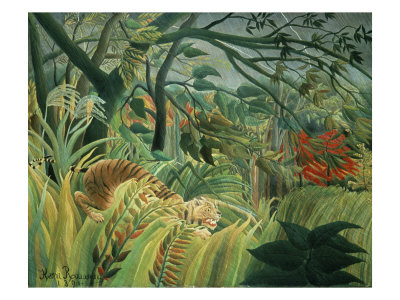
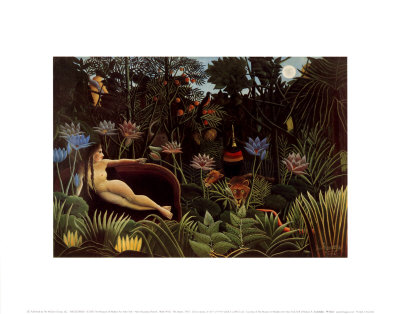
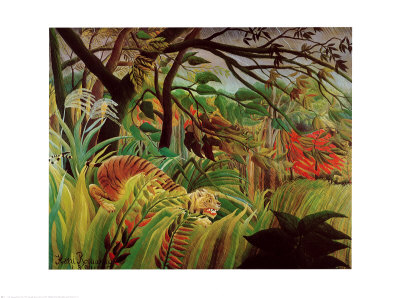
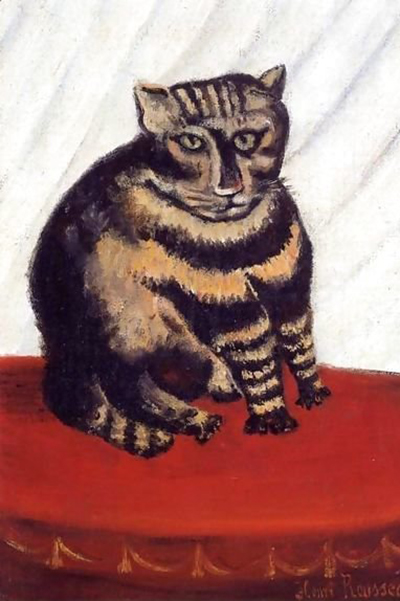
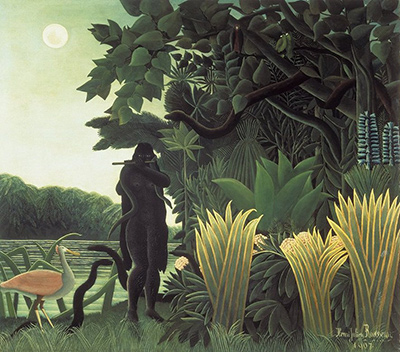
Primitivism is not merely a historical label attached to non-Western art or the works of children; it is a profound philosophical movement that seeks to rediscover the purity of human expression by stripping away the complexities of modern industrial life and academic convention. In the late 19th and early 20th centuries, artists like Henri Rousseau championed the idea that true creativity resides in the uncorrupted imagination, found in the jungles of Brazil, the savannahs of Africa, or the innocent minds of young people. This shift marked a radical departure from the realistic depiction of the world as it was seen, replacing it with a vision of how the world could be felt and dreamed.
Reclaiming the Innocent Eye
The core of primitivism lies in the rejection of the "school of design" that dominated the Parisian art world. Artists felt constrained by rigid rules of perspective, anatomy, and lighting that they believed had sterilized the creative process. Instead, they looked toward cultures they perceived as untouched by the decay of civilization, such as the Polynesian or Aboriginal traditions. The goal was to tap into a collective unconscious that was raw, vibrant, and unfiltered by the logic of society. This approach allowed creators to break free from the physical constraints of reality and enter a realm where the mind dictated the form.
To achieve this raw aesthetic, artists developed a unique visual vocabulary that prioritized emotion over accuracy. Thick, energetic brushstrokes became the primary vehicle for movement, while colors were often flattened and juxtaposed to create a sense of simultaneous vision rather than deep perspective. Shapes were simplified into geometric forms, and figures were elongated or distorted to fit the narrative of the dream rather than the laws of physics. This stylistic freedom was not a lack of skill but a deliberate choice to convey the inner world more directly than a realistic representation could.
The Psychology of the Dream State
A crucial component of this movement was the exploration of dreams and hallucinations. Many proponents believed that the dream state offered a higher form of truth than waking reality because it was governed by the laws of association rather than logic. In this state, the boundaries between the self and the environment dissolve, allowing for a fluid manipulation of space and form. Artists began to paint scenes that defied gravity, with floating islands, upside-down figures, and impossible perspectives, mirroring the chaotic yet beautiful logic of sleep. This focus on the subconscious became a defining characteristic, separating the movement from mere decoration or folk art.
The Role of the Outsider
Primitivism also extended to the concept of the "outsider artist," those who created work outside the established art markets and institutions. This included peasants, prisoners, and those with mental illnesses who produced art without formal training. Their work was valued precisely because it lacked the influence of the art academy. By studying these creators, mainstream artists found a new source of inspiration that validated their own desire to break away from tradition. It created a dialogue between the "civilized" artist and the "primitive" creator, suggesting that the spark of genius exists everywhere, regardless of education or social status.
Practitioners often sought specific sources of inspiration to guide their work, identifying key figures and concepts that defined the era:
- The isolated figure walking through an unfamiliar landscape.
- The vibrant, unnatural colors found in tropical flora.
- The sense of mystery and the unknown in distant lands.
- The innocent, childlike perspective of the world.
- The raw, unedited thoughts of the subconscious mind.
Practical Application for Modern Artists
For contemporary creators seeking to engage with these principles, the most practical step is to abandon the habit of copying what is seen and instead focus on expressing what is felt. One should observe the world not as a collection of facts but as a stream of consciousness, allowing the hand to move before the mind can organize the scene. Embrace the use of bold, non-naturalistic colors and simplified forms to communicate the essence of the subject rather than its superficial details. By adopting a mindset that values the raw impulse over technical perfection, one can create work that resonates with the universal human experience of wonder and mystery. This approach invites the viewer into a shared space of imagination where the rules of the mundane are suspended.
Related reading
- The Digital Brush: Reimagining the Dream World of Rousseau
- The Child in the Jungle: Cultivating the Spirit of Naïve Art
- Finding Your Own Wild Garden: A Guide to Choosing Subjects in Naïve Art
- The Artist's Canvas: Unveiling the Essentials of Naïve Creation
- Unlocking the Surreal Garden: A Guide to Finding Historical Naïve Art for Inspiration