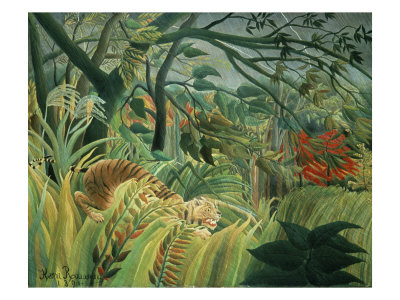
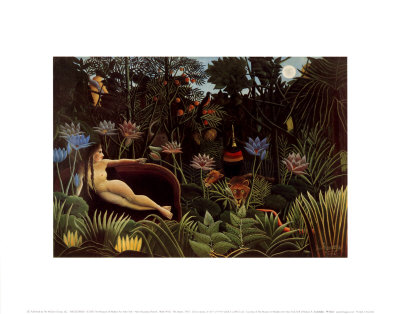
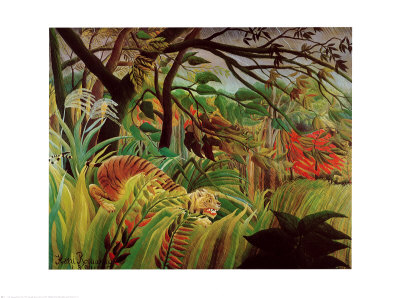
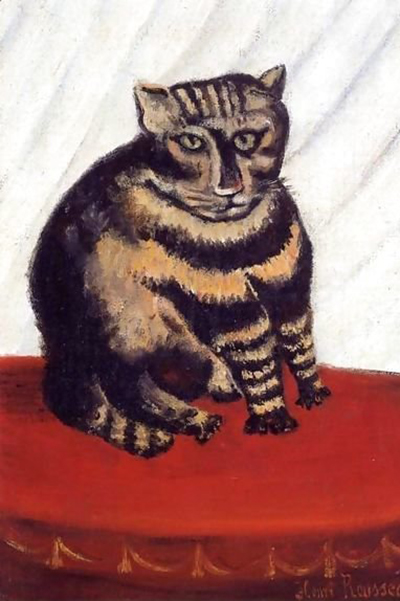
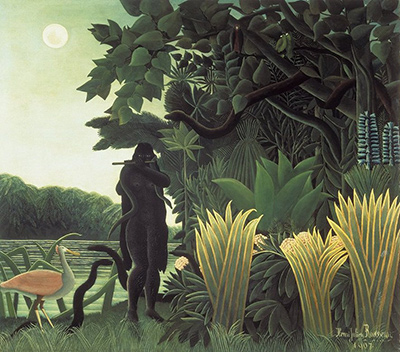
Many aspiring artists who admire the distinct, dreamlike quality of Henri Rousseau often find themselves struggling to replicate his unique vision when they attempt to draw from life. The challenge lies in balancing the use of reference photographs to ground one's observation with the need to maintain the raw, unpolished, and imaginative spirit that defines naive art. This tension between reality and interpretation is where the true magic happens, transforming a standard sketch into a surreal masterpiece that feels both grounded and otherworldly.
The Dual Nature of Reference in Naive Art
To understand how to incorporate reference images without losing your style, one must first appreciate that naive art is not merely a lack of skill, but a deliberate choice to bypass conventional realism. Artists like Rousseau did not simply copy what they saw; they reinterpreted the world through a lens of intense emotion and personal symbolism. When you use a photograph as a reference, you are not committing to the literal accuracy of the frame. Instead, you are using the image as a starting point for a mental landscape where the artist's own psyche dictates the final outcome. The photograph provides the texture, the light, and the subject matter, but your brush or pencil must impose the filter of the naive aesthetic.
Selecting and Preparing Your Visual Sources
Before you even pick up your medium, the selection of your reference material is critical. Naive art thrives on specific qualities that traditional photography often smoothes over or misses entirely. You should seek out images that possess high contrast, unusual angles, or subjects that defy logical arrangement, as these elements naturally lean toward the surreal. It is not enough to have a clear picture of a forest or a city street; the reference must invite distortion. Look for textures that are rough, patterns that repeat oddly, or lighting that seems to emanate from within the objects themselves rather than from an external source. If the reference feels too "photorealistic," you must mentally apply a layer of abstraction before you begin your drawing.
The Process of Mental Translation
Once you have selected your images, the next step is a rigorous process of mental translation that separates the naive artist from the realistic draftsman. This involves actively ignoring the rules of perspective and proportion that the photograph suggests. When looking at a reference photo of a tree, do not try to match the height-to-width ratio exactly. Instead, ask yourself how the tree feels in your mind; is it ancient and gnarled, or is it a strange, twisting pillar of nature? You must allow the image to suggest a form while your imagination fills in the gaps with your own symbolic interpretations. This is where the line between the photo and the painting dissolves. The photograph becomes a scaffold, but the actual building is constructed from your own emotional responses and visual memories, ensuring that the final piece retains the distinct, childlike, or folkloric quality essential to the naive style.
Techniques for Distorting and Enhancing
To truly maintain your style while working from a photo, you must employ specific techniques that alter the visual information provided by the image. One effective method is exaggeration of values; take the mid-tones of your reference and push them toward deep blacks or bright whites to create a high-contrast, graphic quality often found in naive works. Another technique is the flattening of space. In a photograph, depth is created through perspective and layering, but in naive art, planes of color often sit side-by-side without receding into the background. By consciously deciding where the foreground and background begin and end, you can create a composition that feels more like a collage of memories than a window into a specific moment in time. Additionally, you might ignore the horizon line entirely, tilting the composition to give the viewer a sense of unease or wonder, much like the tilted perspectives found in many of Rousseau's landscapes.
Maintaining the Soul of the Naive Style
Ultimately, the goal is to ensure that the photograph serves the artist, not the other way around. If you find yourself tracing the lines of your reference too closely, you are likely losing the soul of the work. The naive style is characterized by a directness and an honesty that comes from expressing what is felt rather than what is seen. Keep your references as loose guides for composition and lighting, but let your hand move freely, responding to the paper as you would to a blank canvas. The presence of the reference should be invisible to the viewer; they should see a world that feels familiar yet strangely new, a place where the logic of the mundane has been replaced by the logic of the dream. By respecting the raw potential of your reference images while aggressively applying your own stylistic filters, you can create works that honor the legacy of artists like Rousseau without ever becoming mere copies.
To solidify these concepts, consider integrating a structured approach to your workflow:
- Gather a diverse collection of images that evoke strong emotional responses.
- Select one image and step away from it to let your subconscious process the subject matter.
- Return to the image only to note general shapes, colors, and lighting conditions.
- Begin drawing without measuring lines or calculating angles.
- Continuously ask yourself if the image feels "dreamlike" rather than "documentary."