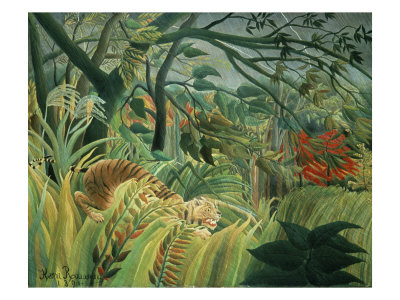
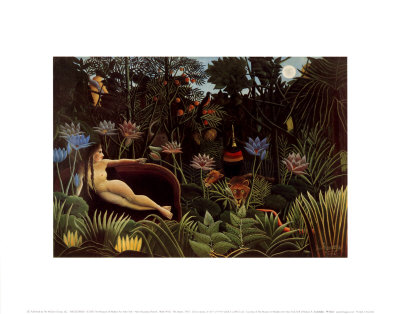
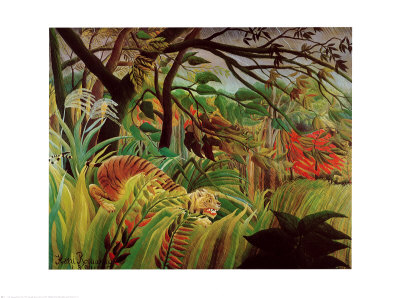
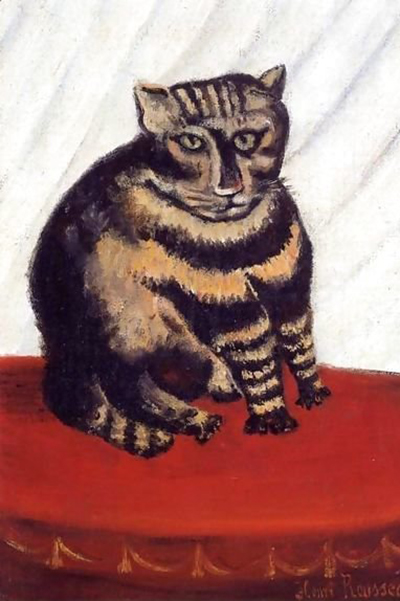
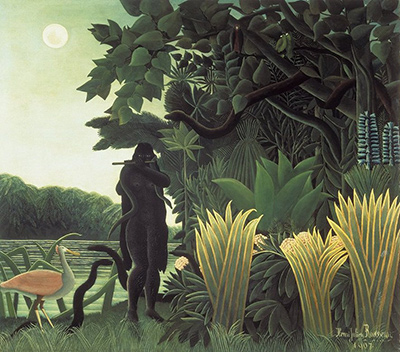
The human eye is perhaps the most complex yet universally recognizable feature in the natural world, yet it remains a frequent stumbling block for artists venturing into the realm of naïve art. When beginners approach the work of masters like Henri Rousseau, they often find themselves frustrated by the departure from anatomical perfection, wondering if there is a secret formula or a rigid technique required to render a "naïve" eye that still feels alive and engaging.
Beyond Anatomical Accuracy
To understand how to paint a naïve eye, one must first discard the burden of scientific precision. In traditional academic painting, the eye is dissected with surgical accuracy, following the rules of perspective, muscle placement, and the subtle gradations of light and shadow. However, the spirit of naïve art, particularly as exemplified by Rousseau, suggests that true emotional resonance often comes from abstraction rather than realism. A naïve eye does not need to be an anatomically correct replica of a human organ; instead, it needs to convey a specific mood, a sense of wonder, or an inner depth that might be impossible to achieve with hyper-realism. The goal is to simplify the structure until only the essential shapes remain, allowing the viewer to project their own emotions onto the gaze.
Simplifying the Complex Shapes
The first practical step in capturing a naïve gaze is to strip away the unnecessary details found in the human eye. A realistic eye contains the sclera (white part), the iris, the pupil, the eyelid crease, the brow ridge, the reflection of light, and often the moisture of tears. In a naïve approach, these elements are often merged or exaggerated. The iris might become a solid block of color, the pupil a distinct, sometimes oversized circle, and the white of the eye might be left blank or given a soft, uniform wash of color. This reductionism forces the artist to focus on the overall shape and the relationship between the dark and light areas rather than getting lost in the micro-details of the iris texture.
Mastering the Triangle and the Oval
Once you have decided to simplify, the next challenge is selecting the correct geometric forms to construct the shape. Many naïve artists rely on a combination of triangles and ovals to define the eye's structure. The white part of the eye is often depicted as a large, slightly irregular oval, while the surrounding skin or eyelids might be represented by triangular shapes that suggest the curve of the brow or the fold of the lid. This geometric approach creates a sense of stability and clarity. By drawing these basic shapes lightly first, you establish the framework upon which you can build your colors. Remember that in naïve art, the lines defining these shapes do not need to be perfect; slight waviness can add a charming, hand-drawn quality that feels more authentic than a rigidly straight ruler line.
The Power of Color and Contrast
Color is the second most critical element in creating a convincing naïve eye. Unlike realism, where color is often muted and naturalistic, naïve art tends to use bold, vibrant, and sometimes unnatural hues. The white of the eye might be painted a soft blue, a pale pink, or even a stark, bright white that catches the eye immediately. The iris might be a deep, saturated blue, a fiery orange, or a stark black, depending on the emotional tone you wish to convey. The contrast between the light color of the eye and the darker surrounding shadows is what gives the eye its "pop" and makes it seem like it is looking directly out at the viewer. Do not be afraid to use pure, unmodulated colors. The flatness of the color application can sometimes enhance the dreamlike quality associated with the style, making the eye feel less like a biological organ and more like a spiritual window.
Capturing the Gaze Without Perspective
Perhaps the most difficult technical aspect for beginners is rendering the perspective of the eye without falling into the trap of trying to show the entire eyeball in 3D space. A true naïve eye often lacks the complex foreshortening seen in realistic portraits. The artist might choose to show only the front view, completely ignoring the curvature of the eye socket, or they might show the side profile in a highly stylized manner that distorts the anatomy for artistic effect. In Rousseau's work, you will often see eyes that are larger than life, positioned in places that defy gravity or anatomical logic, simply because the artist wants to emphasize the intensity of the expression. If you are struggling with the angle, consider painting the eye as if it is on a flat plane, focusing entirely on the relationship between the pupil and the surrounding color areas. This lack of strict perspective can liberate you from the constraints of realism and allow your interpretation of the "soul of the eye" to shine through.
Practical Exercises for Beginners
To truly develop your ability to paint naïve eyes, consider incorporating these specific exercises into your practice routine:
- The Circle Drill: Take a blank sheet of paper and try to draw an eye using only a circle for the iris and a circle for the pupil. Do not add any whites, lids, or shadows. Once you have this basic core, try adding a single color wash around the circle to see how the simplicity affects the perception of the eye.
- The Color Swap: Find a photograph of a realistic eye with a brown iris. Take away the brown color and replace it with a bright, unnatural color like electric blue or neon green. Paint this new version as a naïve eye, focusing on bold strokes and simplified shapes. Compare the emotional impact of the realistic version with your new naïve interpretation.
- The Silhouette Study: Close your eyes and imagine the shape of a human eye. Open them and try to draw that memory without looking at a reference image, focusing only on the general triangular or oval forms you recall. Then, refine your drawing by adding color and texture, ensuring the simplicity remains intact.
By embracing these techniques, you will find that painting a naïve eye is not about failing at realism, but about succeeding in capturing the essence of the gaze. The freedom from strict rules allows you to express emotion and character in ways that a photorealistic rendering cannot achieve, leading to works that are striking, memorable, and deeply moving.