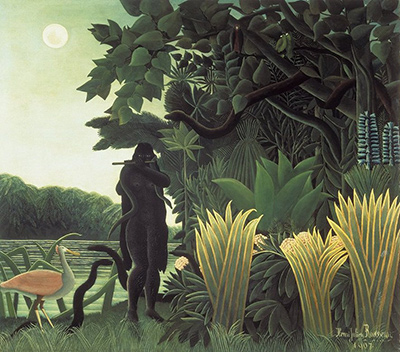
Many aspiring practitioners of the Naïve style begin with a single, burning question regarding the very nature of their medium: should they rely on a reference photo to capture the essence of a scene, or should they attempt to paint from pure memory? The answer is not a simple binary of yes or no, but rather a nuanced exploration of how one balances observation with the distinct, childlike honesty that defines this genre. Using a reference image can serve as a vital anchor, preventing the artist from drifting into the trap of vague recollection, yet the ultimate goal remains the transformation of that observed reality into something new and emotionally resonant.
The Double-Edged Sword of Observation
The primary argument for utilizing a photograph lies in the preservation of specific visual details that the human eye and mind often struggle to retain accurately. Memory is a selective process; it tends to blur the background, exaggerate certain colors, or smooth out complex textures into generic patches. By holding a reference photo, you gain access to the precise positioning of a tree branch, the exact hue of a sunset, or the chaotic arrangement of objects on a table that might otherwise be lost. For the beginner, this visual aid acts as a safety net, ensuring that the composition remains stable and recognizable while allowing you to focus on applying the loose, confident brushwork characteristic of the style.
However, the danger of relying too heavily on a photo is the creation of a painting that looks merely like a photograph rendered in paint. A true Naïve painting requires a distortion of reality, a simplification of form that mimics how a child or a dreamer perceives the world. If your hand simply copies the pixels from your screen, the result lacks the necessary spirit and movement. The reference photo should be treated as a sketch, a map to be navigated, rather than a blueprint to be followed exactly. You must actively filter out the photographic realism and inject your own interpretation, perhaps by flattening the background or grouping disparate elements together to create a unified, dreamlike atmosphere.
Selecting the Right Visual Aid
Not all photographs are created equal when it comes to aiding a Naïve painting. Some images offer too much structural complexity, which can overwhelm the artist and lead to over-complication in the final work. Conversely, highly stylized or abstract images might confuse the beginner about where the actual forms of the subject lie. The ideal reference photo is one that captures a candid, unposed moment, perhaps a snapshot of a street scene, a garden, or an interior room, where the lighting is natural and the perspective is slightly tilted, as if taken with a quick glance. Look for images where the lines are already somewhat loose and where the subjects are interacting in a way that feels spontaneous rather than staged. These types of photos naturally lend themselves to the fluid, organic lines that are so central to the Naïve aesthetic.
The Art of Mental Translation
Once you have chosen an appropriate reference, the process moves from looking to translating. This is the crucial phase where the painting truly begins. You must step back from the photo and close your eyes, mentally sorting the visual information into layers of foreground, middle ground, and background. Start by blocking in the largest shapes and the dominant colors, ignoring the fine details for now. The goal is to capture the feeling of the moment rather than the literal accuracy of the scene. As you work, occasionally glance back at the photo to check your proportions, but do so infrequently to keep your creative flow uninterrupted. Let the image in your mind's eye guide your brush, allowing it to wander and improvise, much like a child drawing a picture of a monster or a castle.
Breaking the Photographic Realism
The essence of the Naïve style is found in its rejection of photographic fidelity. When working with a reference photo, you must consciously decide which details to keep, which to exaggerate, and which to discard entirely. You might choose to merge two different trees into a single, sprawling form, or you might flatten the perspective so that the floor appears to meet the sky directly. Do not be afraid to use bright, unnatural colors that do not exist in the original photo but feel right to your mood. A Naïve painting is not about recording what you saw; it is about expressing what you felt when you saw it. The reference photo is merely the seed from which your unique expression grows.
Practical Exercises for Beginners
To master the balance between using a reference and creating an original interpretation, consider these practical exercises:
- Try painting the same scene from a reference photo twice, but make one version extremely faithful to the photo and the second version highly abstracted, then compare the emotional impact of both.
- Practice "blind contour" drawing where you look at a photo only occasionally, forcing your hand to move independently of your eyesight.
- Select a reference photo and try to paint it using only the top three colors of the spectrum, removing all nuances of the original image.
Ultimately, the use of a reference photo is a tool, not a crutch. It provides the necessary structure for a beginner to build upon, allowing them to experiment with the loose techniques and bold colors that define the Naïve style. By treating the photograph as a springboard rather than a destination, you open the door to creating paintings that are both recognizable and distinctly personal.