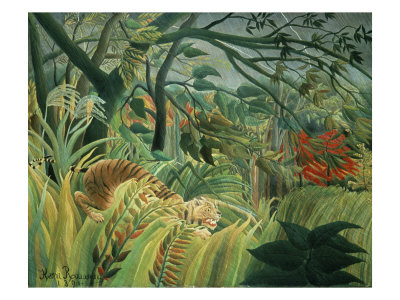
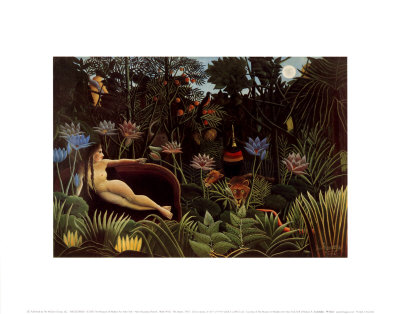
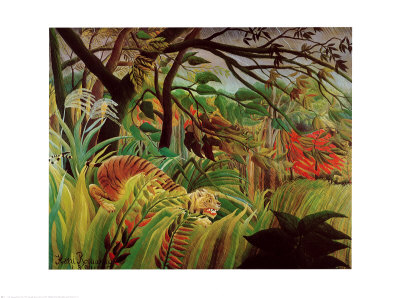
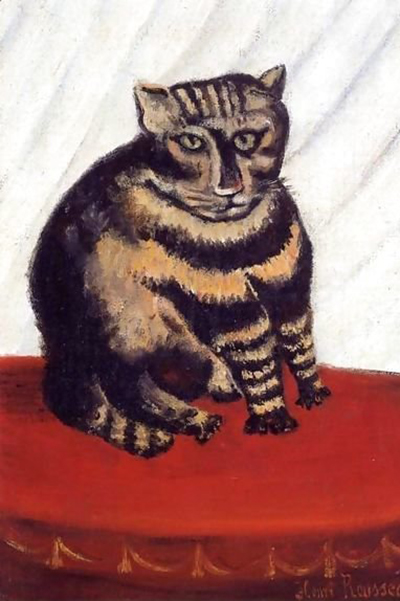
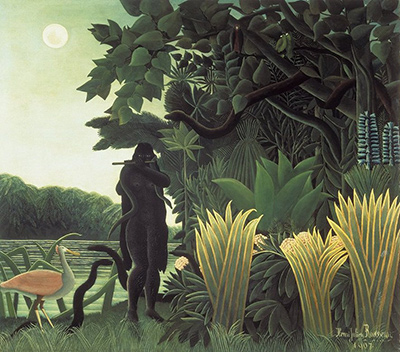
Many aspiring artists approach Henri Rousseau and the broader movement of naïve art with a specific question in mind: is there a rigid, mathematical formula for those thick, confident brushstrokes that seem to defy traditional rules? The short answer is a resounding no. There is no secret algorithm or prescribed set of movements that guarantees the look of Rousseau's vibrant junks, dense forests, or exotic animals. Instead, the charm lies in the freedom of the hand and the painter's unique vision, which allows them to construct scenes that feel both dreamlike and startlingly real. Understanding this lack of a fixed rule is actually the first step toward capturing that distinctive spirit without simply copying the style.
The Freedom of the Untrained Hand
The term "naïve" often carries a negative connotation in modern conversation, implying a lack of skill or education, but in the context of art history, it refers to an untrained, innocent approach to painting. Henri Rousseau, who was a successful career civil servant with no formal training in art, approached his canvas with the same freedom one might have on a Saturday morning. His brushwork was not calculated to mimic the subtle gradations of light found in an academic study. Instead, he painted with a directness that prioritized the immediate feeling of the subject over technical perfection.
His strokes are often described as "thick" or "impasto," meaning the paint is applied in heavy layers, giving the surface a texture that catches the light. This technique was not a learned method but a natural consequence of his speed and confidence. He did not hesitate to correct his work or worry about the underlying layers; he simply put down paint where he felt it needed to be. This lack of self-imposed restriction is what creates the illusion of depth in his work, as the physical texture of the paint interacts with the viewer's eye in a way that smooth, blended techniques cannot.
Visual Construction Without Perspective
A common misconception is that naïve art lacks perspective or vanishing points, rendering it structurally weak. In reality, Rousseau had a very specific way of constructing his scenes that felt intuitive rather than accidental. He often flattened the space, pushing figures and objects forward into the foreground while compressing the background. This creates a sense of immediacy, making the viewer feel as though they are standing right in the middle of the jungle or the city market.
This construction does not follow the strict linear perspective taught in art schools. Instead, it relies on the artist's personal experience and imagination. Rousseau would place a train next to a lion, or a woman in a dress next to a tropical bird, creating a narrative that exists entirely within his mind. The brushwork serves this narrative; if a tree needs to loom large, the strokes become broad and dominant. If a leaf needs to recede, the strokes might become lighter and less defined. The "formula" here is simply to trust the composition you have built, and let the paint express that vision without trying to make it look like a photograph.
Practical Techniques for Imitation
If you wish to explore this style, you do not need to memorize a list of gestures, but rather adopt a mindset that allows for experimentation. The following practical tips can help you begin to replicate the energy and texture found in Rousseau's work:
- Commit to a thick application: Try using a stiff brush or a palette knife to apply paint heavily. Do not be afraid to let the paint remain raised from the canvas; this texture is central to the visual impact.
- Work quickly and decisively: Slow down, and the work will feel hesitant. The magic of the naïve style comes from the energy of the moment. Make every stroke count and move with confidence.
- Ignore strict realism: If you see a detail that seems minor or irrelevant, paint it boldly anyway. The subject matter does not need to be scientifically accurate to be powerful.
- Layer the color: Build up your colors in distinct layers rather than blending them smoothly. Keep the edges between colors sharp and defined.
- Focus on the composition first: Before worrying about brushstrokes, decide where the main elements will be placed. Let the painting lead your hand, not the other way around.
The Role of Color and Light
Color is another pillar of Rousseau's style, often described as bold, saturated, and somewhat unnatural in its brightness. He used colors that seemed to glow from the canvas, creating a luminous quality that feels both magical and earthy. This was partly due to the pigments available to him at the time, but also due to his artistic choices. He did not shy away from using clashing colors side by side, believing that this contrast created a more vibrant and lively image.
Light in his work is not always realistic; it is often emotional or symbolic. A shadow might be as dark as a block of paint, while sunlight might be rendered in a bright, almost electric yellow. This approach strips away the complexities of atmospheric perspective, allowing the viewer to focus on the shapes and colors themselves. The brushwork supports this by keeping the light sources distinct and separate, reinforcing the idea that the world in the painting is a constructed reality rather than a direct observation.
Conclusion: Finding Your Own Voice
Ultimately, the pursuit of a specific "naïve formula" is a trap that prevents true artistic growth. The beauty of Henri Rousseau's work lies in its humanity and its refusal to be constrained by the academic rules that dominated the art world of his time. To paint in this style is not to copy his brushstrokes but to adopt a spirit of freedom, confidence, and uninhibited imagination. By focusing on the texture, the boldness of color, and the intuitive construction of the scene, artists can create works that resonate with the same energy and wonder. The true formula is simply to paint as if you are seeing the world for the very first time, unencumbered by tradition or expectation.