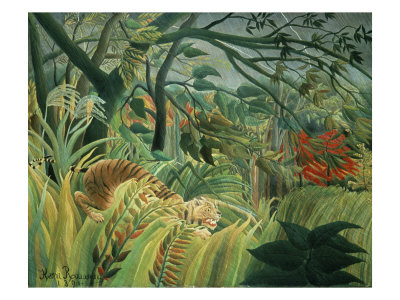
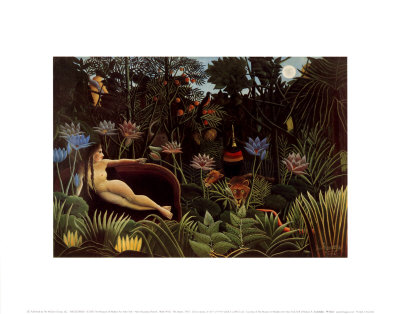
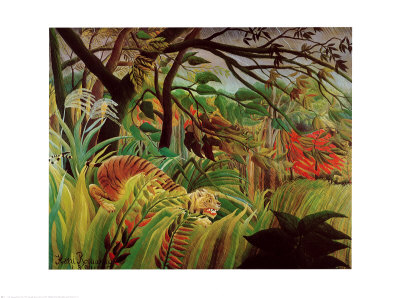
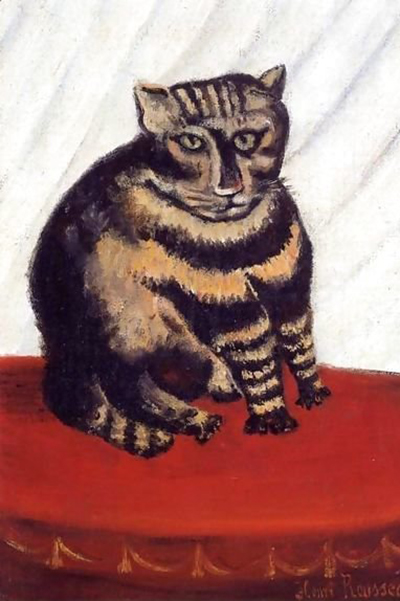
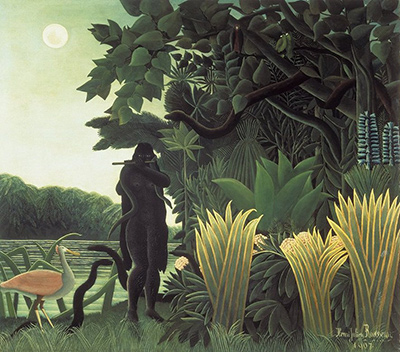
Before the first brushstroke of vibrant pigment touches the canvas, a silent conversation must take place between the artist's mind and the surface. In the spirit of Henri Rousseau's dreamlike, yet meticulously constructed landscapes, the outline is not merely a border; it is the skeleton upon which the entire painting hangs. Skipping this foundational step often leads to chaotic compositions where shapes blur into one another, losing the distinct clarity that defines masterful naive art. By investing time in a careful sketch phase, you establish a roadmap that guides your hand, ensuring that the final image possesses both structural integrity and emotional resonance.
Establishing the Core Shapes
The initial phase involves stepping back from your workspace and observing the scene as a collection of simple geometric forms. Instead of trying to draw every single leaf or stone with perfect detail immediately, focus on the mass and the silhouette. Imagine the entire composition as a puzzle made of circles, squares, and triangles. This abstraction helps you see the negative spaces as clearly as the positive ones. When you capture the essence of the objects through these basic shapes, you create a stable framework that prevents the painting from becoming disjointed or accidentally unbalanced later on.
Defining the Edges with Precision
Once the core masses are in place, the next critical task is to refine the edges where these shapes meet. In naive art, the line often carries a narrative weight, acting as a bridge between the dreamlike quality of the subject and the harsh reality of the medium. You must decide whether the boundaries should be hard and decisive, suggesting a sharp focus, or soft and blurred, implying atmospheric distance or a receding memory. Using a thin brush or a mechanical pencil, trace around your geometric forms to create these defining lines. These lines should be continuous, avoiding jagged interruptions that could distract the viewer's eye from the overall harmony of the piece.
The Power of Negative Space
Understanding the space between your drawn objects is arguably more important than understanding the objects themselves. In many famous paintings, the artist leaves large areas of blank canvas or washes of muted color to let the subjects breathe. By sketching the outlines of the foreground elements, you inevitably carve out the negative space for the background. If your outline drawing is tight and cramped, your finished painting will feel crowded and claustrophobic. Conversely, if you leave generous gaps in your sketch, you can introduce depth and mystery, allowing the viewer's imagination to fill in the missing details. This technique transforms a simple drawing of a house into a vast, inviting landscape where the sky seems to stretch endlessly above the roofline.
Planning the Color Palette
While you are still working on the black and white line work, you should begin to mentally assign colors to different zones of your sketch. Look at the areas you have outlined and ask yourself what hues would best bring them to life. Do the trees in the corner need deep greens or burnt oranges? Is the sky a pale blue or a stormy grey? Sketching in monochrome forces you to rely on composition and value rather than relying on color to do the heavy lifting. However, the outline acts as a guide; as you apply your first wash of color, you can subtly adjust the lines to follow the contours of the shapes you intend to color. This ensures that the color boundaries remain distinct and that no muddy patches of mixed paint accidentally occur where two distinct areas should meet.
Refining the Details
The final stage of the outlining process involves adding texture and specific details without losing the overall composition. This is where you introduce the tiny elements that give life to your sketch, such as the texture of bark, the feathers of a bird, or the cracks in a wall. Use a lighter hand here, varying the pressure of your pencil or brush to create a sense of rhythm. Remember that these details are secondary to the main forms. If a busy cluster of details starts to overwhelm the simple shapes you established in the beginning, simplify them. The goal is a balanced tension between the simple, bold outlines and the intricate, delicate textures. A well-executed outline strategy ensures that when you step back to view the completed work, the image feels complete, intentional, and truly alive, much like the visionary dreams of the great masters of naive art.
To ensure your sketch remains flexible yet structured, consider adhering to these five essential principles during the drafting phase:
- Keep your initial lines light enough to be erased or painted over without damaging the paper.
- Ensure that every major object in your composition has a clearly defined boundary before adding secondary details.
- Verify that the negative space between objects is consistent in size relative to the objects themselves.
- Avoid adding too much detail in the very first pass, as this can restrict the freedom of the subsequent painting process.
- Regularly step back from the paper to check if the overall shape of the composition remains balanced.
By following these guidelines, you create a robust underdrawing that supports the imaginative freedom characteristic of the style, allowing the artist to build upon a solid foundation while maintaining the ethereal quality that makes such works so captivating.