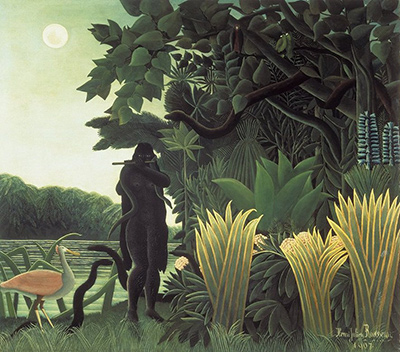
Capturing the three-dimensional world on a two-dimensional surface is one of the most satisfying challenges for any artist, yet many believe that mastering perspective requires complex geometry, precise protractors, and strict adherence to vanishing points. In reality, the true essence of perspective lies in observation and intuition rather than rigid calculation. By trusting your eyes and employing a few simple visual cues, you can create dynamic depth and spatial relationships that feel authentic and alive, even without a single straightedge in sight. This approach allows the artist to focus on the flow of light and the rhythm of forms, resulting in work that resonates with the viewer's perception of reality.
The Power of Relative Size
One of the most fundamental rules of perspective is that objects appear smaller as they recede into the distance. While you do not need to measure the exact scale of distant mountains compared to nearby trees, your brain naturally understands that a tree far away must be physically larger than a tree close up to look the same size. This concept, known as relative size, is the cornerstone of creating depth. Start by identifying objects in your scene and establishing a logical scale for them. If a car is in the foreground and a bus is in the background, the bus should be drawn significantly larger than the car, even if they are the same model, because the bus is further away. This visual shorthand instantly grounds your composition in a believable space, allowing the viewer's mind to fill in the missing geometric calculations.
Overlapping to Create Depth
When objects are placed in front of one another, the ones in front obscure the ones behind. This principle of occlusion or overlapping is a powerful tool for establishing which objects are closer to the viewer. You can achieve this simply by drawing the outline of a tree trunk so that it covers the lower portion of a cloud or the upper portion of a building. The act of letting one form block another immediately tells the eye where the plane of separation lies. It does not matter if the lines are perfectly straight or if the proportions are slightly off; the act of covering serves a stronger purpose than mathematical precision. By consciously deciding which elements should overlap, you are actively constructing the layers of your artwork, building a sense of volume and atmosphere without needing to construct a formal horizon line.
Atmospheric Hues for Distant Forms
The atmosphere between objects acts as a soft filter, diminishing the contrast and saturation of distant things. This phenomenon, often called aerial perspective, can be achieved by altering the color values of your subject matter. Objects that are closer to the viewer usually have higher contrast, with darker shadows and brighter highlights, while distant objects tend to appear hazier, lighter, and often tinged with a bluish or grayish hue. Instead of measuring the distance to a specific point, simply imagine a layer of air separating your foreground from your background. Apply lighter, cooler tones to the farthest elements and warmer, richer tones to the nearest ones. This shift in value and color palette creates a profound sense of distance that feels organic and natural, mimicking how the human eye actually sees the world under normal lighting conditions.
Simplifying Complex Forms
Complex shapes can confuse the sense of depth if treated with excessive detail. A practical strategy is to simplify the forms you are drawing into basic geometric shapes before adding intricate details. A mountain range can be reduced to a series of triangles, a group of buildings to rectangles, and a person to a cylinder and a sphere. Once you have established the basic shapes and their relationships in space, you can add texture and detail on top of these simplified forms. This method keeps the perspective consistent and prevents the clutter of too many lines from confusing the viewer's spatial understanding. It also encourages a more confident hand, as you are working with the essential structure of the scene rather than getting lost in the minutiae.
Using Reference Photos for Composition
While you may not need precise measurements, having a reference photo can help you visualize the spatial arrangement of your scene. Look at the photograph not as a blueprint to be copied pixel-for-pixel, but as a study of how objects relate to one another in space. Notice how the ground plane slopes, where the shadows fall, and how the horizon line sits relative to the subjects. Jot down your observations regarding the grouping of objects and the flow of the composition. Then, translate these observations onto your canvas or paper. Use your own intuition to exaggerate or emphasize certain areas if needed, but keep the fundamental spatial relationships intact. This balance between observation and artistic license ensures that your final piece feels both grounded and uniquely expressive.
To truly internalize these concepts, consider integrating the following practices into your daily workflow:
- Sketch a quick thumbnail where you exaggerate the size difference between the nearest and farthest objects.
- Cover a distant object with a foreground element to test if the overlap feels immediate and convincing.
- Mix a wash of pale blue and gray to see if it effectively lightens the value of a background mountain.
- Identify three distinct shapes in a complex scene and redraw the scene using only those forms first.
- Analyze a photograph by mentally erasing the horizon line to see how the ground plane feels without strict alignment rules.
- Paint a small study focusing solely on how color temperature changes over a perceived distance of ten meters.
- Use a mirror held to your eye to check the relative sizes of objects in front of you before starting a new drawing.
By combining relative size, overlapping, atmospheric color shifts, and simplified forms, you can master the illusion of depth and space. These techniques rely on the natural way our eyes perceive the world, requiring no mathematical formulas or specialized tools. They invite you to engage directly with the scene, to observe carefully, and to trust your artistic vision. Whether you are painting a bustling street scene or a quiet landscape, these principles will guide you in creating works that feel real, three-dimensional, and full of life.