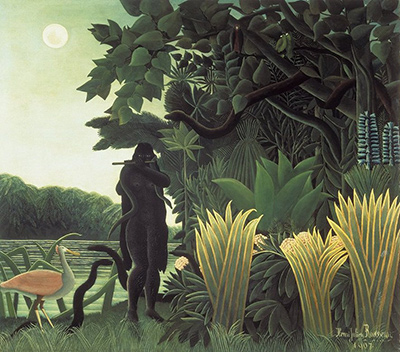
Mastering the art of brushwork without the paralyzing pressure of perfect proportion is a journey that transforms the painter from a precise technician into a free-flowing storyteller. When we stop worrying about exact measurements and instead focus on the rhythm, energy, and texture of our strokes, we unlock a unique way of seeing the world where emotion takes precedence over geometry. This shift allows the hand to move with confidence, creating surfaces that breathe and feel alive, much like the dreamlike landscapes of artists who prioritized intuition over rigid perspective.
Unlocking the Mental Block
The primary obstacle to practicing brush strokes freely is the internal critic that demands perfection from every curve and angle. We often hesitate to let the brush touch the paper because we fear drawing a line that is too long, too short, or in the wrong place, which leads to a static and overly calculated approach. To overcome this, one must consciously decide to make mistakes with abandon. Instead of trying to draw a perfect circle or a straight horizon line, imagine the brush as a playful child exploring a new playground, making marks that express movement rather than defining boundaries. By accepting that your first attempts will likely lack proportion, you remove the fear of failure and allow the physical act of painting to become a pure sensory experience.
The Power of Gesture and Motion
True freedom in brushwork comes from engaging the whole body, not just the arm and hand. When we focus solely on proportion, our grip becomes too tight, and our movements become robotic and hesitant. To practice without worrying about what the object looks like, try to capture the "gestural" essence of the subject. Focus on the direction, speed, and pressure of the stroke. A heavy, slow stroke can imply a heavy cloud or a dense tree trunk, while a quick, light flick might suggest wind or a fleeting shadow. By directing your attention to the kinetic energy of the line, the specific proportions become secondary details that can be adjusted later or left intentionally ambiguous to create mystery and depth.
Practical Exercises for Fluidity
To develop this muscle memory, several specific exercises can help you isolate the feeling of the brush from the concept of the object. Here are a few methods to try in your own studio:
- Draw continuous lines that never stop, covering a blank sheet of paper with overlapping, overlapping marks without lifting the brush, focusing entirely on the flow of the wrist.
- Use a single color to paint abstract shapes that have no relation to reality, such as spirals, jagged spikes, or soft waves, ignoring any attempt to create recognizable forms.
- Practice "blind" tracing by placing objects in front of you and moving your hand over the paper to mimic their shapes without looking at the surface, relying entirely on muscle memory and visual memory of the object's silhouette.
- Experiment with different materials, such as charcoal, pastels, or watercolor, to see how each medium responds to pressure and how different textures can convey mood without needing accurate drawing.
- Set a timer for one minute and make as many varied, energetic strokes as possible within that short window, forcing yourself to prioritize speed and variety over accuracy.
Embracing the Abstract Nature of Naive Art
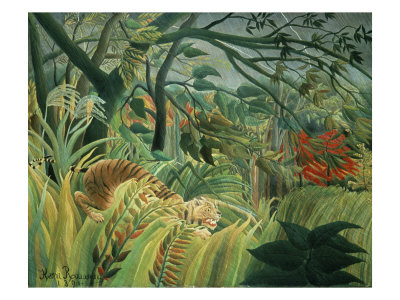
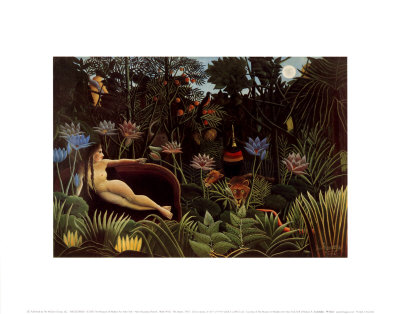
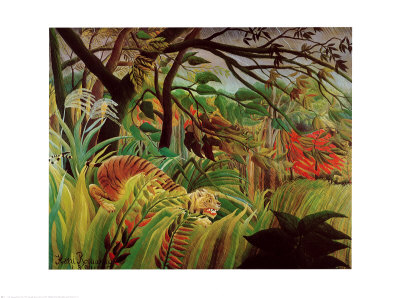
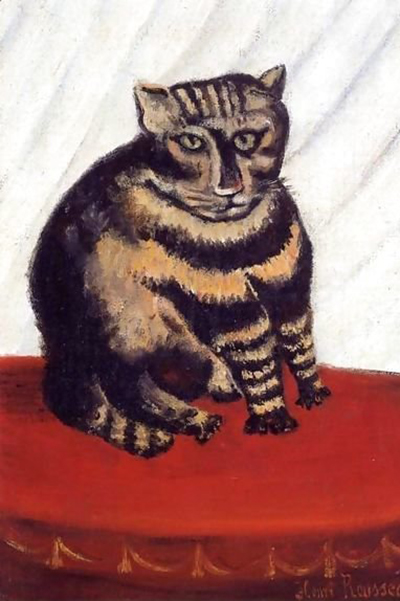
The style of Henri Rousseau, often associated with naive art, thrived on a combination of precise detail and wild, uncontrolled brushstrokes. His famous jungle scenes often feature trees and leaves painted with a chaotic, scribbled energy that defies logical botanical structure, yet they feel incredibly real and vibrant. This dissonance between the logical composition and the emotional brushwork is what gives the art its unique power. When you practice strokes without worrying about proportion, you are essentially training your mind to appreciate this kind of artistic truth. You begin to understand that the "correct" way to paint is not the one that matches a textbook diagram, but the one that best conveys the feeling of the moment.
Cultivating Confidence Through Repetition
Finally, the path to confident, unweighted brushwork requires consistent repetition and a willingness to let go of the analytical mind. Over time, you will find that your hands begin to move with a natural ease, creating lines that carry a weight and presence that precise proportion cannot achieve. The goal is not to produce a perfectly scaled drawing, but to create a visual experience that resonates with the viewer. As you continue to practice these liberating techniques, you will discover that the lack of concern for exact measurements actually enhances the emotional impact of your work, leading to paintings that feel spontaneous, authentic, and deeply connected to the artist's inner world.