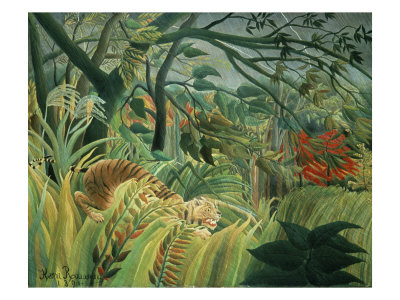
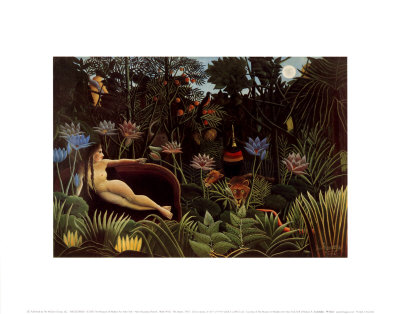
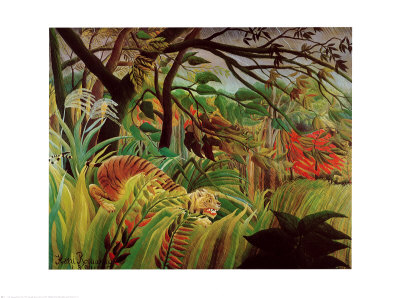
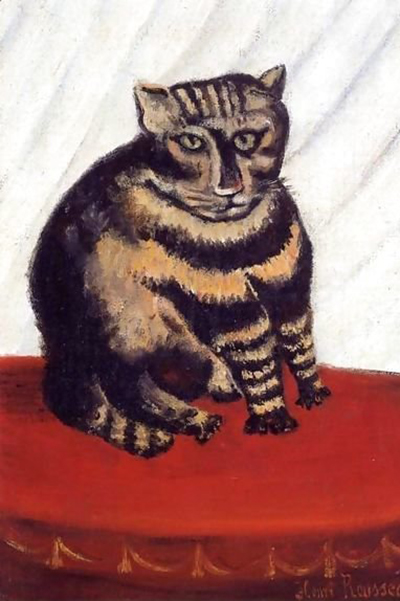
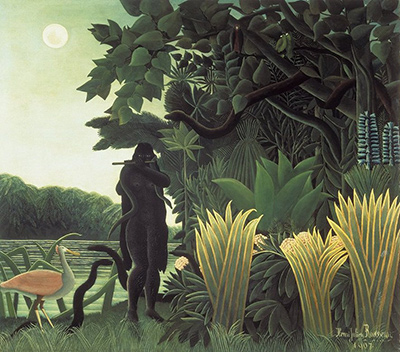
Capturing the essence of light without the rigidity of realistic physics is the true magic of Henri Rousseau's unique vision. By embracing the illusion rather than the exactness, artists can create worlds that feel alive, mysterious, and deeply immersive, much like the dense jungle scenes that define the master's legacy. This guide explores how to manipulate shadow to enhance depth and emotion while maintaining the distinctive, dreamlike quality of naive art.
The Philosophy of Illusion Over Accuracy
In realistic painting, shadows are calculated based on the angle of the sun, the texture of surfaces, and the specific material properties of objects. In the realm of naive art, however, shadow becomes a vehicle for mood and narrative. Rousseau did not merely paint what he saw; he painted what he felt and what his imagination constructed. Therefore, the first step in creating depth without realism is to abandon the concept of "correct" shadow placement. Instead, treat darkness as an active element of composition, a tool used to guide the viewer's eye toward focal points or to hide the mundane details of the background. When you stop trying to simulate the physics of light, you free yourself to invent a new kind of truth where the emotional weight of a scene carries more value than its visual fidelity.
Understanding the Geometry of the Imagination
To achieve depth, one must understand that naive shadows often defy the laws of linear perspective found in academic training. In Rousseau's works, you might see shadows that stretch across impossible distances or disappear into corners that should be fully illuminated. This distortion is not a mistake but a deliberate stylistic choice that flattens the image slightly while creating a sense of infinite expansion. When painting shadows in this style, focus on the relationship between the object and the surrounding space rather than the object itself. A shadow can be as dark as the subject, creating a silhouette effect that adds mystery. Conversely, you can introduce patches of white or pale yellow within deep shadows to suggest the presence of light sources that the viewer cannot immediately identify. This contrast between absolute darkness and unexpected brightness creates a rhythm in the painting that mimics the texture of a forest or a night sky, adding layers of complexity without relying on photorealism.
Techniques for Manipulating Light Sources
Mastering the placement of shadows requires a keen eye for how light travels through the artist's mind rather than through the physical world. Here are several practical methods to implement this unique approach:
- Invert the Light: Instead of placing shadows directly opposite a light source, place them in the opposite direction of the viewer's eye or even within the object itself. This creates a surreal quality where the viewer questions the logic of the scene.
- Use Atmospheric Diffusion: Mix your darkest shadows with hints of the surrounding environment's color. If you are painting a night scene under a moon, your deepest shadows should contain traces of blue or violet, rather than pure black. This technique, known as glazing, adds an ethereal glow that separates the foreground from the background.
- Break the Shadow Planes: In realistic art, shadows often fall in smooth, continuous planes. In naive art, disrupt these planes by adding small patches of bright color or leaving areas unpainted to suggest the chaotic nature of the subject matter.
- Elongate Beyond Logic: Draw shadows extending far beyond the physical limits of the objects casting them. This can make small birds appear to tower over the trees or make distant figures loom large, enhancing the sense of scale and wonder.
The Role of Color in Shaping Form
Color plays a pivotal role in defining shadows in naive art because the absence of color is rarely used to denote shadow. In Rousseau's paintings, the shadows are often as vibrant and varied as the highlights. A shadow might be a deep, bruised purple, a sickly green, or a warm, glowing orange depending on the time of day or the emotional tone of the piece. To add depth without realism, rely on the interplay of contrasting hues rather than just value differences. For instance, a shadow cast by a green leaf might be rendered in a deep, cool blue, while a shadow cast by a warm sun might be a rich, earthy brown or even a warm grey. By assigning specific color temperatures to different areas of your painting, you create a sense of volume and space. The transition between a warm highlight and a cool shadow, even if the lighting logic is flawed, gives the eye a natural place to rest and travel, creating a three-dimensional feel on a two-dimensional surface.
Embracing the Dreamlike Quality
Ultimately, the goal is to create a painting that feels like a memory or a dream, a place where the logic of the waking world has been suspended. When you paint shadows that do not behave realistically, you invite the viewer into a personal interpretation of the scene. The depth comes from the tension between what the eye expects and what the painting offers. By focusing on the emotional resonance of the light and the deliberate breaking of natural laws, you can produce works that are visually striking and spiritually evocative. Remember that in the world of naive art, the most profound shadows are not those that hide things, but those that reveal the infinite possibilities hidden within the artist's imagination.