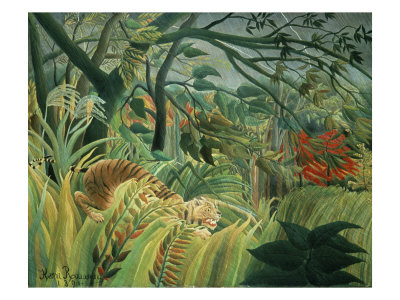
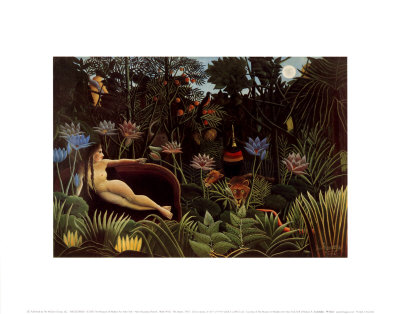
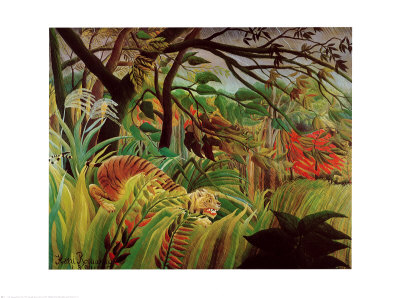
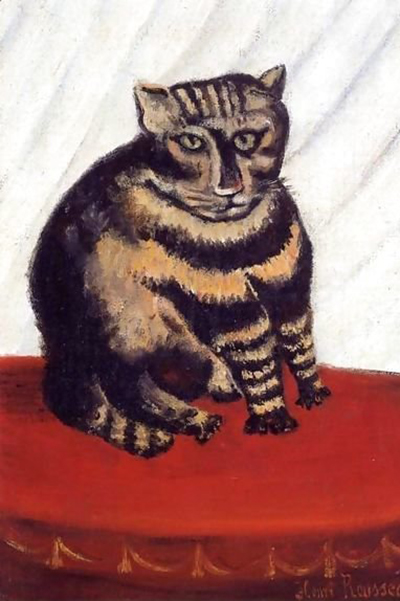
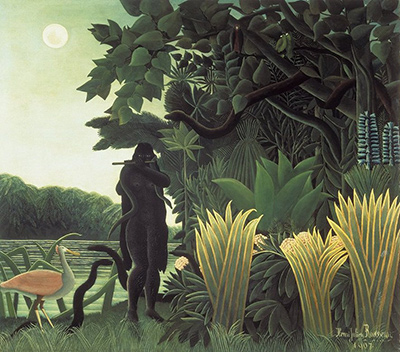
Capturing the wild, untamed energy of Henri Rousseau's jungle scenes requires more than just botanical accuracy; it demands a mastery of illusion that makes the viewer feel as though nature is bursting forth from the very edge of the frame. To achieve the effect of vines exploding from the canvas itself, one must abandon traditional perspective rules in favor of a direct, almost aggressive dialogue between the paint and the viewer's eye. This technique transforms the artwork into a living ecosystem where the support of the board becomes merely a foundation for an infinite, breathing forest.
Mastering the Edge of the Canvas
The most critical step in creating this surreal abundance is how you begin the composition, specifically regarding the boundaries of the physical artwork. Traditional painting often adheres to the rule of thirds, pushing elements away from the edges to maintain visual comfort, but the naive style thrives on the opposite approach. You must intentionally allow the foliage to cross the frame, overlapping the wood grain or the varnish layer to suggest that the plant life continues infinitely beyond what is seen. This technique creates an immediate sense of intrusion, making the viewer feel they are peering into a space that has no clear exit. By deliberately painting leaves that touch and obscure the canvas edges, you break the fourth dimension, suggesting that the vines are not merely depicted on the surface but are actively growing through the material itself. This deliberate violation of the frame's integrity is the first key to achieving that signature Rousseau look.
The Language of Line and Shape
Once the composition is established, the focus shifts to the specific language used to render the plant matter. In naive art, the line is not a mere outline but a primary vehicle for texture and movement. Instead of using thin, delicate lines to sketch the veins of a leaf, utilize thick, confident strokes that carry the weight of the pigment themselves. The lines should vary in thickness, sometimes appearing bold and dark at the tips of the stems to anchor them, and then softening as they branch out. It is important to avoid rigid geometric shapes; instead, let the forms be organic and slightly abstract, resembling the scribbled, energetic marks often found in children's drawings or folk tales. This lack of strict realism creates a dreamlike quality that is essential to the genre. The stems should look like they are twisting and turning with a life of their own, often curling back towards the center of the composition to create a sense of tension and dynamic energy.
Creating the Illusion of Depth Without Perspective
A common misconception in naive painting is that depth must be achieved strictly through linear perspective, where parallel lines converge at a vanishing point. However, to make vines seem to grow out of the canvas, one must rely on layering, color temperature, and the manipulation of space rather than geometric precision. The foreground elements should be rendered with the most vibrant, saturated colors, often using warm yellows, oranges, and deep greens that seem to glow from within. As the vines recede into the background, the colors should shift towards cooler tones and slightly less saturation, creating an atmospheric perspective that mimics the effect of distance without using actual vanishing points. Furthermore, the interaction between the paint layers is crucial; by allowing the bottom layers to peek through the top layers of leaves, you create a sense of complexity and volume that suggests the vines are physically occupying the space in front of the canvas. This layering technique allows the viewer to perceive depth even when the "roots" are painted directly onto the surface, making it feel as though the vegetation is emerging from the very heart of the board.
Tools and Materials for the Jungle
To successfully execute this style, the choice of tools plays a significant role in achieving the desired texture and energy. A variety of brushes, ranging from large, flat ones for broad, sweeping strokes of foliage to smaller, filberts or round brushes for defining specific leaves and tendrils, are essential. The size of the brush often matches the size of the mark you wish to create; larger brushes can quickly cover vast areas of greenery, while smaller ones allow for intricate detailing that mimics the chaotic growth of a wild vine. Additionally, the consistency of the paint matters; thick, impasto applications can add a physical texture that catches the light, enhancing the illusion that the vines are three-dimensional objects growing out of the surface. Using a palette that emphasizes high contrast between light and shadow will further emphasize the volume of the plants. The goal is to create a surface that feels alive, textured, and full of movement, inviting the eye to wander endlessly through the tangled mess of greenery.
- Select brushes with stiff, bristle tips to create crisp, distinct edges against the soft background.
- Use a palette knife to apply thick, sculptural dabs of green that physically rise from the canvas surface.
- Mix a highly saturated, electric green to serve as the primary anchor color for the foreground vines.
- Keep your palette simple to ensure the vibrant greens pop against the neutral or dark background.
- Work quickly with wet-on-wet techniques to allow colors to bleed slightly and create organic, undefined shapes.
Practical Exercises for Growth
To truly internalize these techniques, artists benefit from specific exercises that focus on breaking conventional rules. One effective method is to practice painting vines on the very edge of a sketchpad or canvas, forcing the foliage to overflow the frame and encouraging the artist to ignore the boundary lines. Another exercise involves creating a series of leaves using only straight lines, which forces a more abstract and stylized representation that moves away from photorealism. Furthermore, try painting a single vine growing from a blank canvas edge, focusing entirely on how the plant interacts with the physical limit of the paper. By repeating these actions, the muscle memory of the hand begins to adapt to the unique demands of naive art, making the process of painting vines that grow out of the canvas feel natural and instinctive rather than forced.