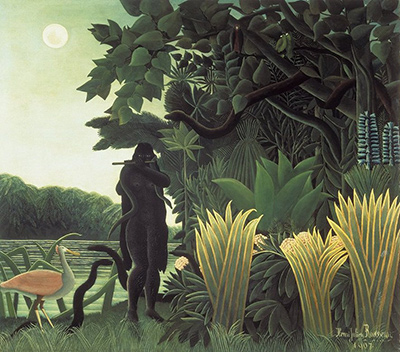
To master the depiction of rivers that sweep unimpeded across the canvas, one must first abandon the traditional perspective that forces the eye to a single vanishing point. In the spirit of naive art, where the imagination often triumphs over rigid geometric rules, a river should feel like a living entity that refuses to be contained by the borders of the paper. This approach creates a sense of infinite motion, suggesting that the water does not merely exist within the frame but actively expands beyond it, inviting the viewer to imagine the flow continuing into the unseen world. By treating the canvas not as a window but as a surface to be inhabited, the painter can achieve a dynamic, sweeping composition that feels both chaotic and strangely harmonious.
Establishing the Psychological Horizon
The foundation of a successful edge-to-edge composition lies in redefining where the horizon sits. In classical painting, the horizon is a fixed line, but in naive landscapes, it becomes a malleable concept driven by the emotional weight of the water. If the river is meant to feel wild and untamed, the horizon should be pushed high up, allowing the mass of the water to dominate the lower two-thirds of the canvas. Conversely, if the river is gentle and meandering, it can snake through the middle, touching the top and bottom edges simultaneously. The key is to ensure that the water's boundary never stops at the physical edge of the paper; instead, it should fade into the frame or blur into a suggestion of continuation, creating a visual rhythm that pulls the eye back and forth without ever finding rest.
The Anatomy of the Flowing Stroke
Once the composition is mentally mapped, the execution requires a specific approach to brushwork and texture. Naive rivers are rarely depicted with smooth, academic gradients; instead, they possess a tangible quality, often rendered with thick impasto that mimics the froth and energy of moving water. The stroke itself should be decisive and continuous, moving from one side of the canvas to the other in long, sweeping gestures that mimic the actual current. Avoid breaking the line of the river with small, isolated strokes that interrupt the flow. Instead, think of the brush as a paddle, pushing water forward in a relentless, rhythmic motion. This technique ensures that the river feels alive and active, rather than a static illustration of a body of water.
Techniques for Seamless Edge-to-Edge Transitions
Achieving a true edge-to-edge effect requires careful attention to the points where the river meets the canvas border. The challenge is to make the transition feel natural, as if the water is simply spilling over the edge of the page. There are several practical methods to achieve this seamless integration:
- Use a wet-on-wet technique to blend the river's edge with the surrounding bank or sky, eliminating harsh, artificial lines that suggest the water stops abruptly.
- Allow the paint to drip slightly down the side of the canvas, using gravity to create a natural, organic taper that mimics the behavior of real flowing water.
- Introduce a sense of vibration by slightly wavering the brushline as it approaches the edge, suggesting the chaotic movement of the current near the boundary.
- Incorporate reflections that stretch beyond the visible banks, painting the shimmer of the water onto the sky or distant shore to imply the river's path continues invisibly.
- Leave a small margin of negative space at the very edge, allowing the paint texture to fade rather than cut off cleanly, which enhances the feeling of endlessness.
Integrating Land and Water Dynamics
The river should not exist in isolation; it must interact dynamically with the land it traverses. In naive art, the relationship between earth and water is often simplified and exaggerated for visual impact. Rocks and banks should not necessarily block the flow but should instead interact with it, sometimes being swept away or partially submerged to reinforce the idea of overwhelming power. Vegetation along the banks should appear to be bowing or being pushed aside by the current. The contrast between the heavy, solid nature of the land and the fluid, ethereal quality of the water creates a visual tension that keeps the composition engaging. Remember that in this style, the logic of nature is secondary to the emotional truth of the scene; a rock can be painted partially underwater if it feels more expressive to do so.
The Illusion of Infinity
Finally, the goal is to create an illusion of a world that extends beyond the frame. The viewer should feel as though they are standing on the bank, looking out at a river that leads somewhere vast and unknown. This is achieved by simplifying the details in the distance and allowing the texture of the water to dominate the foreground. The more the river seems to touch the edge, the more the viewer's imagination is invited to complete the picture. By focusing on the movement, the texture, and the uninterrupted flow, the painter transforms a simple depiction of water into a profound expression of the natural world's boundless energy. The result is a painting that breathes, flows, and feels alive, capturing the very essence of the naive spirit where the canvas becomes a vessel for infinite possibility.