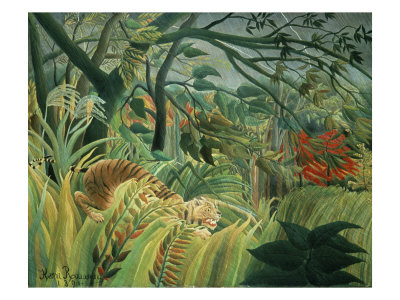
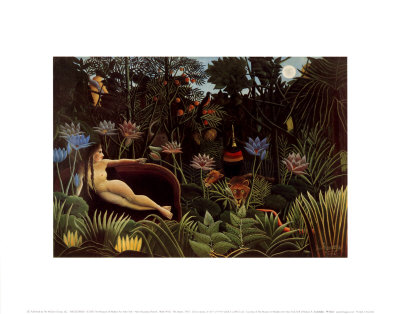
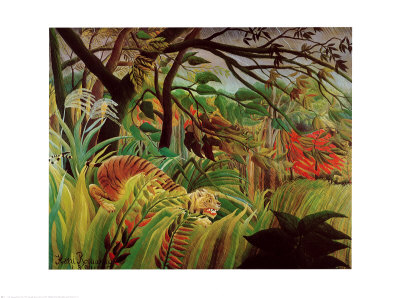
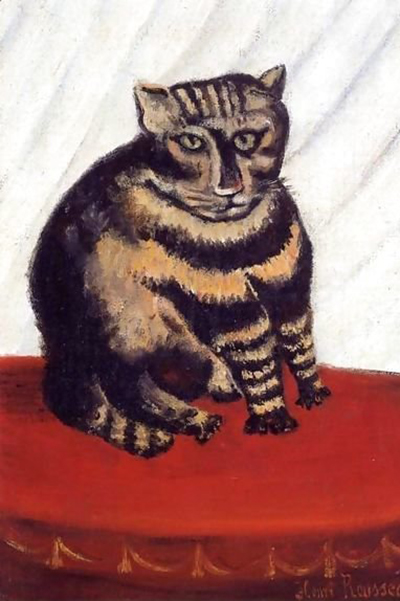
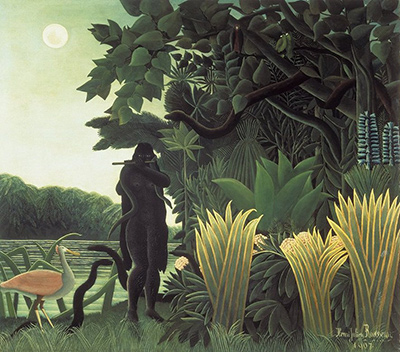
Mastering the art of depicting ladders that seem to lead to nowhere requires a unique understanding of perspective and the dreamlike logic inherent in naive art, a style famously championed by artists like Henri Rousseau. Unlike traditional realism, where structure and depth must be strictly adhered to, this approach invites the viewer into a world where physical laws bend to serve the imagination, creating a sense of infinite possibility and quiet mystery.
Deconstructing the Structural Logic
To begin creating a ladder that defies conventional geometry, one must first abandon the rigid rules of linear perspective that govern our everyday reality. In the naive tradition, objects often exist in a state of suspension, floating slightly above the ground or leaning at angles that suggest they are caught in mid-movement. The key is to treat the ladder not as a functional tool for climbing, but as a symbolic bridge connecting two disparate worlds. This approach allows the artist to ignore the need for a solid base or a clear destination, focusing instead on the visual rhythm of the rungs and the sense of upward aspiration.
Mastering the Rhythmic Composition
The visual impact of such a ladder relies heavily on the repetition and spacing of its components. By arranging the rungs in a consistent, hypnotic pattern, the artist creates a visual flow that draws the eye upward and outward, eventually dissolving into the background. This repetition mimics the way the human eye perceives patterns in nature, from the rows of leaves on a tree to the steps of a distant staircase. The spacing between the rungs should not be perfectly mathematical; slight variations in distance can introduce a sense of organic motion, making the structure feel alive rather than static.
The Art of Atmospheric Blur
To enhance the feeling that the ladder leads to an undefined space, the use of atmospheric perspective is crucial. As the ladder recedes into the distance, its colors should become lighter and less distinct, blending harmoniously with the sky or the horizon line. This technique, borrowed from classical landscape painting but applied with a softer, more ethereal touch in naive art, suggests that the destination is obscured by mist, light, or sheer impossibility. The edges of the ladder should be slightly softer than those in the foreground, encouraging the viewer to look past the physical object and into the realm of the imagination.
Utilizing Color and Light to Define Space
Color plays a pivotal role in establishing the mood and the "nowhere-ness" of the scene. In naive paintings, colors are often chosen for their emotional resonance rather than their optical accuracy. A ladder might be painted in vibrant, almost neon hues that contrast sharply with a muted, pastel sky, creating a focal point that pulls the viewer in before gently pulling them away again. Light sources should be diffuse and even, avoiding harsh shadows that would ground the ladder in a specific, real-world location. Instead, the interplay of light should feel fluid, suggesting that the space the ladder occupies is a dream state where boundaries between objects and backgrounds are porous.
Practical Steps for Execution
When executing this style, follow these steps to ensure the ladder achieves its ethereal quality:
- Sketch the ladder using loose, gestural lines rather than precise, measured strokes to establish the initial form and angle.
- Apply a base layer of wash with soft, blended colors to create the atmospheric background before adding the ladder structure.
- Paint the rungs with a consistent rhythm, varying the length slightly to break the mechanical feel and add life to the composition.
- Use a dry brush technique for the final details to soften edges and create a sense of texture and distance.
- Step back frequently to assess the balance between the solid foreground elements and the dissolving background.
By adhering to these principles, the artist transforms a simple object into a portal, capturing the essence of the naive aesthetic where the ladder does not lead to a roof, a tree, or a cliff, but rather to a realm of pure possibility that exists just beyond the reach of logic.