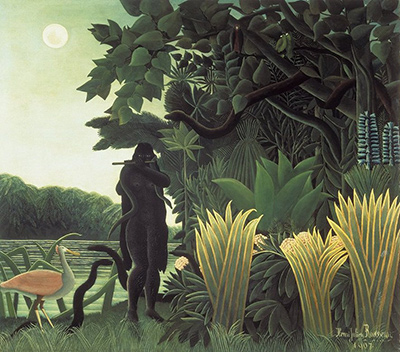
Henri Rousseau, the French artist famous for his dreamlike, jungle-filled canvases, possessed a unique gift for infusing still life and landscape with a sense of impossible motion and whimsical life. While he is often associated with the dense greenery of his forests, his approach to subjects like kites offers a fascinating study in how to capture a fleeting moment of dance against the sky. To paint these naive kites that seem to be dancing in the wind, one must abandon rigid realism in favor of a bold, rhythmic brushwork that suggests movement through energy and color rather than mechanical accuracy. The goal is not to document the object, but to evoke the feeling of the wind tugging at its string, creating a scene where the impossible becomes the only reality.
Understanding the Rhythm of the Wind
The foundation of a Rousseau-esque kite lies in the treatment of the wind itself. Unlike traditional aerodynamic drawings where lines are straight and angles are precise, Rousseau's kites appear to be caught in a chaotic, swirling gust. The artist must focus on the flow of the air around the object, using curved, sweeping strokes to mimic the turbulence of the breeze. The string should not hang straight down; it should wobble, twist, and seem to pulse with the energy of the gust. This creates a dynamic tension that makes the viewer feel the kite is not just floating, but actively interacting with the atmosphere. The sky background should be left with loose, textured marks rather than a smooth wash, reinforcing the idea that the wind is a living force filling the canvas.
Mastering the Line of Dance
Once the atmosphere is established, attention must turn to the structure of the kite. In naive art, the construction of the frame is often exaggerated for visual interest rather than structural truth. Use thick, dark outlines to define the edges of the kite, ensuring they appear slightly jagged or uneven, as if the material is stretching under the wind's pressure. The colors should be applied in broad, flat patches of vibrant hues—crimson, electric blue, or sunflower yellow—that contrast sharply with the sky. To achieve the effect of dancing, introduce secondary lines that run diagonally across the kite's surface, suggesting the flutter of fabric or the shifting of joints. These lines should overlap in a haphazard way, creating a sense of rapid, jerky motion that feels organic and spontaneous.
The Art of Suggestive Detail
When adding detail to the kites, remember that simplicity is the key to the naive style. Avoid intricate shading or realistic textures that would ground the image in physics. Instead, use small, abstract shapes or dots to represent the patterns on the kite fabric. These details should be clustered in groups rather than distributed evenly, further enhancing the sense of a frantic, wind-tossed movement. If the kite has a tail, treat it as a ribbon of color that is being torn and whipped by the air. The artist should leave gaps in the tail's painting, allowing the viewer's imagination to fill in the missing strands of fabric. This lack of completion is crucial; it implies that the kite is moving too fast to be fully observed, making the dance feel alive and uncontained.
Creating the Scene and Composition
The final step involves placing the kites within their environment to complete the narrative of the dance. Rousseau often used high horizons with vast expanses of sky, placing the kites in the upper third of the canvas to emphasize their height and freedom. However, to heighten the sense of action, you might consider clustering several kites together in a single corner, making them appear to be competing in a chaotic aerial ballet. The perspective can be tilted or distorted, leaning the kites toward the center of the composition to create visual excitement. Lighting should be bright and diffuse, as if under a harsh midday sun, which casts sharp, hard shadows that deepen the colors and make the kites pop against the background. The interplay between the dark, heavy outlines of the kites and the airy, light strokes of the sky creates a visual rhythm that guides the eye across the canvas in a continuous, dancing motion.
Practical Techniques for Execution
To translate these concepts onto paper or canvas, the artist should employ specific techniques that prioritize speed and energy over precision. Start with a loose sketch using a charcoal pencil to map out the sweeping curves of the wind and the jagged edges of the kites. Do not get stuck refining the lines; keep them rough and energetic. When applying paint, use a palette knife or a stiff brush to create thick, impasto textures that catch the light and add depth to the flat areas. Work in layers, beginning with the sky and the background elements, allowing the wind lines to be painted last so they can cut through the scene and disrupt the calm. Finally, step back frequently to assess the overall rhythm of the painting. If the kites look too static, add more chaotic lines or adjust the direction of the "wind" strokes to introduce more urgency. This iterative process of roughing in and refining the sense of motion is essential to capturing the spirit of a Rousseau-inspired dance.
By focusing on the interplay of color, the distortion of form, and the suggestion of rapid motion, an artist can create kites that appear to be alive with energy. This approach transforms a simple subject into a vibrant celebration of imagination, inviting the viewer to feel the wind and witness the impossible dance.
Essential Elements of the Naive Style Checklist
To ensure your painting captures the true spirit of Rousseau's naive kites, consider incorporating the following elements into your work:
- Use thick, black outlines that are uneven and slightly wobbly to suggest fabric under tension.
- Apply broad, flat blocks of bright, unnatural colors like electric blue or neon yellow.
- Avoid realistic shading; instead, rely on the contrast between the dark lines and bright colors.
- Paint the wind with chaotic, sweeping strokes that seem to disrupt the static image.
- Leave intentional gaps in the tail feathers or kite patterns to imply speed.
- Cluster multiple kites in the composition to create a sense of a chaotic competition.
- Use a high horizon line to emphasize the vastness of the sky and the height of the flight.