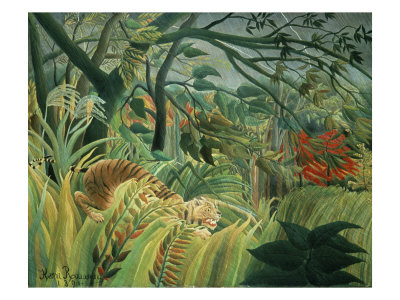
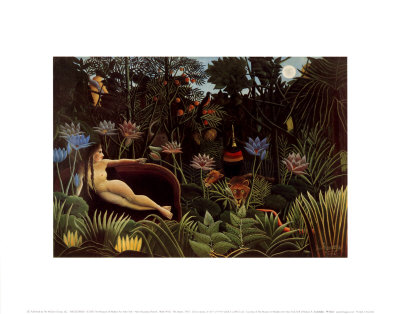
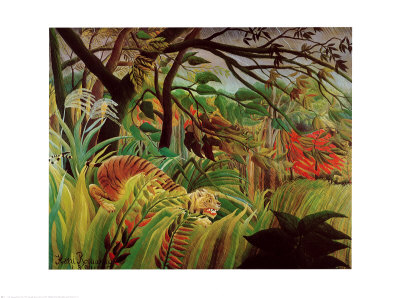
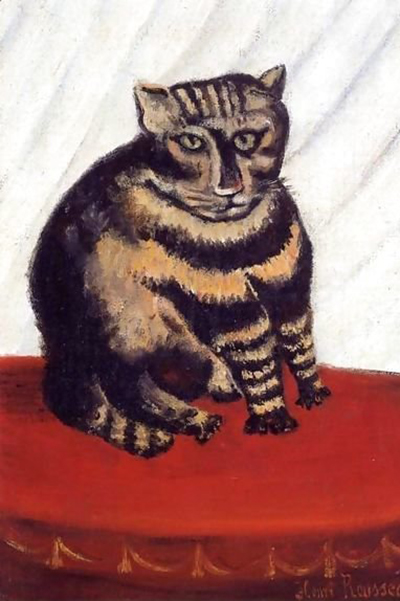
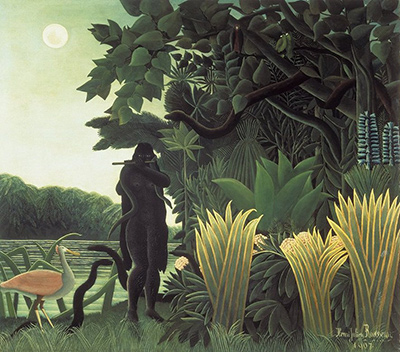
To capture the essence of Henri Rousseau's unique vision, one must first step away from realistic observation and embrace the logic of the dream. By blending familiar domestic structures with impossible geometries and vibrant, unnatural colors, you can create paintings that feel both intimately cozy and strangely detached from reality. This approach invites the viewer to lose themselves in a world where the house is not just a shelter, but a portal to a whimsical, hallucinatory afternoon.
Deconstructing the Architecture of the Imagination
The foundation of a naive house lies in its distorted perspective, which serves as the primary vehicle for surrealism. Unlike traditional styles that strive for a single vanishing point, naive structures often defy gravity and Euclidean geometry, creating a sense of wonder rather than fear. The walls may curve inward like a funnel, the roofs might tilt at an impossible angle, or the corners could melt into the background like watercolor bleeding on paper. These distortions are not mistakes; they are intentional choices that signal to the eye that this is a place constructed by a child's mind or a dreamer's psyche. When painting these forms, focus on simplifying the shapes into bold, flat planes. Avoid intricate detailing on the architectural elements themselves; instead, let the overall composition speak. A roofline that intersects a tree trunk at a forty-five-degree angle, or a chimney that dissolves into the sky, immediately establishes the surreal tone. The goal is to make the viewer feel as though they are peeking into a secret room that exists only in the collective unconscious.
The Color Palette of Unnatural Light
Once the structural framework is established, the next crucial element is the application of color, which in Rousseau's work is as vibrant as it is deliberate. Cozy houses often rely on warm, earthy tones, but in a surreal context, these colors should be pushed to their limits of saturation. Imagine a front door painted a glowing neon orange or a window frame in a shocking electric blue that seems to emit its own light. This unnatural luminosity creates a dreamlike atmosphere where the physics of the world do not apply. The contrast between the bright, almost glaring colors of the house and the softer, muted tones of the surrounding foliage creates a dynamic tension. Use thick impasto techniques to make the paint texture itself contribute to the visual noise, mimicking the way a child might apply paint with a brush or even their fingers. The texture should feel tactile, as if one could reach out and touch the rough, glossy surface of the painted wood. This physicality grounds the surreal concept, making the impossible object feel strangely real and tangible.
Mastering the Foliage and Atmosphere
The relationship between the house and its environment is equally important in achieving the desired effect. In naive art, the surrounding nature often acts as a frame or a backdrop that interacts with the architecture in unexpected ways. Trees should not merely stand beside the house; they should wrap around it, growing through windows, or their branches should be painted with such exaggerated thickness that they obscure the view behind them. The leaves can be rendered as large, distinct shapes with minimal detail, almost like postage stamps glued onto the canvas. This lack of botanical realism enhances the surreal quality while maintaining a sense of organic life. The sky above should also be treated with care; it might be a single, uniform block of color that ignores the horizon line entirely, or it could be split into two different hues that suggest a perpetual, impossible twilight. By disconnecting the elements from their natural rules, you create a cohesive yet bizarre world where the house feels like an integral part of the landscape, not just an object placed within it.
Integrating Human Presence and Narrative
To truly evoke the feeling of a cozy home, even one that is slightly surreal, you must include figures that suggest life and habitation without breaking the dream logic. The people in these scenes are often stylized, lacking detailed facial features, rendered instead as simple shapes or silhouettes. They might be sitting in chairs that float slightly above the ground, or they might be engaged in activities that make no sense, such as drinking tea from a cloud or reading a book that glows from the pages. These figures serve as anchors for the viewer, providing a scale to the distorted architecture and a hint of narrative. Even if the story is abstract, the presence of life makes the house feel inhabited and alive. The interaction between the figures and the environment should be fluid; a cat might stretch across a fence that doesn't exist, or a bird might fly in a straight line through the trees without changing direction. By leaving the narrative open-ended, you allow the viewer to project their own imagination onto the scene, completing the loop between the artist's intent and the viewer's perception.
Finalizing the Composition with Textural Contrast
The final step in creating a naive house that balances coziness with surrealism is the careful layering of textures and the management of negative space. While the structures are bold and the colors are intense, there should be areas of the painting that feel more delicate and airy. This could be achieved through loose brushstrokes in the background or by leaving areas of the canvas unpainted, allowing the white of the paper to shine through. This interplay between the heavy, textured foreground of the house and the light, airy background creates a sense of depth that feels more like a memory or a daydream than a physical space. The edges of the painting should also be considered; sometimes, painting the edges of the canvas helps to frame the scene and prevent the viewer from feeling overwhelmed by the complexity. By focusing on these final touches, the painting transforms from a simple illustration of a house into a complete, immersive experience that lingers in the mind, inviting the observer to step inside and explore the endless possibilities of the dreamer's abode.
To ensure the composition feels balanced, consider these five key elements to include:
- A clear focal point where the eye is drawn to the glowing doorway or window.
- A contrast between the solid, heavy house forms and the wispy, airy vegetation.
- Figures that are simplified enough to blend into the surreal background but distinct enough to imply presence.
- A color scheme that avoids naturalistic browns and greys in favor of vivid, almost neon hues.
- A perspective that may ignore ground planes, allowing buildings to appear to float or lean against the sky.
By weaving these techniques together, the artist creates a visual rhythm that guides the viewer through a space that is simultaneously comforting and disorienting. The result is a piece that captures the magic of a forgotten corner of the world, where the laws of physics bow to the whims of imagination.