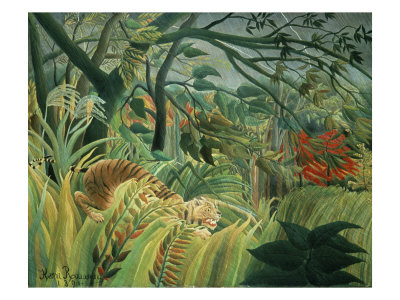
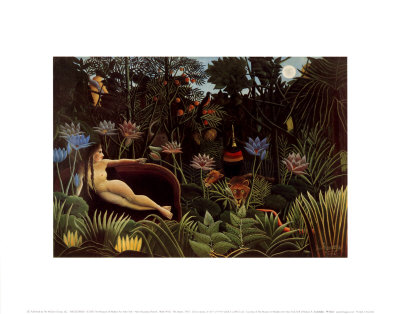
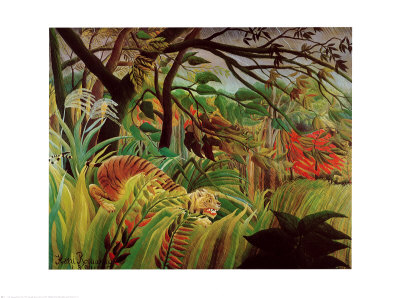
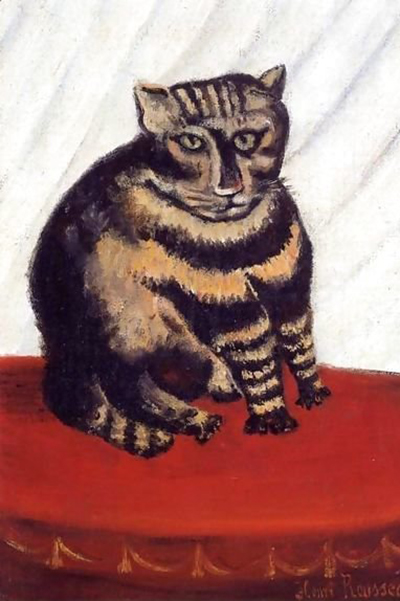
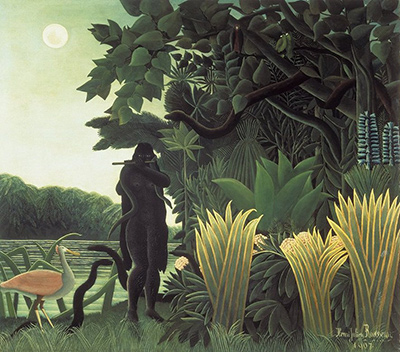
To emulate the magical quality of Henri Rousseau's botanical illustrations, one must abandon traditional realism in favor of an internal vision where nature feels alive and urgent. The goal is not to replicate a flower's exact structure, but to convey the sensation of it springing forth from the very surface of the paper, defying gravity and perspective with a burst of pure color and energy.
Setting the Stage with Thick Impasto
The foundation of this effect lies in the texture of the paint itself. Naive art often relies on a heavy application, or impasto, where the brushstrokes remain visible and the paint sits high on the canvas. When applying your base layer for a flower, do not rush to blend everything into a smooth gradient. Instead, let the paint accumulate in thick mounds, creating a physical relief that catches the light. This tactile quality immediately separates your work from academic realism. Use a stiff, natural-bristle brush to load generous amounts of pigment. As you lay down the petals, ensure that the strokes overlap slightly, allowing the white of the paper to peek through the gaps. This trick mimics the luminosity of sunlight filtering through leaves and creates an illusion of depth without needing complex shading techniques. The roughness of the paint texture itself becomes part of the composition, making the flower feel tangible and present.
The Anatomy of a Simplified Form
Once the texture is established, focus on simplifying the complex geometry of flora. Rousseau did not draw flowers as they exist in nature; he drew them as they existed in his imagination. Break the flower down into its most essential shapes. A rose might be reduced to a cluster of overlapping ovals, while a daisy becomes a central circle surrounded by distinct, separate rays. Avoid drawing every single vein or petal tip. This reductionism allows the viewer's eye to fill in the missing details, engaging them in the creative process. Keep the outlines bold and confident, using a slightly different hue or a darker value to define the edges. These lines should feel decisive, as if the artist is shouting the form into existence rather than carefully tracing its contours. By stripping away unnecessary detail, the remaining elements gain a singular, overwhelming power that drives the "bursting" effect.
Mastering the Color Palette
The true soul of Rousseau's work resides in his choice of color, which was often bold, unnatural, and emotionally charged rather than strictly botanical. To achieve a bursting look, you must select colors that vibrate against one another. Do not be afraid to use pure, saturated pigments that might look garish in a studio but sing on a large canvas. For instance, pair a bright, electric yellow with a deep, rich purple or a burnt orange. These contrasting hues create a magnetic tension that pulls the eye inward, making the flower feel like a source of energy radiating outward. You can even introduce non-naturalistic greens for the stems or leaves, such as a vivid turquoise or a metallic olive, to further distance the work from reality. The key is consistency in tone; ensure that the colors within a single flower share a similar saturation level so they feel unified, even if they clash with the surrounding background. This harmony within conflict is what gives naive paintings their unique, dreamlike atmosphere.
Composing the Explosion
Finally, consider how the flower interacts with the negative space around it. To make the bloom appear as though it is erupting from the paper, the surrounding area should remain relatively simple and subdued. Leave large areas of white or a very light, neutral tone around the edges of the flower. This negative space acts as a lens, focusing all attention on the central subject and enhancing the feeling of expansion. Imagine the flower pushing against the invisible border of the paper, wanting to break free. In the composition, place the flower slightly off-center to create dynamic movement. Allow the petals to extend toward the margins of the canvas without necessarily touching them, suggesting infinite growth beyond the frame. If the flower seems too contained within a rectangular shape, consider cropping the final image or painting directly onto a canvas with a textured edge to enhance the sense of emergence. The composition should feel unstable, shifting, and alive, mirroring the restless energy of the natural world captured by the naive eye.
Essential Techniques for Maximum Impact
To truly master the illusion of bursting forms, you must incorporate specific mechanical and visual tactics that reinforce the naive aesthetic. These techniques work in tandem with the previous steps to create a cohesive, jarring yet beautiful experience.
- Apply a matte varnish over the finished piece to reduce glare, ensuring the thick texture is seen clearly rather than washed out by reflection.
- Use a palette knife instead of a brush for the central petals to create a more chaotic, sculpted look that resembles actual organic matter.
- Intentionally leave small "accidents" in the paint application, such as a drip or a smudge, to maintain the raw, unedited feel of the original work.
- Mix your colors on the palette with fewer steps to preserve the purity and intensity of the pigments, avoiding muddy tones.
- Ensure the background does not compete with the flower for attention by keeping it flat and devoid of detailed patterns.
- Vary the size of the flowers within a single composition; some should be large and dominant, while others are small and tucked away.
- Consider the psychological effect of the colors, ensuring that the reds and yellows feel warm and inviting while the blues and greens feel distant and cool.
By combining thick texture, simplified forms, vibrant color, and dynamic composition, you can create a piece that truly feels as though nature is bursting out of the paper before our very eyes.