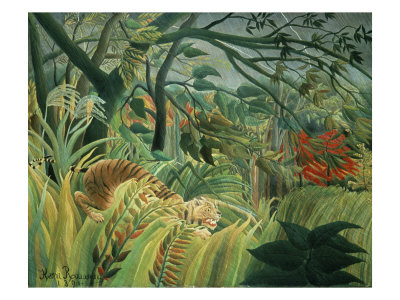
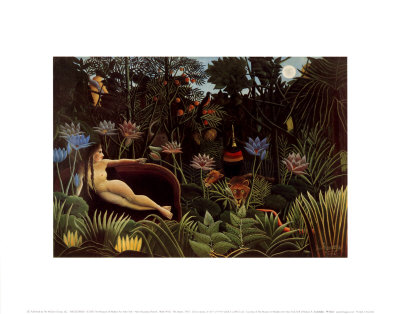
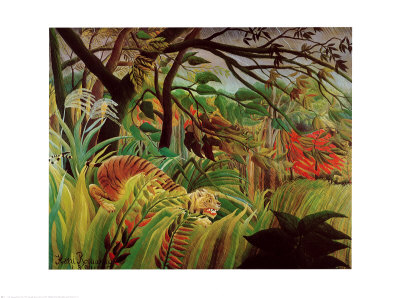
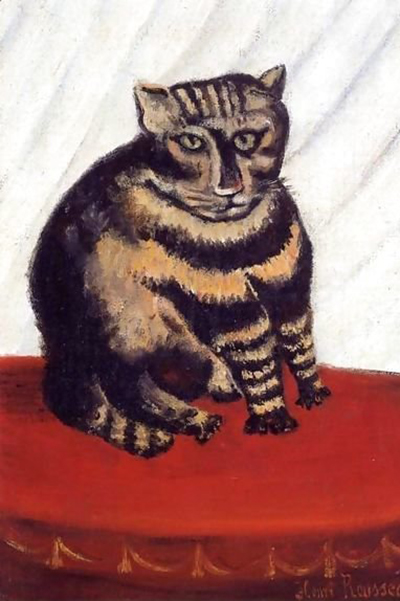
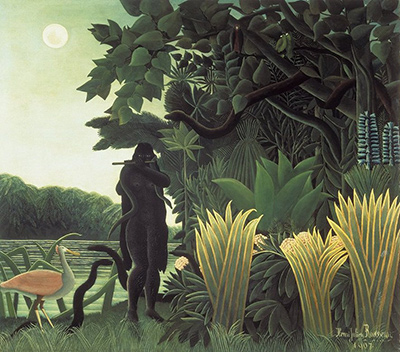
Henri Rousseau, the French painter known as "The Sleeping Gypsy," possessed a unique ability to transport viewers into dreamlike landscapes that felt simultaneously impossible and utterly real. His masterpieces often feature dense, vibrant vegetation and mysterious silhouettes that seem to exist in a state of suspended animation, inviting us to step into a world where logic takes a backseat to pure sensation. To replicate this specific aesthetic, one must understand that the fence in his work is not merely a structural element; it is a deliberate psychological device used to divide the viewer from the dream world. By learning how to paint these naive fences, you can transform your own canvas into a portal, creating a tangible edge that separates the mundane outside from the magical inside.
Establishing the Dream Logic
The first step in painting a naive fence that separates reality from fantasy is to abandon strict adherence to linear perspective and geometric perfection. In traditional art, a fence usually recedes into the distance with consistent vanishing points, but in the realm of Rousseau's influence, the boundaries of space are fluid. The fence should not necessarily connect at the top or bottom in a logical manner. Instead, the rails can appear to float, the posts can lean in different directions, or the gaps between slats can vary wildly in size. This slight distortion creates an immediate sense of unease and wonder, signaling to the eye that the viewer has crossed a threshold. The goal is not to depict a fence as it physically exists, but rather as it exists in the mind's eye, where the laws of physics are softened by the magic of imagination.
Choosing the Right Palette
Color plays a pivotal role in defining the atmosphere of the dream world. A naive fence should never be painted in a single, flat tone that mimics a photograph. Instead, utilize a palette that shifts subtly across the structure. Start with a warm, earthy base for the wood, perhaps a deep ochre or a burnt sienna, but allow the highlights to glow with a pale yellow or a touch of ochre that suggests sunlight filtering through the dream. The shadows should not be dark blue or black, as one might expect in a realistic rendering; instead, use muted purples, greens, or even a warm brown to keep the mood unified. This lack of harsh contrast removes the "realness" of the fence, making it feel more like a memory or a figment of imagination rather than a piece of construction lumber found in a lumberyard.
Creating Texture and Depth
To achieve the look of naive art, texture must be handled with a brush that suggests the roughness of the wood without detailing every grain. Thick, impasto applications of paint can give the fence a tactile quality, making it seem like it might protrude from the canvas. However, be careful not to make the texture so heavy that it obscures the forms. The key is to let the paint sit on the surface in a way that feels organic and handmade. When painting the gaps between the slats, use a technique that allows the background to show through, but ensure the gaps are irregular. Some gaps should be wide, some narrow, and some might be entirely missing, creating a rhythm that guides the eye across the composition without leading it to a single focal point. This irregularity reinforces the idea that the fence is a barrier made of light and shadow rather than solid matter.
The Psychology of the Barrier
The Role of Negative Space
The most critical aspect of painting this specific type of fence is understanding the power of negative space. The fence is not just an object; it is a line drawn in the air between what is known and what is unknown. The area behind the fence should be treated with a different level of detail than the area in front. The world behind the barrier can be rendered with softer edges, more saturated colors, and a sense of mystery, perhaps featuring tall, impossible trees or a surreal sky. By contrasting the defined, slightly chaotic nature of the fence with the ethereal quality of the background, you create a visual wall that the viewer can almost touch. This separation forces the eye to pause, creating a moment of reflection before moving deeper into the dream. The fence acts as a guardian of the imagination, ensuring that the viewer remains aware of their own reality while being pulled irresistibly toward the fantasy.
Techniques for Execution
When you begin your work, consider the following approach to constructing the fence elements:
- Start with a loose underpainting to establish the overall composition and the relationship between the fence and the background.
- Use broad strokes to define the main shapes of the slats and posts, avoiding fine details until the final layers.
- Vary the thickness of the lines to suggest depth and the curvature of the forms, ensuring no two segments look identical.
- Apply color layers starting from the darkest tones and working up to the lightest highlights, blending them carefully to avoid harsh lines.
- Allow the paint to dry between layers to maintain the distinct, naive quality of the brushwork.
By following these principles, you will be able to craft a fence that does more than divide space; it will divide time and perception, placing the viewer right on the precipice of a beautiful, dreamlike reality.