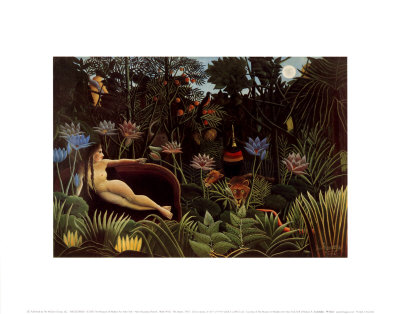
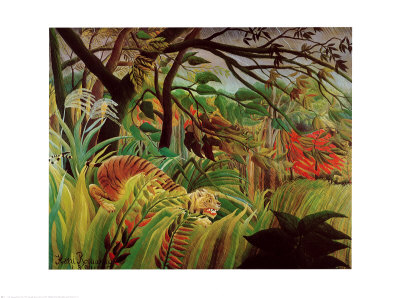
To paint clouds that possess the illusion of motion, one must abandon strict realism for the fluid logic of the imagination, much like Henri Rousseau did in his masterful depictions of exotic skies. This approach relies not on photographic accuracy, but on capturing the fleeting feeling of wind, light, and depth that makes the viewer believe the scene is unfolding before their very eyes. By mastering the manipulation of form, texture, and negative space, an artist can transform static marks on canvas into a dynamic, breathing atmosphere.
Understanding the Physics of Illusion
The secret to making clouds appear to move lies in understanding that they are never truly isolated shapes; they are fragments of a larger, shifting entity. In naive art, the rules of perspective often bend to serve the emotional truth of the moment rather than geometric correctness. The movement is suggested by the direction the edges curl, the way shadows stretch across the forms, and the implied flow of air through the composition. If you paint a cloud that looks perfectly still, it will remain still; to create motion, you must introduce a sense of trajectory that the viewer's subconscious brain will eagerly interpret as speed.
The Power of Negative Space
Often, the most effective way to depict movement is to focus on what is not there. Instead of filling the canvas with billowing white masses, consider the blue sky as an active element that pushes the clouds forward. By painting large areas of clear, unbroken color, you give the clouds a path to travel upon. The contrast between the soft, diffused edges of the cumulus and the sharp, defined expanse of the azure background creates a tension that mimics the friction of air against a moving object. This technique forces the eye to travel across the empty spaces, filling them in with the mental image of the wind rushing through, thereby creating a dynamic flow that feels alive.
Techniques for Suggesting Velocity
To achieve this effect, several specific brushwork techniques can be employed to break the stiffness of traditional rendering. The key is to avoid rigid outlines and to embrace the organic, slightly chaotic nature of a storm or a breeze.
- Use loose, sweeping strokes that curve in the direction you want the cloud to travel, ensuring the brush tip never stops its momentum until the cloud form is complete.
- Layer translucent washes of color over the base shapes to create a sense of depth and atmospheric haze, mimicking how distant clouds blend with the background.
- Add streaks of darker blue or grey that cut diagonally across the lighter masses to indicate the direction of the wind and the pressure of the moving air.
- Vary the size and density of the cloud fragments; larger, heavier forms can anchor the composition while smaller, wispy tendrils suggest the faster movement of the wind's edge.
- Consider painting the "undersides" of the clouds with a hint of shadow or darker tone to give them volume and make them appear as if they are floating and sliding rather than floating statically.
Embracing the Naive Aesthetic
Naive art thrives on its own unique language, which prioritizes the artist's personal vision over technical perfection. In this style, clouds are not merely weather phenomena; they are characters in the story of the painting, often bearing the weight of the sun or the shadow of the moon. The movement should feel whimsical and dreamlike, evoking a sense of childhood wonder or the quiet majesty of the natural world. Do not try to replicate a photograph of a storm; instead, capture the feeling of a sudden gust of wind that you just experienced. The cloud should seem to lean into the breeze, its form dictated by the invisible hand of the atmosphere.
Finalizing the Dynamic Composition
Once the shapes and the sense of motion are established, the final step is to unify the elements so that the clouds do not feel disjointed from the rest of the scene. Ensure that the direction of the cloud movement complements the direction of any other elements in the painting, such as the flight of birds, the tilt of trees, or the flow of water. If the clouds are rushing from left to right, the entire composition should lean slightly in that direction to maintain consistency. This holistic approach ensures that the viewer feels the momentum of the sky before they even fully analyze the details, resulting in a painting that feels as though it is happening right now.