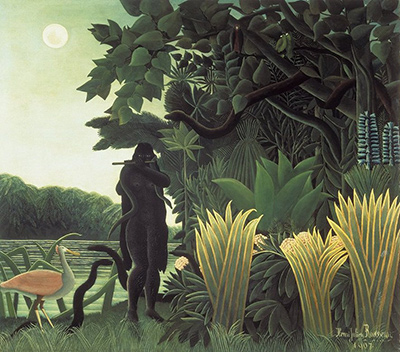
Creating a castle that feels instantly transported to a forgotten storybook requires moving beyond architectural accuracy and embracing the whimsical logic of the naive style. By simplifying forms, prioritizing vibrant color over realistic shading, and flattening perspective, you can craft a structure that defies physics and invites the viewer into a magical realm.
The Power of Simplification
The foundation of any great naive castle lies in the deliberate reduction of complex architectural details. Traditional architecture is defined by intricate stonework, precise angles, and realistic lighting, but the naive aesthetic thrives on what is left unsaid. Instead of rendering every brick and mortar joint, focus on the essential shapes and volumes of the building. Think of the castle not as a physical structure subject to gravity, but as a collection of floating geometric forms.
When sketching the initial outline, avoid using a ruler or compass to create perfectly straight lines. The slight waviness and organic curves characteristic of naive painting give the structure a hand-crafted, human quality that feels alive. Do not strive for architectural perfection; instead, aim for a sense of whimsical stability. The walls should appear solid yet slightly amorphous, perhaps merging seamlessly into the sky or the ground, suggesting that these buildings exist in a state of perpetual suspension between the waking world and the dreamscape.
Defining the Silhouette and the Skyline
Once the basic forms are established, the next crucial step is to define the skyline in a way that defies conventional physics. In naive art, the horizon line is often fluid, sometimes curving upwards to make the ground look like a rolling hill of clouds, or dipping down to create a sense of vast, open space. The castle itself should rise from this horizon with a sense of grandeur, but without the heavy, oppressive weight of realistic medieval fortifications.
Towers should be simplified into distinct shapes. A moat is not a deep, dark chasm filled with water reflecting the sky; it is often a bright, flat band of color, perhaps blue or green, that separates the castle from the earth below. Banners flying from flagpoles should be rendered as simple, flowing ribbons of color, fluttering in a wind that is felt but not logically calculated. The windows are key; rather than dark, rectangular holes, they are often depicted as glowing orbs or simple geometric shapes that emit a warm, inviting light, hinting at the magical life within without revealing specific interior details.
Color as an Emotional Language
In the naive tradition, color is never merely descriptive; it is an emotional language that dictates the mood of the scene. A realistic castle might use muted grays and browns to convey age and decay, but a fairy tale castle demands a palette that is bold, saturated, and sometimes unexpected. The walls of the castle might be painted in a vivid, electric blue or a soft, pastel pink that contrasts sharply with the surrounding landscape. This lack of naturalism is intentional, designed to catch the eye and draw the viewer into the fantasy.
Lighting in naive castles is often artificial or magical rather than solar. There may be no distinct sun casting long shadows, or the light itself might be represented by patches of bright white or yellow scattered across the scene. This creates a luminous quality where everything seems to be illuminated from within. The use of color should be consistent with the emotional tone of the piece. If the castle is meant to be menacing, use deep, dark greens and blacks, yet keep the lines simple. If it is meant to be welcoming, use bright yellows, reds, and blues that seem to pulse with energy.
Textures and Patterns Without Realism
Texture in naive painting serves a different purpose than in academic art. While a realist painter might strive to render the roughness of stone or the smoothness of marble, the naive artist uses texture to add rhythm and visual interest to the surface. This is often achieved through the application of paint in thick, visible strokes or the use of repeated patterns that cover the walls of the castle.
Consider how the naive style often employs decorative motifs. A castle wall might be covered in a repeating pattern of circles, diamonds, or floral shapes, applied directly onto the canvas without regard for architectural logic. These patterns act as a visual texture, giving the flat surface of the canvas depth and complexity. The paint application itself can contribute to the texture; thick impasto strokes can mimic the roughness of ancient stone, while flat, unblended areas of color can suggest smooth plaster. The key is to let the medium itself tell the story, rather than trying to simulate a photorealistic surface.
Composition and the Sense of Space
The final element in creating a convincing naive castle is the manipulation of space and composition. Naive art often flattens the perspective, reducing the depth of the scene to a two-dimensional plane. This allows the castle to appear as if it is right in front of the viewer, or perhaps floating in the distance without the vanishing point that pulls the eye away. The background might be a solid block of color, a patterned field, or a collage of other imagery, rather than a realistically rendered landscape.
To achieve this, avoid using linear perspective to create depth. Instead, layer the elements of the scene based on their emotional importance or visual weight. The castle itself might occupy the entire frame, with no sky or ground visible, emphasizing its isolation and dreamlike nature. Alternatively, the castle might be placed centrally, surrounded by abstract shapes or simple forms that frame it. The goal is to create a composition that feels complete and self-contained, a self-sufficient world that exists within the boundaries of the canvas. By freeing the castle from the constraints of realistic perspective and lighting, the artist ensures that the final image resonates with the timeless, enchanting quality of a true fairy tale.
Essential Steps for Execution
To ensure your final piece truly captures the spirit of the naive movement, keep these practical steps in mind during your painting process:
- Sketch your composition lightly first, focusing on overall shapes rather than fine details.
- Choose a palette that includes at least one highly saturated color to serve as a focal point.
- Apply paint in visible, textured strokes to avoid a smooth, overly polished finish.
- Intentionally leave white space or gaps in the painting to represent the magical quality of light.
- Resist the urge to correct crooked lines, as asymmetry often enhances the naive charm.
- Consider adding a simple border or frame to isolate the castle from the surrounding environment.
- Review your work from a distance to see if the emotional tone matches your intended story.