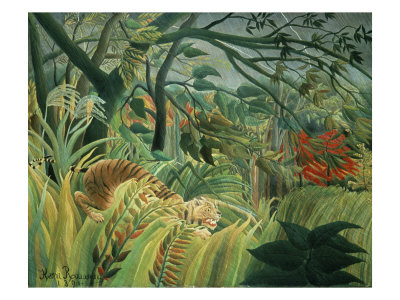
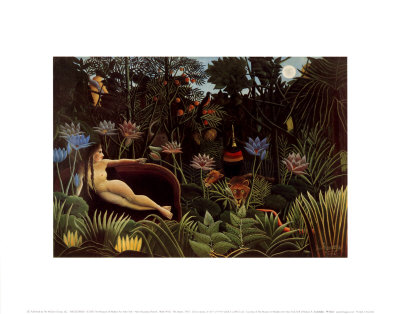
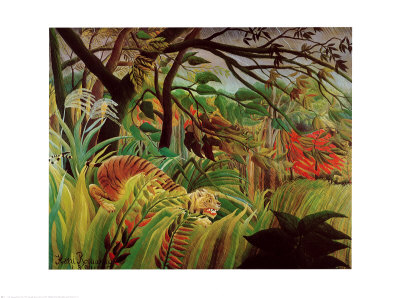
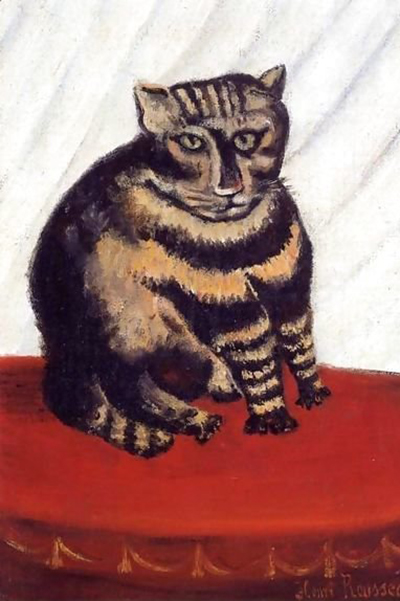
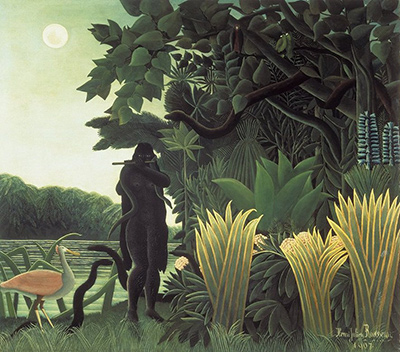
To capture the essence of a dreamlike world where impossible bridges span chasms of mist or connect floating islands, one must first abandon the rigid rules of linear perspective that govern our waking reality. Just as Henri Rousseau wove a logic of his own imagination, the artist must prioritize the emotional truth of the scene over strict geometric accuracy, allowing the structure to become a vessel for wonder rather than a mere architectural element. This guide will explore the specific techniques required to render these ethereal connections with the vibrant, naive charm that defines the movement.
Establishing the Floating Realm
Before a single brushstroke is laid upon the canvas, the foundation must be established not by a horizon line, but by a sense of infinite distance that defies gravity. In a naive interpretation, the ground is often suggested by color and texture rather than defined edges, creating a sense of softness and ambiguity. The landscape should feel suspended, as if caught in a perpetual moment of dawn or dusk where the air is thick with possibility. Use broad, sweeping strokes to define the terrain, ensuring that the connection between the two sides feels organic, as though the earth itself is breathing and expanding to meet the viewer.
The Architecture of Imagination
The bridge itself becomes the protagonist of the narrative. Unlike traditional structures built on solid foundations, these dream bridges often seem to grow from the soil or float above it, supported by whimsical columns or vines that twist in impossible directions. The materials of the bridge—whether they appear to be made of light, glass, or woven dreams—should be rendered with a simplified, almost cartoonish clarity. Avoid intricate detailing; instead, focus on the silhouette and the overall rhythm of the form. The path should invite the eye to travel from one side to the other, acting as a visual bridge that mirrors the emotional bridge being constructed in the mind of the artist.
Mastering the Illusion of Depth
Creating the illusion of depth in a naive style requires a shift in how we perceive shadows and light. Instead of using a single light source to create realistic gradients, utilize flat areas of color with sharp, contrasting outlines to define the form. The "bridge" should appear to emerge from the background in a way that defies physical law, perhaps by having its underside visible from above or by fading into the sky. Consider using a subheading to explore the specific handling of the bridge's underside. If the bridge is elevated, the space beneath it should be filled with a contrasting color or pattern to emphasize its separation from the ground. The key is to maintain a consistent, flat tonality that prevents the scene from becoming too realistic, keeping the viewer firmly within the dream state.
Palette and Atmosphere
The color choice is paramount in establishing the mood of the surreal landscape. Vibrant, saturated hues should dominate the scene, often clashing in a way that feels joyful rather than jarring. Consider using a palette of electric blues, burning oranges, and lush greens to create a sense of energy and movement. The atmosphere should feel humid and heavy, as if the air is vibrating with the presence of the impossible structure. Avoid dull, muddy tones; instead, opt for pure, intense colors that pop against the white of the canvas or the soft blues of the sky. This vibrancy is what triggers the feeling of wonder and transports the viewer out of the mundane world.
Step-by-Step Execution Plan
To translate these concepts onto the canvas, follow this practical sequence of actions that mirrors the construction of a dream:
- Begin with a rough wash of color to establish the two distinct landmasses, ensuring they are separated by a significant gap of sky or mist.
- Sketch the outline of the bridge with loose, confident lines, ignoring gravity and perspective to let the form suggest itself naturally.
- Fill in the spaces between the land and the bridge with abstract shapes and patterns to suggest vegetation or water, avoiding clear definitions of individual leaves or waves.
- Refine the details of the bridge's structure, adding texture to the materials with varied, textured brushstrokes to give them a tactile quality.
- Apply the final highlights and shadows using the most vibrant colors available, ensuring that the light seems to emanate from the structure itself rather than an external source.
By following these steps, the artist can create a painting that feels less like a depiction of a physical place and more like a memory of a place that never existed but feels infinitely real. The result is a work that speaks directly to the subconscious, inviting the observer to wander across the unseen span and discover the magic hidden within the folds of the imagination.