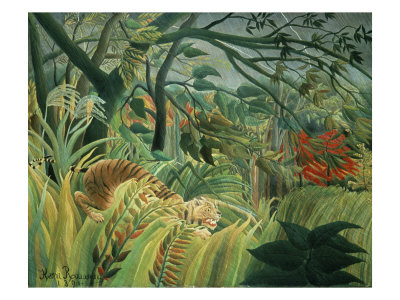
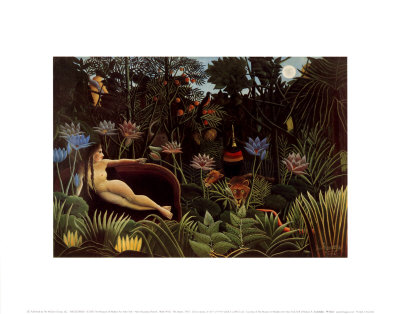
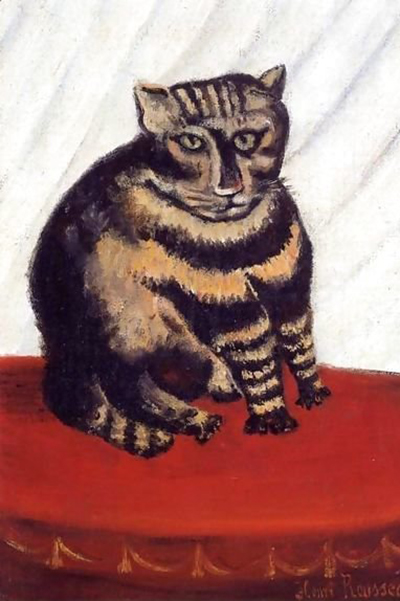
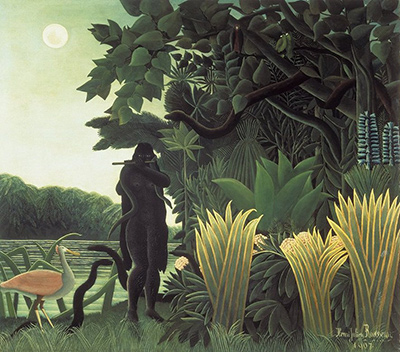
Painting birds in flight with the sense of effortless grace found in the works of Henri Rousseau requires more than just accurate anatomy; it demands a shift in perspective that prioritizes rhythm and emotion over rigid realism. To achieve that unburdened, dreamlike quality, one must learn to simplify forms, break apart the structure, and focus entirely on the feeling of motion rather than the physical mechanics of the bird's movement.
Deconstructing the Real Form
The first step in achieving a naive style is to intentionally ignore the perfect proportions of a real bird. A realistic bird is a complex machine of feathers, bones, and muscles that must be rendered with precision to be understood by the eye. In contrast, the naive approach asks the artist to see the bird as a collection of shapes and energies. Instead of trying to draw every feather or outline the wing perfectly, focus on the silhouette and the general direction of the flight path. This simplification allows the bird to feel light and airy, as if it is gliding through the air without any resistance. By reducing the visual complexity, the painting invites the viewer to fill in the gaps with their own imagination, creating a sense of freedom that is impossible to achieve with overly detailed realism.
Embracing Asymmetry and Imperfection
One of the most distinct characteristics of naive art is its embrace of asymmetry. In traditional painting, a composition is often balanced perfectly, with elements mirroring one another to create stability. However, to capture the chaotic joy of flight, introduce slight tilts, uneven wing angles, and unexpected turns. A bird should not always fly straight ahead; it might dip low, swoop upward, or twist its body in mid-air. This sense of dynamic imbalance prevents the painting from feeling static. When you deliberately break the rules of standard composition, you mimic the unpredictable nature of the sky. The bird appears to be dancing rather than traveling, which reinforces the feeling that it is unburdened by gravity. This technique transforms the subject from a mere observation into a lively participant in the scene.
Mastering the Lines of Motion
The lines used to define the bird in naive art must be fluid and continuous, suggesting movement rather than solid structure. Avoid thick, heavy outlines that can make the bird look like a cartoon or a stiff doll. Instead, use thin, wavy lines that mimic the texture of wind and air. When drawing the wings, do not create a single, solid shape. Break the wing into smaller segments or suggest the motion by leaving small gaps in the line. These interruptions create a visual rhythm that guides the eye across the canvas, making the bird seem to be in the middle of a dance. The goal is to make the viewer feel the speed and direction of the flight, not just see the object itself. By varying the thickness and curvature of your lines, you can convey acceleration, deceleration, and the subtle sway of the wings against the breeze.
Using Color to Define the Atmosphere
In naive art, color is often used more for emotional effect than for accurate representation of the bird's species or the time of day. To make the bird look unburdened, choose a palette that feels luminous and ethereal. Bright, saturated colors can evoke the warmth of a sunny day, while softer pastels can suggest the gentle mist of dawn or dusk. When painting the bird, consider using colors that contrast with the background to make it pop, but ensure that the transition between colors is smooth and blended. Avoid harsh, dark shadows that would ground the bird to the earth. Instead, use lighter tones and highlights to suggest the way sunlight catches the feathers, reinforcing the idea that the bird is floating in a radiant environment. The color scheme should work in harmony with the overall mood of the piece, contributing to a sense of dreamlike suspension.
Practical Steps for Execution
To put these concepts into practice, follow a structured approach that prioritizes feeling over technical perfection. Begin your sketch by lightly marking the direction of the flight and the general shape of the body. Do not worry about getting the anatomy right at this stage; the focus is on the flow. Next, apply your simplified forms, keeping the lines loose and confident. As you work on the colors, remember to keep the composition dynamic and asymmetrical. Finally, step back and observe the overall rhythm of the piece. Does the bird feel like it is moving? If not, adjust the lines or the placement of the wings.
- Start with a loose, gestural sketch to establish the direction of flight.
- Simplify the bird's form into basic shapes and avoid detailed feather work.
- Use asymmetrical compositions to create a sense of dynamic movement.
- Apply thin, wavy lines to suggest the fluid motion of the wings.
- Choose a luminous color palette that enhances the feeling of lightness.
By following these guidelines, you can create paintings that capture the magic of flight, inspired by the visionary spirit of Henri Rousseau. The key lies in trusting your intuition and allowing the bird to become a character of pure energy and joy, soaring freely above the canvas without a single weight to hold it back.