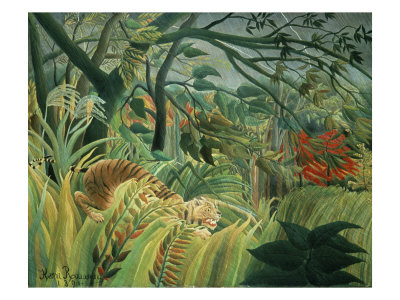
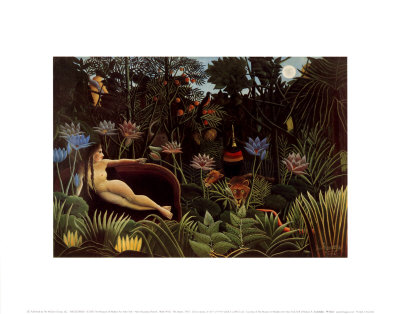
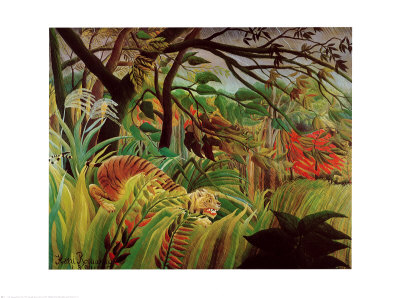
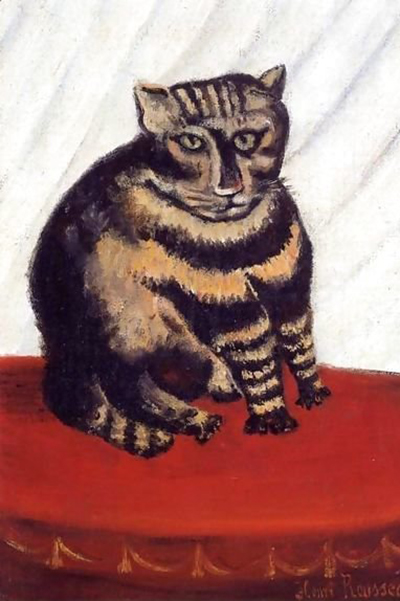
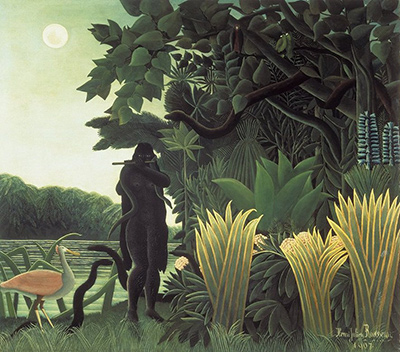
Blending several distinct subjects into a single canvas is a hallmark of the naive style, particularly in the work of artists who found inspiration in the bustling, untamed beauty of the natural world. This approach allows the viewer to see a story unfold simultaneously, where every object holds equal importance, regardless of its size or traditional artistic hierarchy. To achieve this effect without creating visual confusion, one must embrace a specific mindset that prioritizes the arrangement of shapes and the freedom of expression over strict perspective rules.
The Freedom of Flat Perspective
Naive artists often reject the illusionistic depth taught in formal academies, opting instead for a flat, two-dimensional presentation that invites the eye to roam freely across the surface. When introducing multiple subjects, such as a bird, a tree, and a house, the key is to avoid forcing them into a single vanishing point. Instead, place each element on its own plane, allowing them to coexist in a shared space that feels more like a collage than a window looking out. This technique creates a dynamic tension where the subjects interact visually without competing for realistic spatial dominance.
Breaking the Rules of Proportion
A common challenge in naive composition is maintaining a sense of unity when too many objects vie for attention. The solution lies in deliberately breaking the rules of proportion that govern classical art. You might draw a small tree next to a gigantic flower, or a tiny sun hovering above a large mountain, simply because the composition demands it. This deliberate imbalance creates a unique rhythm. For instance, a naive painter might depict a flock of birds in the foreground with exaggerated detail, while a distant house is rendered with simplified strokes, yet both remain equally integral to the narrative. The goal is not to draw what is seen realistically, but to express what is felt, ensuring that no single subject overwhelms the others in a way that breaks the dreamlike quality of the piece.
Managing Visual Weight and Balance
When you stack multiple elements on a single canvas, the risk of visual clutter is high. To manage this, consider the concept of visual weight, which is determined by factors such as size, color saturation, and detail level. In a naive composition, a brightly colored butterfly in the upper right corner might act as an anchor, balancing a cluster of dark, heavy foliage in the lower left. By distributing these "heavy" elements evenly across the canvas, you create a stable composition that feels intentional rather than chaotic. Avoid clustering too many small, busy items in one corner; instead, spread them out to give the viewer's eye a path to follow.
The Art of Overlapping and Intercutting
One of the most effective techniques for integrating multiple subjects is the use of overlapping and intercutting, which mimics the way objects naturally interact in our field of vision. In naive art, objects often overlap in a way that defies strict logical depth, creating a sense of intimacy and immediacy. A bird might fly directly in front of a tree branch, obscuring part of it, while a fence line might weave between legs and flowers. This method ensures that no subject feels isolated or distant. By allowing the shapes of one subject to interact with the forms of another, you create a cohesive web of relationships that binds the entire composition together. It transforms a collection of separate items into a unified scene where every element supports the others.
A Practical Approach to Composition
To execute this style effectively, follow these steps when planning your next multi-subject naive painting:
- Start by sketching your main subjects lightly, focusing on their basic shapes rather than their details.
- Arrange the shapes on the canvas to ensure they are spaced out enough to breathe but close enough to feel connected.
- Deliberately exaggerate the size or position of specific elements to create a focal point without losing the overall balance.
- Use a limited palette to unify the disparate subjects, ensuring that the colors complement rather than clash.
- Add details last, focusing on the texture and pattern of each subject individually to bring them to life.
By embracing these principles, you can create vibrant, engaging paintings that capture the essence of naive art. The resulting work will not only showcase multiple subjects harmoniously but will also evoke the whimsical, unfiltered perspective that defines this cherished artistic tradition.