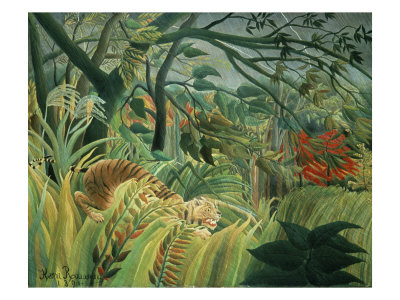
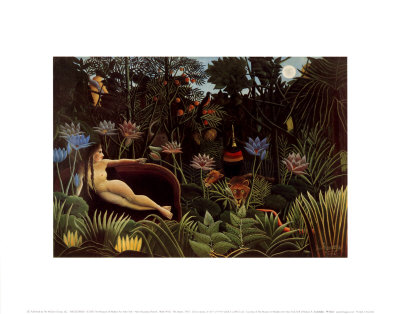
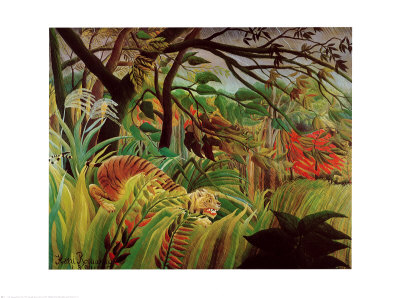
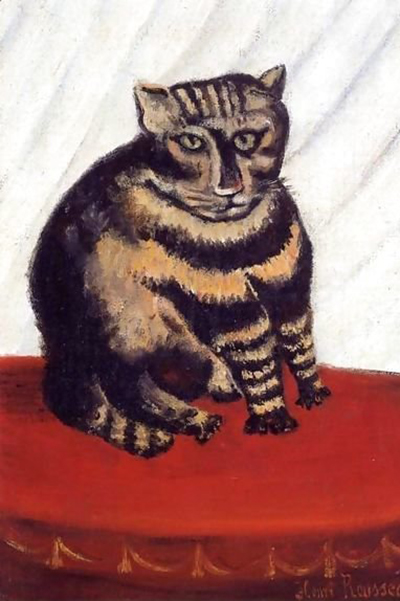
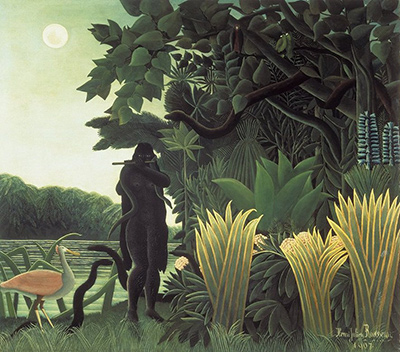
Henri Rousseau, the enigmatic French painter known for his "naive" style and dreamlike forests, once revealed a simple yet profound secret: the most complex natural scenes are built from the most basic geometric foundations. By stripping away unnecessary detail and focusing on the underlying structure of forms, artists can capture the spirit of nature with a brushstroke of pure confidence. This approach, reminiscent of Rousseau's bold outlines and flat colors, transforms the chaotic garden into a harmonious composition of shapes and planes.
The Foundation of Simple Geometry
To begin painting flowers in the spirit of Rousseau, one must first abandon the obsession with hyper-realistic textures and intricate shading. Instead, look at the flower not as a collection of tiny petals, but as a cluster of distinct geometric volumes. A rose, for instance, is not merely a round object; it is a series of overlapping cylinders and spheres stacked upon one another. The stem is a tapering cylinder, and the leaves are elongated ovals or teardrops that twist in space. By reducing these elements to their core shapes, the painting gains an immediate clarity and strength that often feels unfinished when too much detail is added.
Capturing Light Without Shading
Rousseau did not rely heavily on the subtle gradations of light and shadow found in academic training. He believed that the true value of a flower lay in its color and its relationship to the surrounding environment, not in a realistic depiction of how sunlight hit its surface. When painting with simplified forms, you can often skip the traditional "chiaroscuro" technique where you blend dark shadows into mid-tones. Instead, define the edges of your shapes clearly and let the color itself carry the light. A bright yellow petal against a deep green leaf will naturally suggest illumination, requiring no painted highlights to convey the effect. This separation of form and light creates a flat, two-dimensional quality that is both striking and timeless.
Breaking Down the Petal Structure
One of the most common mistakes beginners make is trying to draw the delicate edges of every single petal, which can result in a muddy, cluttered image. To avoid this, focus on grouping the petals into larger masses. You can categorize them by their orientation: upward-facing petals, downward-facing petals, and those lying flat against the stem. Each group can be represented by a single, simplified shape, perhaps an oval or a teardrop, rather than dozens of individual strokes.
Here is a practical guide to simplifying specific flower structures:
- Identify the main head of the flower as a central sphere or oval.
- Group the outer petals into a ring of overlapping cylinders.
- Represent the inner buds as smaller, tighter spheres nestled within the main shape.
- Draw the stem as a simple, slightly curved cylinder, ignoring any fine hairs or texture.
- Treat leaves as large, flat planes that overlap the stem and each other.
Managing Color and Harmony
Once the shapes are established, the next step is to apply color with purpose. Rousseau was a master of using vibrant, sometimes unnatural, hues to make his flowers pop. When working with simplified forms, you have the freedom to use bold, flat areas of color without worrying about blending them seamlessly. A bright, electric blue can sit next to a sunny yellow, and the contrast will create visual excitement. However, ensure that these colors are chosen carefully; they should complement each other or provide a pleasing contrast. The simplicity of the shapes means the color becomes the primary driver of the composition, so choose hues that evoke the feeling of the season or the mood of the piece.
The Power of Negative Space
Finally, remember that the spaces between the flowers are just as important as the flowers themselves. In a composition based on simplified shapes, the negative space—the empty areas between the geometric forms—helps define the boundaries of the objects. If you fill every corner with detail, the painting becomes a chaotic mess. Instead, leave some areas open or use lighter, less saturated colors to create a sense of airiness. This technique, often seen in Rousseau's later works where figures seemed to float in a misty atmosphere, gives the painting a sense of calm and balance. By respecting the space around the simplified forms, you allow the viewer's eye to rest and wander, creating a more engaging and restful viewing experience.
Related reading
- The Digital Brush: Reimagining the Dream World of Rousseau
- The Child in the Jungle: Cultivating the Spirit of Naïve Art
- Finding Your Own Wild Garden: A Guide to Choosing Subjects in Naïve Art
- The Artist's Canvas: Unveiling the Essentials of Naïve Creation
- Unlocking the Surreal Garden: A Guide to Finding Historical Naïve Art for Inspiration