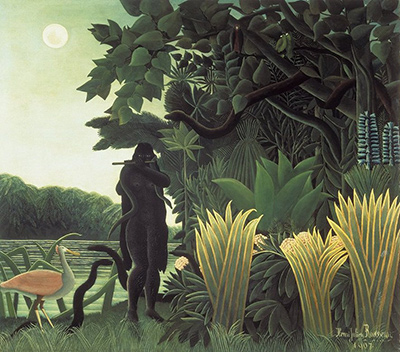
Mastering the art of rendering structures that ignore the laws of linear perspective is one of the most captivating challenges for an artist inspired by the work of Henri Rousseau. This approach allows creators to build worlds where buildings stretch horizontally across the canvas, float in mid-air, or recede at impossible angles, creating a dreamlike atmosphere that defies scientific logic yet feels emotionally true. To achieve this unique aesthetic, one must abandon strict geometric rules in favor of intuitive composition and a deep understanding of how viewers perceive depth in an imaginative context.
Breaking the Horizon Line
The first step in constructing a logic-defying architecture is to deliberately ignore the traditional horizon line that usually divides the sky from the earth. In realistic painting, the horizon acts as a fixed datum from which all vertical lines converge to a single vanishing point. To create a surreal effect, an artist should allow the ground plane to tilt, curve, or even disappear entirely. You might have a long corridor that seems to stretch infinitely to the left while the right side of the room is filled with vertical columns that do not align. This disorientation invites the viewer into a subconscious state of wonder, mirroring the whimsical nature of naive art where the boundary between reality and fantasy dissolves. The key is to make these distortions feel intentional rather than accidental, ensuring that the structure maintains an internal coherence even as it breaks external rules.
Manipulating Scale and Proportion
Another powerful technique involves subverting the expected relationship between objects and the surrounding environment. In conventional perspective, a large building in the distance should appear small relative to a small figure in the foreground. In a Rousseau-inspired style, you can place a massive, detailed tower directly next to a tiny human figure without any sense of scale distortion based on distance. Alternatively, you might make distant objects appear larger and more intricate than those nearby, creating a sense of infinite depth where the background is actually the most detailed part of the scene. This reversal of scale challenges the viewer's spatial understanding and adds a layer of mystery to the composition. It suggests that the world is not governed by physical laws but by the artist's vision, allowing the architecture to breathe and exist on its own terms.
Techniques for Distorted Volumes
To execute these ideas effectively, one must rely on specific visual cues that hint at impossibility without explicitly labeling it as such. Here are several methods to incorporate into your workflow when designing these otherworldly structures:
- Use repetitive patterns that extend beyond the visible edges of the canvas, suggesting a texture that wraps around the viewer.
- Draw vertical lines that do not meet at the top or bottom, creating a sensation of endless height or compression.
- Introduce asymmetrical windows or doors that open in unexpected directions, such as sideways or upwards.
- Blend architectural elements with natural forms, like trees growing out of windows or vines encasing walls in a way that defies gravity.
- Leave blank spaces around structures that feel empty yet contain implied objects, playing with the viewer's expectation of what should be visible.
Playing with Light and Shadow
Lighting plays a crucial role in anchoring a scene to reality, so in the realm of impossible architecture, light must be treated as a narrative tool rather than a physical phenomenon. Shadows should not necessarily fall in the direction that gravity dictates. You might cast shadows upwards from a sun positioned below the horizon, or have a building cast a shadow onto a sky that is not meant to receive it. By manipulating the quality and direction of light, you can emphasize the flatness or the depth of the surreal forms. Soft, diffuse lighting often enhances the dreamlike quality, while harsh, directional light can create dramatic tension that highlights the absurdity of the structure. Remember that in this style, the mood is more important than the accuracy of the illumination.
The Power of the Unseen
Finally, the most effective way to paint architectural elements that defy logic is to embrace the unknown and the incomplete. Leave parts of the buildings cut off by the frame of the painting, suggesting that the world continues beyond the viewer's sight. This technique, known as the trompe-l'œil effect when used skillfully, tricks the eye into trying to find the rest of the structure, only to realize that the missing pieces are the most important part of the illusion. By not showing the entire building, you allow the imagination to fill in the gaps, making the viewer an active participant in the creation of the impossible world. This engagement transforms the act of viewing into a shared exploration of the mind's capacity to imagine structures that never existed, capturing the very essence of the naive art movement where the fantastical reigns supreme over the rational.