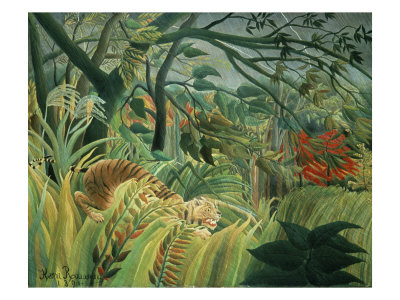
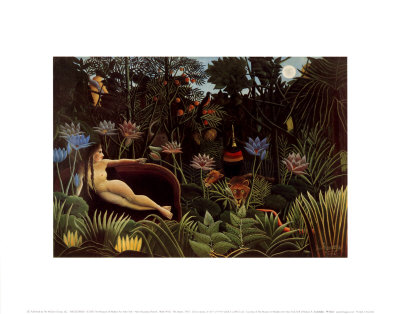
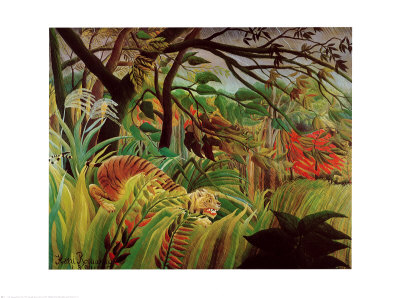
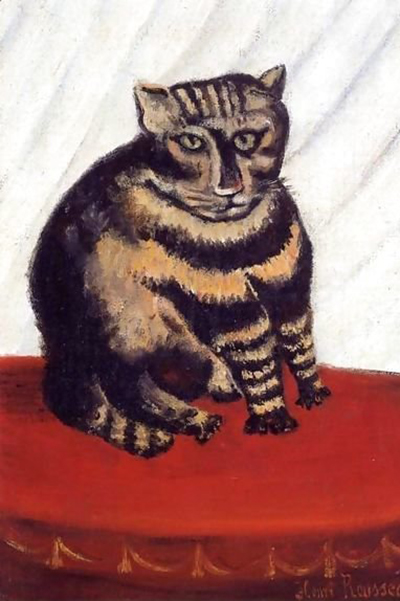
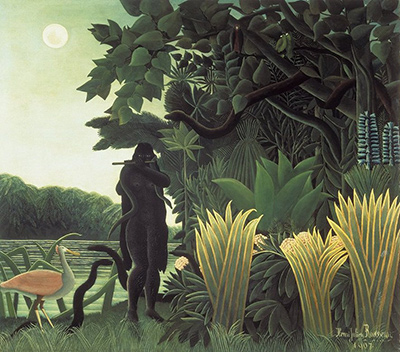
Henri Rousseau, the French Post-Impressionist known for his dreamlike forests and exotic jungles, often mastered the art of placing subjects in unexpected proximity, creating a visual tension that feels almost like a secret held between the canvas and the viewer. By examining how he managed to make disparate elements coexist without jarring the eye, artists today can learn to transform ordinary compositions into moments of profound, quiet drama. This exploration focuses on the techniques used to create these unique spatial relationships, allowing the viewer to focus on the narrative without being overwhelmed by clutter.
The Psychology of Unseen Elements
The core of Rousseau's compositional strategy often lies in what is deliberately omitted. He frequently places a figure or an object in a scene where it logically should not be, leaving the viewer's brain to fill in the missing context. This technique, often referred to as the "elephant in the room," relies on the psychological gap created by an absence that is visually present but narratively absent. When an artist includes an element that defies logical placement, such as a woman in a jungle where no human has recently been, the viewer is forced to confront the strangeness of the scene directly. The tension arises because the eye catches the figure immediately, yet the surrounding environment suggests a time or place where such a presence is impossible. This dissonance becomes the focal point of the painting, drawing the attention away from the details of the flora and fauna and toward the mystery of the figure's existence.
Mastering the Illusion of Depth
To make this juxtaposition work, one must understand how Rousseau manipulated the illusion of depth to separate the foreground from the background without actual distance. In his naive style, he often used flat planes of color to suggest distance rather than traditional perspective lines. By placing a small, detailed figure in the extreme foreground against a vast, simplified background, he creates a sense of scale that emphasizes the isolation of the subject. The key here is the use of negative space. Rousseau would often leave large areas of unbroken color, such as a solid blue sky or a dense green canopy, to frame the central element. This framing acts as a visual barrier, preventing the eye from wandering too far and keeping the tension focused on the interaction between the intruder and the environment. The lack of transitional details helps the viewer accept the impossibility of the scene, turning the logic-break into a stylistic strength.
Constructing the Impossible Scene
Once the decision is made to introduce a logically impossible element, the artist must carefully construct the surrounding narrative to support the anomaly. This involves selecting specific visual cues that hint at a world where this exception exists. For instance, if a figure is placed in a forest, the trees should be rendered with a certain wildness or uniformity that ignores the presence of people. The lighting in the painting should also play a crucial role; Rousseau often used a soft, even light that does not cast harsh shadows on the impossible element, allowing it to blend seamlessly into the dreamlike atmosphere. The artist must ensure that the texture and brushwork of the impossible element match the style of the surrounding objects. If the figure is painted with the same naive, slightly clumsy strokes as the leaves and vines, the viewer's brain will suspend its disbelief much more easily. The goal is not to make the impossible element look realistic, but to make it look like a natural part of this specific, dreamlike reality.
Techniques for Visual Balance
To prevent the composition from becoming chaotic, the artist must balance the visual weight of the impossible element against the rest of the canvas. This often involves repeating shapes or colors elsewhere in the painting to create a rhythm that includes the anomaly. If a strange figure is placed on the left side of the canvas, similar shapes or colors might appear on the right to create a sense of equilibrium. The use of repetition can help the eye move across the painting without getting stuck on the oddity. Furthermore, the size of the impossible element matters. It should be large enough to command attention but not so dominant that it dominates the entire visual field. A smaller, more distant presence can create a subtle unease, while a large, central figure creates a more immediate confrontation. The artist must experiment with scale until the feeling of tension is perfectly calibrated to the desired emotional response.
Practical Application for the Student
Applying these lessons requires deliberate practice in observation and composition. Students should begin by analyzing existing works that utilize similar strategies, noting exactly where the eye is led and where it pauses.
- Identify the specific element that defies logical placement in the studied artwork.
- Trace the path of the eye as it moves from that element to the surrounding environment.
- Analyze how the artist used color and line to separate the foreground from the background.
- Sketch your own compositions starting with a simple, impossible placement and then build the environment around it.
- Review the final sketches to ensure the tension feels intentional rather than accidental.
By following these steps, learners can begin to incorporate this unique compositional approach into their own work, creating pieces that resonate with a sense of mystery and wonder reminiscent of the great masters of naive art.