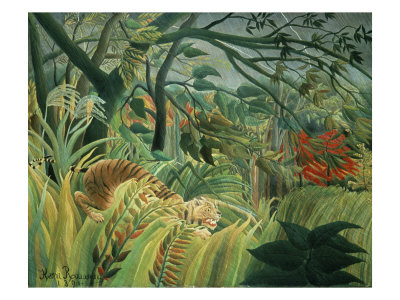
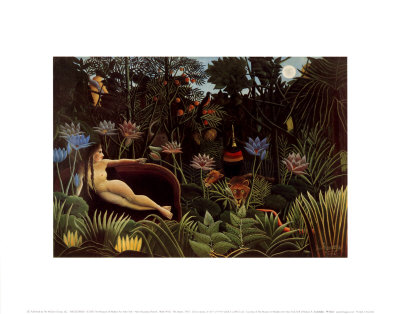
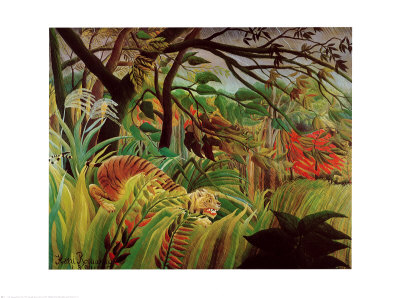
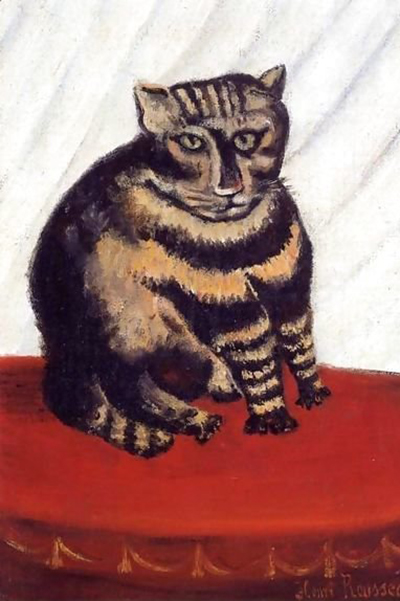
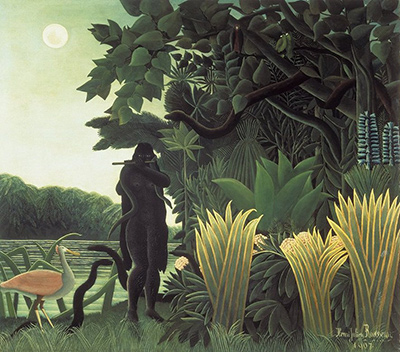
In the vast landscape of art history, a few masters stand out not just for their technical mastery, but for their unique, almost childlike approach that defies the rules of their time. Henri Rousseau, the French painter known for his "naive" style, created works that feel like windows into a surreal, dreamlike jungle, yet they were painted by a man who confessed he had never seen the rainforest he depicted. Recognizing these distinct visual signatures allows anyone to quickly distinguish a naive painting from a traditional academic work in just a few minutes. This guide provides the essential checklist of features found in Rousseau's work and similar naive traditions, helping you spot the magic of the untrained eye.
The Landscape of Unconscious Truth
Naive art is often misunderstood as merely amateur or lacking skill, but it is actually a deliberate choice to bypass conventional artistic training and express pure observation. In Rousseau's paintings, the perspective often shifts dramatically; the viewer might be placed inside a bird's eye view looking down at a jungle floor, or the horizon line might be placed lower than in reality to emphasize the towering height of the trees. This unusual composition is a hallmark of the naive style, creating a sense of wonder and mystery that traditional artists strive to avoid.
The Brushstroke and Color Palette
One of the most immediate ways to identify a naive painting is by examining the brushwork and the use of color. Naive artists typically use broad, confident strokes that cover the canvas rapidly, often without blending colors smoothly together. Instead, they apply flat areas of vibrant, saturated hues. You will notice a lack of subtle gradations or atmospheric perspective where distant objects normally fade into blue or gray. In Rousseau's work, the green of the foliage is often an intense, almost electric emerald, while the sky is a stark, unmodulated blue. The texture of the paint itself can sometimes be visible, with thick layers applied in a way that prioritizes the emotional impact of the color over realistic texture.
Understanding the Narrative of Light
Light in naive paintings behaves differently than in the works of a trained realist. There is no strict adherence to the direction of a single light source or the interplay of shadows that defines the chiaroscuro technique. Instead, light appears to bounce off surfaces with an almost magical quality, illuminating every corner of the composition equally. This flat lighting creates a two-dimensional quality that makes the painting feel like a stained-glass window or a memory rather than a photograph of reality. The shadows are often simplified into solid black shapes or omitted entirely, focusing the viewer's attention on the forms and colors rather than the play of light and dark.
Composition and Perspective Flaws
The composition of naive paintings often reveals the perspective of the artist's mind rather than their technical training. A common feature is the "flat" nature of the space, where depth is suggested through layering rather than linear perspective. You might see objects that appear to be in the foreground overlapping with objects in the background, yet they share the same scale. In Rousseau's specific case, he often painted his own bedroom plants and then transposed them into an imaginary South American jungle, resulting in a jarring juxtaposition of familiar domestic details with exotic, fantastical landscapes. The arrangement of figures and trees often feels spontaneous, as if the artist was painting what they felt in the moment rather than what they saw with scientific precision.
A Practical Checklist for Identification
To confirm your suspicion of a naive work within minutes, apply the following quick diagnostic steps. Look for the absence of anatomical correctness in figures or animals, where limbs might be elongated or proportions skewed. Check if the background lacks atmospheric haze, appearing as a solid block of color regardless of distance. Finally, observe the framing; naive works often lack the elaborate, illusionistic frames of the academic era, instead presenting the canvas as a direct, unmediated portal to the artist's vision.
By combining these observations, you can quickly determine if a painting belongs to the naive tradition. Whether it is the vibrant, unblended greens of Rousseau's jungles or the whimsical, dream-like quality of the entire composition, these signs point directly to a work created from the heart rather than the hand. The next time you encounter a painting that seems slightly off, remember that this deviation might be the key to unlocking a unique and enchanting world of naive art.
- Examine the horizon line for unnatural height or placement.
- Inspect the brushstrokes for broad, unblended application.
- Assess the lighting for a lack of directional shadows.
- Check for the juxtaposition of domestic and exotic elements.
- Verify the absence of standard perspective lines in the composition.