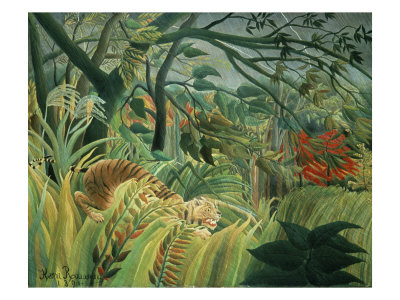
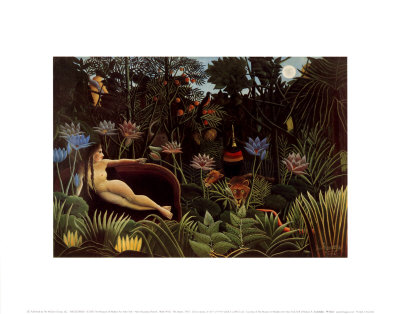
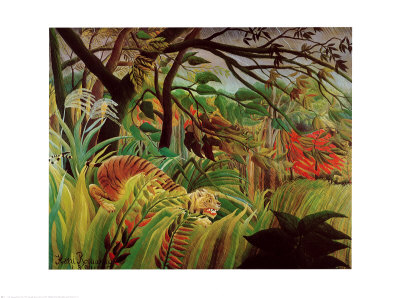
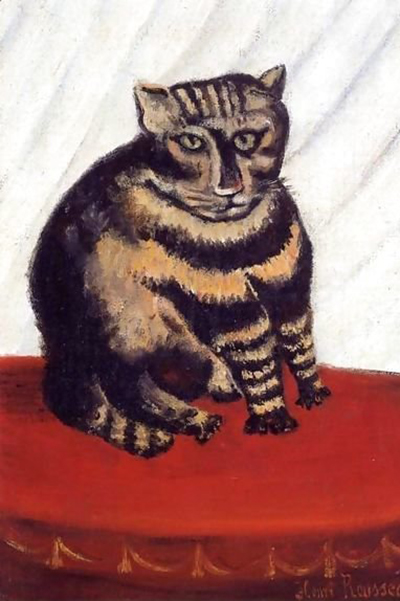
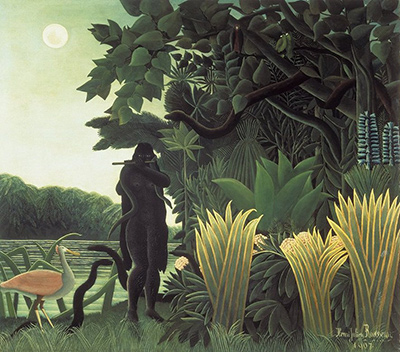
Henri Rousseau, the man who once painted himself as a jungle king amidst the silence of Parisian studios, understood that the true magic of art lies not just in the subjects he chose, but in the invisible air between the brushstrokes. When a background feels flat and dead, it steals the energy from the entire composition, leaving the viewer with nothing but a static arrangement of shapes. By studying how the French Post-Impressionist manipulated light and shadow to create his dreamlike forests and misty meadows, we can learn to infuse our own works with a tangible sense of atmosphere and depth that pulls the eye into the scene rather than pushing it away.
Understanding the Illusion of Distance
The first step toward fixing a flat background is to recognize that reality does not operate on a single plane. In nature, objects do not sit side-by-side; they recede into the distance through a delicate interplay of tonal values. A flat painting often suffers because the artist treats the background as a solid block of color, ignoring how light fades and softens over distance. To fix this, one must abandon the idea that the background is merely a backdrop. Instead, view it as a distinct character in the story, an environment that exists in its own spatial logic. When we apply this mindset, we stop seeing walls of color and start seeing layers of air, fog, and light that create a window into another world. This shift in perspective is crucial because it transforms the background from a passive element into an active force that supports the foreground figures.
Mastering Atmospheric Perspective
Atmospheric perspective is the specific technique that allows us to fake the feeling of vast distances on a two-dimensional surface. It relies on the fact that as objects move further away from the viewer, the air between them scatters light, causing colors to appear less saturated, cooler in tone, and slightly hazier. In many flat compositions, the background colors are too dark, too warm, or too sharp compared to the middle ground. To add depth, you need to deliberately mute the intensity of the background hues. Imagine a warm, golden sunset in the foreground; if the background sky is painted with the same deep, saturated orange, the scene feels compressed and fake. Instead, blend that warmth with soft whites, pale lavenders, or hazy blues to simulate the diffusion of light through thickening air. This technique creates a visual hierarchy where the viewer's eye naturally travels from the sharp, detailed foreground toward the indistinct, ethereal background, creating a seamless journey through space.
Applying Value Control to Texture
Once you have the theoretical understanding, the practical application involves specific adjustments to value and texture. The most effective way to deepen the background is to reduce the contrast between the lightest and darkest areas within that specific zone. High contrast often signals proximity to the viewer, while low contrast suggests distance. Therefore, take a neutral tinted brush and gently lower the value of the background elements, pushing them toward the middle of the tonal scale without making them muddy. This subtle reduction in contrast makes the forms appear to "float" rather than "sit." Furthermore, texture plays a massive role; a rough, heavily textured background can feel immediate and close, while a smoother, blended area suggests distance. By smoothing out the brushwork in the rear layers and keeping the foreground crisp and defined, you create a tactile distinction that the brain interprets as depth. This balance between roughness and smoothness is the key to unlocking the illusion of a three-dimensional world on a flat canvas.
Enhancing the Illusion of Light
Light is the primary architect of depth, and a flat painting often lacks a clear source of illumination or a logical play of shadows. In a lifeless work, shadows might be missing entirely, or they might be painted with the same hardness as the highlights, which makes everything look like it is pressed flat against the paper. To add atmospheric depth, establish a dominant light source and let it carve the scene. Notice how Rousseau's jungle scenes are often lit from a single, dramatic angle, casting long, soft shadows that stretch into the mist. When fixing your own work, ensure that the shadows in the background are softer, more diffuse, and less defined than those in the foreground. Use a glazing technique to layer semi-transparent washes of cool shadow colors over the darker areas of the background, allowing the underlying texture to peek through slightly. This creates a sense of atmospheric gloom or brightness that wraps around the objects, making them feel suspended in a volume of air rather than glued to the surface.
Practical Steps for Immediate Improvement
If you are looking to implement these changes immediately in your current projects, follow this step-by-step approach to transform a flat composition into a vibrant, deep scene. First, identify the area of the background that feels most static and resistant to viewing as a distance. Second, select a palette of cool, desaturated tones that match the ambient light of your painting but are significantly lighter and less saturated than the foreground colors. Third, apply these tones using loose, blended strokes to simulate the scattering of light through air, avoiding hard edges and sharp transitions. Fourth, introduce a subtle haze by adding a very diluted wash of the complementary color of your main background hue to create a violet or blue tint that unifies the space. Fifth, step back and observe the relationship between the front and back; if the background still feels too close, push the values of the mid-ground elements slightly darker to create a clearer separation between the layers. Finally, assess the overall harmony; ensure that the atmospheric effects do not muddy the focal point, but rather enhance the mystery and depth characteristic of the master's style. By systematically applying these adjustments, you will find that your painting gains a new dimension, breathing with the same quiet complexity and atmospheric mystery that defined the master's work.
Consolidating Your Vision
To ensure these changes stick, consider these fundamental principles when refining your artwork:
- Always prioritize the relationship between the foreground and background before adding detail.
- Remember that less is often more when dealing with distant elements.
- Use transparency to let light pass through layers of paint.
- Keep the edges of the background softer and less distinct than the foreground.
- Regularly step back to evaluate the perceived depth and airiness of the piece.
- Observe nature closely to understand how the human eye perceives distance.
- Trust your intuition regarding the emotional weight of the background space.
By integrating these methods, you move beyond mere representation into the creation of an immersive experience.
Related reading
- The Digital Brush: Reimagining the Dream World of Rousseau
- The Child in the Jungle: Cultivating the Spirit of Naïve Art
- Finding Your Own Wild Garden: A Guide to Choosing Subjects in Naïve Art
- The Artist's Canvas: Unveiling the Essentials of Naïve Creation
- Unlocking the Surreal Garden: A Guide to Finding Historical Naïve Art for Inspiration