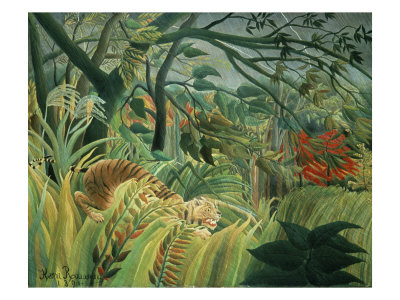
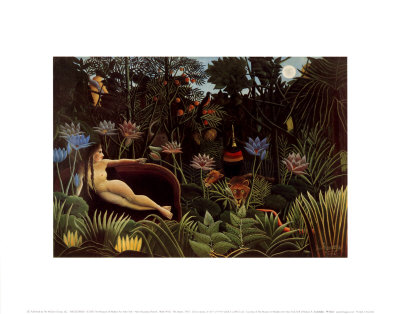
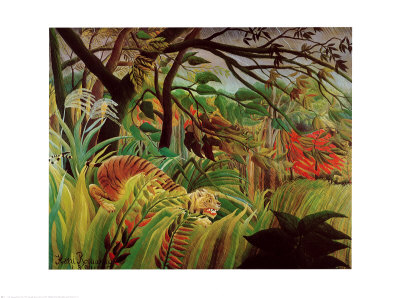
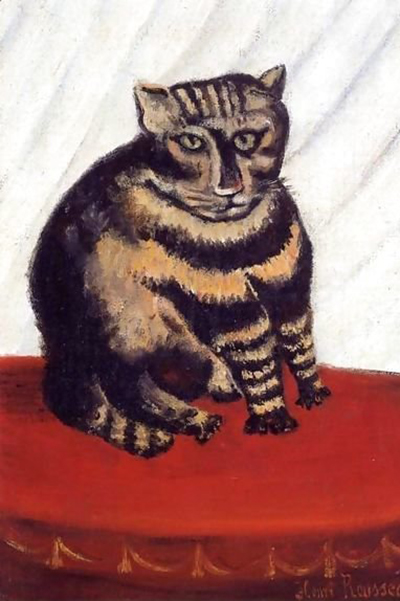
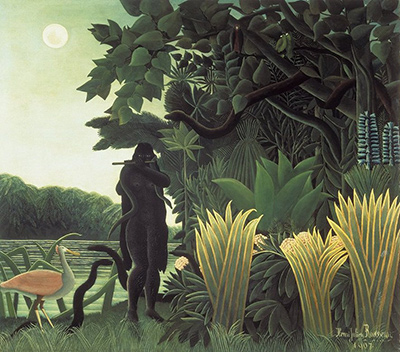
The world of naive art, championed by the whimsical genius of Henri Rousseau, invites us to look at nature not as it is scientifically measured, but as it feels emotionally and spiritually. To paint your first naive-style forest scene is to step into a realm where imagination reigns supreme over photorealism, creating a dreamlike landscape that feels both ancient and newly discovered. This guide will walk you through the essential steps to capture that unique, childlike wonder in your own studio.
Finding Your Inner Jungle
Before you ever touch a brush or lay a drop of paint, the most crucial step is to adopt the mindset of a child or a dreamer. Naive art thrives on its ability to simplify complex realities into pure emotion and distinct forms. Instead of studying a forest for its botanical accuracy, focus on the feeling of being lost among tall, swaying trees, the dappled light filtering through the canopy, and the sense of mystery that lingers in the woods. Imagine a world where the shadows are thick and heavy, and the colors are more vibrant and saturated than you might see in a photograph. This mental shift allows you to paint the essence of the forest rather than just its surface details.
Gathering Your Artistic Tools
While you can paint with watercolors or pastels, oil paints or acrylics offer the rich texture and longevity often associated with traditional naive works. You will need a variety of broad-bristled brushes to create the large, sweeping strokes that define the style, as well as smaller ones for adding texture to leaves and grass. A palette with a wide range of greens, earthy browns, and deep blues is essential, but do not be afraid to incorporate bright, unnatural colors like lime or electric yellow, much like the fantastical elements often found in Rousseau's compositions. Furthermore, you will need a sturdy canvas or heavy watercolor paper with a rough texture to hold the impasto technique that adds depth to the foliage.
The Foundation of Composition
Start by lightly sketching your composition on the canvas using thin charcoal or a soft pencil. In naive art, the horizon line is often placed lower in the frame, allowing the trees to dominate the upper two-thirds of the canvas, giving the viewer a sense of looking up into a vast, starry or leaf-filled sky. Do not worry about perspective or vanishing points; the shapes should feel flat and two-dimensional, overlapping simply to create depth. You might sketch a single, central tree that acts as the anchor, with other forms radiating outward. Keep the lines bold and confident, avoiding the hesitant shading that plagues many beginners.
Adding Texture and Depth
Once your basic shapes are in place, it is time to begin applying paint. Focus on creating distinct layers of color rather than blending them seamlessly. Use heavy, thick strokes of paint to build up the trunks of the trees and the clusters of leaves, leaving some areas white to represent the sky or the brightness of the forest floor. You can mimic the rough bark of trees by dabbing the brush aggressively against the canvas. For the undergrowth, use short, choppy strokes of green and yellow to suggest grass and ferns. If you wish, add unexpected elements—a strange bird, a floating moon, or a small, enigmatic creature—to pay homage to the surreal nature of Rousseau's work. Remember, the goal is to evoke a feeling of discovery and wonder, not to document a specific moment in time.
To truly capture the magic, consider these five specific techniques that distinguish naive art from realistic landscapes:
- Apply paint in thick, visible dabs rather than smooth gradients.
- Use contrasting colors, such as bright yellow sunbeams against dark green shadows.
- Paint shapes that overlap without strictly adhering to linear perspective rules.
- Include impossible elements like a giant fruit hanging in the sky or a bridge with no rails.
- Leave significant areas of white canvas to suggest high light or open sky.
Refining Your Magical World
The final stage is about stepping back and asking yourself if the scene feels alive and dreamlike. If the colors feel muddy, mix in a brighter hue to bring the light back. If the trees feel too thin, add thicker blocks of color to the foliage. The beauty of naive art lies in its simplicity and lack of self-consciousness. Do not try to "fix" things that look imperfect; in this style, the imperfection is part of the charm. Take time to let the paint dry, then admire your creation. You have successfully created a window into a private, imaginative forest, proving that the most profound landscapes are often painted from the heart rather than the eye.