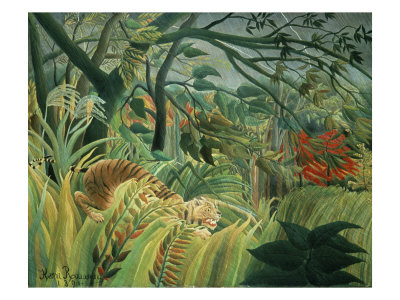
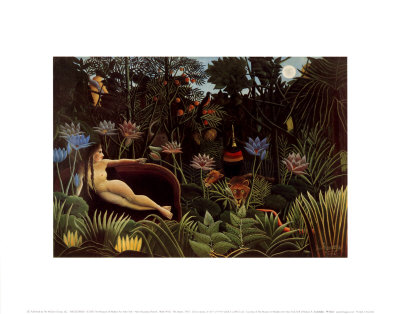
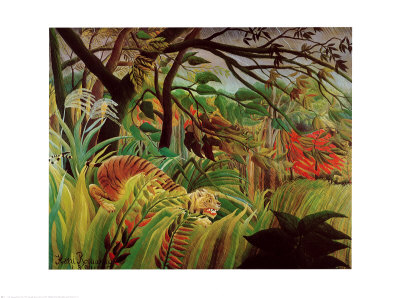
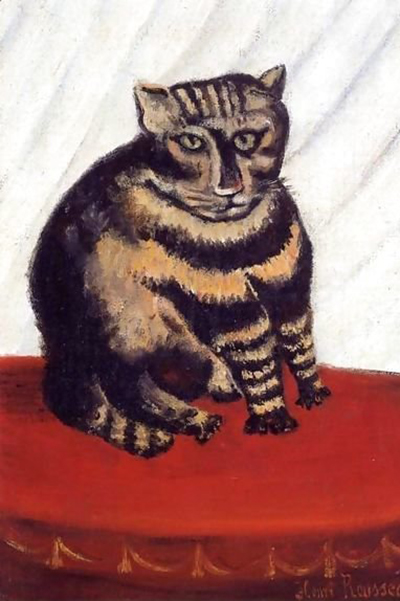
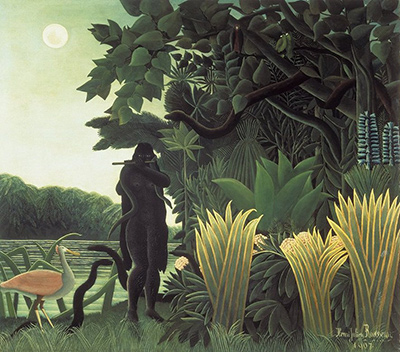
Diving into the legacy of Henri Rousseau, the French artist known as "The Sleeping Gypsy," offers a unique opportunity to explore a style that defies traditional academic rules. His work invites viewers to step into a dreamlike reality where nature is reimagined with bold, flat colors and simplified forms. By studying his methods, you can begin to create your own naive art, capturing a sense of magic and innocence that transcends technical perfection.
Embracing the Art of the Dreamer
Before picking up a brush, one must adopt the mindset of an observer who sees the world through a child's eyes or a dreamer's gaze. Naive art is not merely a style but a state of being that prioritizes emotional truth over realistic representation. Rousseau often painted scenes he had never seen in real life, constructing his own worlds in his studio. This suggests that the most important step is to look at your surroundings with curiosity and wonder, noticing the patterns, the light, and the textures that others might overlook.
Choosing Your Medium and Palette
The physical materials you select play a crucial role in achieving that distinct naive aesthetic. Traditional oil paints can sometimes be too complex and layered, whereas acrylics or even watercolors allow for quicker drying times and more vibrant, unblended colors. For beginners, high-quality acrylics are often recommended because they are forgiving and allow for strong, solid blocks of color. Avoid mixing colors together too much on the palette; instead, keep hues pure and let the viewer's eye blend them when viewing the finished piece. Think of the jungle scenes where the green is a deep, singular emerald and the sky is a flat, brilliant blue, with no hint of atmospheric gradient.
Mastering the Composition of Flatness
One of the defining characteristics of naive art is the rejection of deep perspective and foreshortening. In the world of the artist, depth is often replaced by a two-dimensional plane where objects are presented in a way that feels immediate and front-on. This does not mean the image is a flat drawing, but rather that the illusion of three-dimensional space is minimized in favor of a direct, confrontational view. You should arrange your subjects so that they stand out clearly against the background, often using a solid block of color to separate the foreground from the background. This creates a sense of stability and clarity that is characteristic of the style.
Creating a Sense of Magical Realism
Once the composition is laid down, the focus shifts to filling the space with life and energy. In Rousseau's work, every element of the landscape seems to possess a personality and a story. When filling your canvas, do not be afraid to exaggerate sizes or distort shapes slightly if it enhances the feeling of the scene. Imagine the scene is happening inside a dream where logic is suspended. You might make a bird larger than a tree or give a flower a face. The goal is to evoke a feeling of happiness, mystery, or peace rather than to document reality. Use bold outlines to define shapes, ensuring that the colors remain distinct and the composition feels unified.
The Process of Execution and Refinement
Finally, the act of painting becomes a journey of discovery rather than a technical exercise. Work in loose, confident strokes, avoiding the meticulous detailing that might trap you in realism. If a line feels hesitant, do not overpaint it; let it stand as a mark of your hand. Keep the edges of your shapes crisp and defined, as blending colors too much can wash out the impact of the naive style. Once the painting is dry, step back and look at it as a viewer would. Does it feel alive? Does it capture the spirit of the subject? If the answer is yes, the work is complete, regardless of how it compares to professional standards of technical skill.
To truly internalize this style, consider incorporating these foundational principles into every practice session:
- Start each session by observing a single object from a distance, ignoring fine details until you grasp its overall form.
- Select three primary colors and two secondary colors as your base palette, refusing to mix them into new shades until absolutely necessary.
- Sketch your composition lightly first, ensuring that the main subjects are centered and balanced within the frame.
- Apply your first layer of paint with a thick, impasto technique to emphasize texture and solidity.
- Resist the urge to refine your lines, accepting slight imperfections as part of the organic, human touch.
- Allow your brush to move freely across the canvas, trusting your intuition over measured precision.
- Review your work daily, asking yourself if the image breathes and feels authentic to your own vision.
Related reading
- The Digital Brush: Reimagining the Dream World of Rousseau
- The Child in the Jungle: Cultivating the Spirit of Naïve Art
- Finding Your Own Wild Garden: A Guide to Choosing Subjects in Naïve Art
- The Artist's Canvas: Unveiling the Essentials of Naïve Creation
- Unlocking the Surreal Garden: A Guide to Finding Historical Naïve Art for Inspiration