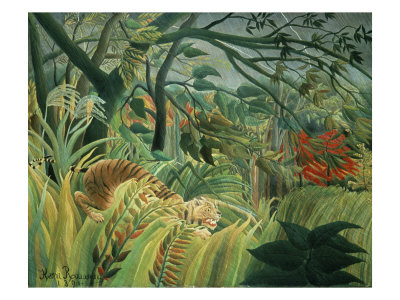
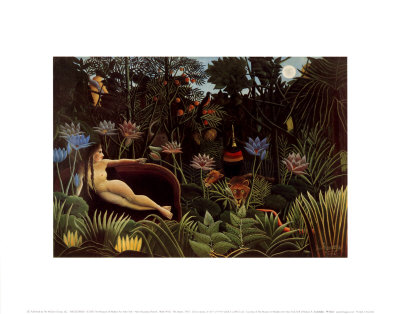
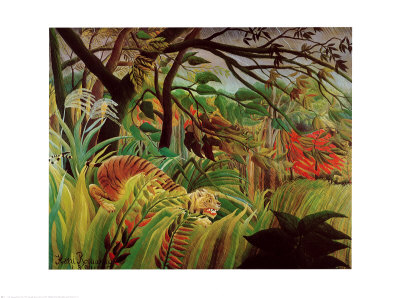
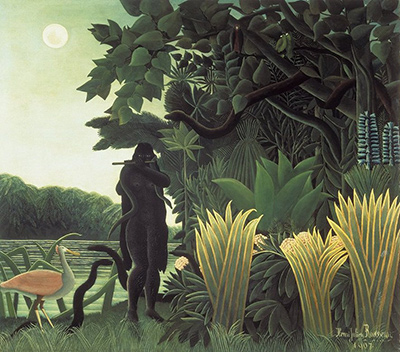
Choosing the right canvas size for a landscape painting is not merely a technical measurement; it is the first act of composition where you decide how the viewer will experience your world of trees, rivers, and skies. In the spirit of Henri Rousseau's ability to transport the eye to distant forests and serene coastlines, the physical dimensions of your support must harmonize with the emotional scale of your scene. If your goal is to evoke the vastness of a jungle or the intimacy of a garden corner, the wrong size can flatten the illusion, while the perfect size will make the viewer feel as though they are standing right before the painted trees.
Measuring the Distance of the Gaze
The primary factor in selecting a canvas is the distance at which the intended viewer will stand to observe the work. A massive landscape intended for a gallery wall requires a significant viewing distance, often several meters away, meaning the details must be rendered large enough to be seen from afar without blurring. Conversely, a small sketch meant for a desk or a personal journal can afford intricate details that would be lost in a large format. When planning a project, consider the space where the painting will hang. If it is for a living room where family members gather, a medium-to-large size allows for shared appreciation, whereas a smaller piece might be kept in a study for quiet reflection. Rousseau himself often worked on small canvases, yet managed to create scenes that felt expansive; understanding the relationship between the viewer's proximity and the brushstrokes is crucial for achieving that sense of depth.
Calculating the Ratio of Sky to Ground
Once the viewing distance is established, the next step involves determining the proportions of the composition, specifically the ratio of sky to ground. This decision directly influences the physical dimensions of the canvas you need to purchase. A landscape dominated by a dramatic sky, reminiscent of the moody horizons in Rousseau's later works, will naturally require a canvas that is wider than it is tall, or perhaps even taller to emphasize the vertical reach of the clouds. If your focus is on the forest floor, the meandering paths, or the interaction between water and earth, a more square format or one that is taller than wide will better frame the lower third of the image. It is impossible to paint a 2-meter wide landscape if the composition demands a tall, vertical orientation; the physical canvas limits the possible angles of view. Therefore, before grabbing a brush, you must sketch the composition on paper first, measuring the width and height of the area you intend to paint, and then selecting a canvas that matches those exact ratios, perhaps adding a small margin for the stretcher bars.
Understanding the Psychological Weight of Scale
Beyond the mechanics of measurement, the size of the canvas carries a psychological weight that affects the narrative of the painting. A tiny canvas can feel claustrophobic, making the viewer feel trapped within the scene, which might be the desired effect for a dark, mysterious forest. On the other hand, a very large canvas can make the viewer feel insignificant, overwhelmed by the sheer size of the mountains or the density of the jungle. Rousseau was known for his bold, naive style where simplicity met grandeur; his works often felt larger than life regardless of the canvas size. When you are in doubt, consider the emotional impact you wish to convey. Do you want the viewer to feel like an explorer discovering a new land, requiring a wide, immersive format? Or do you want them to feel like a small bird watching from above a sprawling plain, which might necessitate a smaller, more controlled format? Trust your instinct regarding the mood, and let that feeling guide your choice of dimensions, ensuring the physical object supports the internal vision.
Practical Tools for Precision
To ensure accuracy and avoid waste, you should utilize specific tools and methods when determining your final dimensions. Relying on memory or vague estimates often leads to mismatched canvases, which can ruin a painting that has taken weeks to complete. Instead, use a measuring tape or a laser distance measurer to determine the exact width and height required for your composition. If you are buying a custom canvas, provide the artist with these precise measurements, including any desired depth for the stretcher bars. For projects involving multiple panels or a series of landscapes, ensure the total area is calculated correctly so that the seams do not disrupt the continuity of the scene. Additionally, consider the texture of the canvas itself, as a coarse linen might require a slightly larger surface area to accommodate the texture of the paint without obscuring the lines you have drawn.
Final Adjustments for the Frame
The final consideration is the relationship between the canvas size and the frame or wall space it will occupy. A painting that fills a wall completely can be intimidating, while one that leaves too much empty space might feel lost. When selecting the final canvas size, measure the available wall space and subtract a margin of at least 15 to 20 centimeters on each side to allow for visual breathing room and to accommodate the frame depth. If you plan to mount the painting on a wall, ensure the canvas size fits the mounting hardware you intend to use, such as D-ring hangers or wire strings. Remember that the frame will also add to the overall dimensions, so the canvas itself should be slightly smaller than the total finished size you desire. By carefully measuring, calculating ratios, and considering the psychological impact, you can choose a canvas size that perfectly complements your landscape project, allowing your vision of the wild to unfold with the intended grandeur and intimacy.
To ensure you have a comprehensive checklist before purchasing, consider these essential steps:
- Determine the intended viewing distance for your specific location.
- Sketch your composition to establish the sky-to-ground ratio.
- Select a format (vertical, horizontal, or square) that matches your visual focus.
- Measure your wall space and account for the frame thickness.
- Verify the canvas texture can support your chosen paint application method.