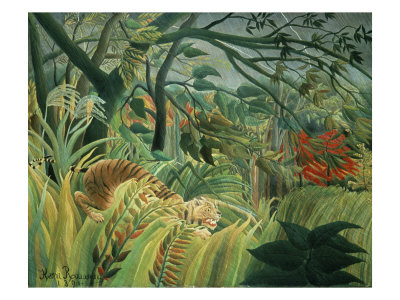
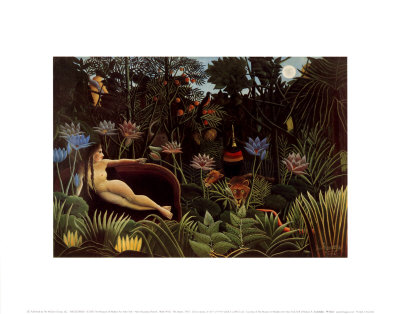
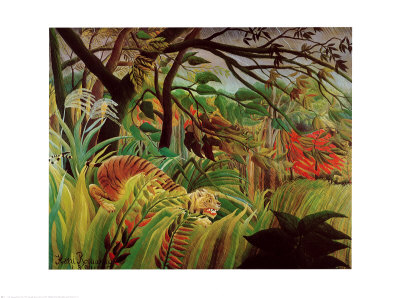
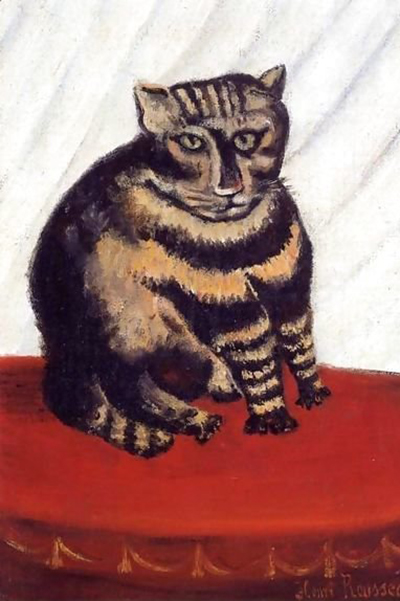
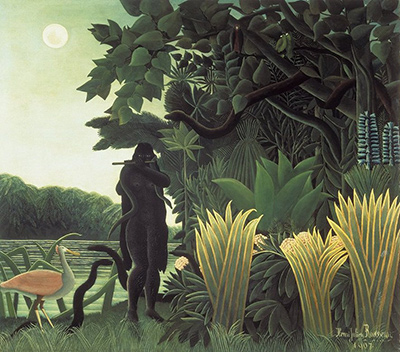
Henri Rousseau taught us that the eye perceives motion not just through speed, but through the deliberate manipulation of line and shadow. In the realm of naive art and visual storytelling, a static scene can feel heavy and lifeless unless we actively guide the viewer's gaze with dynamic energy. By employing bold, decisive lines, an artist transforms a mere arrangement of objects into a living, breathing narrative that seems to shift under the weight of its own internal logic.
The Anatomy of a Bold Line
To understand how to inject movement, one must first grasp the fundamental difference between a descriptive line and a directive line. A descriptive line merely outlines the edge of a flower or the corner of a table; it defines what is there but tells us nothing about what is happening. A directive line, however, possesses a vector, a direction, and an intensity that demands attention. When we draw with bold strokes, we are essentially creating a path of least resistance for the viewer's eye to follow. These lines act as physical rails upon which the imagination can ride, creating a sense of flow that mimics the actual motion of wind, water, or living creatures. The thickness and weight of the stroke matter just as much as the angle; a heavy, dark line feels heavy and grounded, while a sharp, jagged line suggests sudden impact or rapid acceleration.
Directional Forces and Composition
Movement in a two-dimensional space is often an illusion created by the relationship between opposing forces. In a composition of bold lines, we must consciously balance these forces to generate tension and release. If all lines in a painting run horizontally, the scene will feel stagnant, trapped in a single plane. To break this paralysis, the artist must introduce diagonal lines that cut across the grid, suggesting upward thrust, falling weight, or swirling chaos. Furthermore, the direction of the line should not be random; it must align with the implied action of the subject. A falling leaf should be traced by a line that curves downward and fades, while a rushing river should be depicted with continuous, unbroken strokes that lead the eye from the source to the sea. This consistency between the line's trajectory and the object's intended motion is the cornerstone of dynamic composition.
Mastering the Contrast of Line Quality
The most effective way to create visual vibration is through the juxtaposition of different line qualities within the same frame. By mixing thick, assertive strokes with thin, delicate ones, the artist creates a rhythm similar to music or a heartbeat. This variation prevents the viewer from becoming fatigued by uniformity and keeps the eye constantly scanning the canvas in search of the next interesting element. The contrast also adds depth; a bold, dark line in the foreground can appear to pop forward, while a lighter, thinner line in the background recedes into space. This spatial manipulation, driven entirely by the character of the line, allows a flat surface to feel deeply immersive and alive.
Practical Techniques for Dynamic Drawing
Applying these principles requires a shift in how we approach the act of drawing itself. Instead of focusing on perfect accuracy or smoothness, the artist must embrace the energy of the gesture. Here are a few practical methods to incorporate movement into your static scenes:
- Utilize cross-hatching with varying angles to create a sense of swirling wind or turbulent water, ensuring the lines intersect at multiple points to generate visual noise and energy.
- Draw lines that start heavy and gradually become lighter and thinner to simulate the fading trail of a moving object, such as a bird in flight or a splash in a pond.
- Introduce jagged, erratic lines to represent shock, sudden movement, or the instability of a scene, contrasting them with smooth, curving lines to represent calm or organic growth.
- Use the direction of the line to imply wind direction across a landscape, making the grass and trees appear to sway even if they are not explicitly shown as moving.
The Psychology of the Eye
Finally, it is crucial to remember that the goal of bold lines is not just aesthetic but psychological. We are wired to perceive patterns and directions in the world around us, and bold lines exploit this innate tendency. When a line sweeps across the canvas with confidence, it compels the viewer to move their eyes in that direction, creating a physical sensation of motion. This engagement turns the passive act of looking into an active experience of traversing the image. By mastering the language of the bold line, the artist does not just depict a scene; they invite the viewer to step inside the moment, feeling the rush of the wind and the weight of the objects, transforming the static into the profoundly moving.