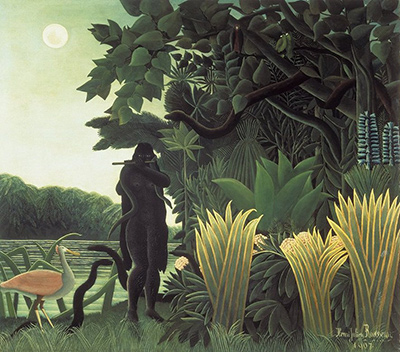
The enduring narrative surrounding Henri Rousseau often hinges on a single, provocative idea: that the "Dream Painter" was a completely uneducated peasant who created his masterpieces from pure, unfiltered intuition. While this myth has captivated the public imagination for over a century, it oversimplifies the complex reality of his life and learning process. In truth, Rousseau possessed a solid foundation of literacy and engaged in rigorous self-directed study that shaped his unique artistic voice long before he picked up a brush.
The Reality of His Schooling Years
To understand Rousseau's true capabilities, one must look past the romanticized idea of the completely ignorant peasant. Born in Paris in 1844, the young Henri did not grow up in a remote village; he lived in a working-class neighborhood near the city, which meant he was exposed to urban life from a very young age. Historical records indicate that he did attend primary school, although his records are somewhat fragmented due to the economic instability of his family and the chaotic nature of his childhood. He was certainly not illiterate in the sense of being unable to read or write. Rousseau was able to sign his name, keep a diary, and correspond with friends and dealers, proving that he had acquired the foundational skills necessary for communication. This basic literacy was the bedrock upon which his later self-education was built, allowing him to process the world around him through the lens of language.
Self-Taught Mastery and Reading Habits
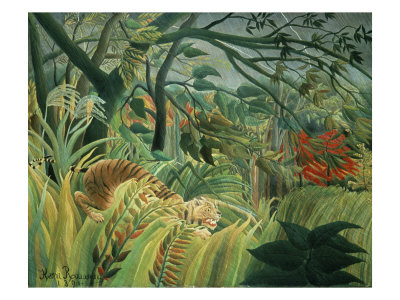
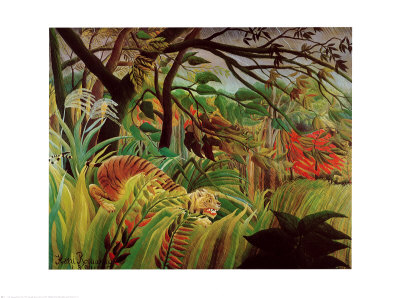
The concept of "uneducated" often implies a total lack of exposure to books, ideas, or structured knowledge, a definition that fails to capture Rousseau's actual journey. Throughout his life, he voraciously read, particularly works on botany, zoology, and geography. He was fascinated by the natural world and sought out detailed illustrations and texts to study the intricate details of flora and fauna. His famous "jungle" scenes were not random hallucinations created by an unlearned mind; they were the result of a lifetime of absorbing scientific knowledge and then translating that knowledge into a painterly language. He studied anatomy, color theory, and perspective independently, often using magazines, books, and botanical guides as his curriculum. This relentless self-study demonstrates a high degree of intellectual curiosity and discipline, traits that are hallmarks of an educated individual, not an uneducated one.
The Influence of Intellectualism on Style
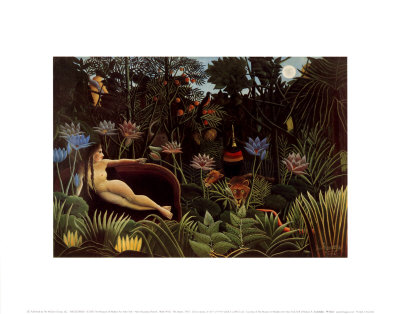
It is crucial to recognize how his reading directly influenced his artistic style, debunking the notion that he lacked intellectual depth. Rousseau was known for his keen observation and his ability to synthesize complex ideas into visual forms. His paintings often reflect a deep understanding of light, shadow, and texture, techniques that require a theoretical foundation. The way he arranged his subjects in space, creating impossible, dreamlike landscapes, suggests a mind that was actively constructing narratives rather than merely copying what it saw. Furthermore, his letters reveal a man who thought deeply about his work, questioning his technique and reflecting on the emotional impact of his paintings. This internal dialogue and critical analysis are indicators of an educated mind that was constantly refining its own craft.
Key Takeaways on His Intellectual Development
Understanding Rousseau's background requires acknowledging specific facts that contradict the myth of his total ignorance. His education was not a void but a mosaic of experiences and studies. The following points summarize the evidence that proves his intellectual engagement:
- He was able to sign contracts and correspond formally with galleries and collectors.
- His journals and letters show a sophisticated command of written language and complex sentence structures.
- He actively studied scientific texts to understand the mechanics of nature before painting it.
- He traveled to London and Rome, engaging with the European art scene and acquiring new perspectives.
- His correspondence with his brother and other figures indicates a deep capacity for abstract thought.
- He maintained a detailed diary where he recorded his daily thoughts and artistic ambitions.
- He successfully navigated the commercial art market, requiring a level of business acumen and literacy.
The Role of the Self-Taught Path in Art History
While Rousseau did not have a formal degree or a mentor in the traditional sense, his path was far from unguided. He was a determined autodidact who navigated the art world with a level of sophistication that belied his lack of academic credentials. The myth of his complete ignorance often stems from a desire to simplify his biography into a compelling story of a "genius without limits." However, the truth is more complex and fascinating. His education was eclectic, informal, and intensely personal. He learned from nature, from books, from his own experiences, and from the vibrant art scene of Paris, where he sold his work despite his lack of training. The fact that he could sell paintings to prominent collectors and influence the broader art movement proves that his lack of formal academic training did not equate to a lack of skill or intellect.
Conclusion: A More Nuanced Portrait
In conclusion, the myth that Henri Rousseau was completely uneducated is a distortion that diminishes the complexity of his genius. He was not a man who could not read or write, nor was he unaware of the world's knowledge. Instead, he was a self-educated artist who blended basic literacy with an insatiable curiosity for science, nature, and art. His career serves as a testament to the power of independent learning and the ability to create profound beauty without formal institutional backing. By acknowledging his actual level of education and his self-directed studies, we gain a more accurate appreciation of his work, recognizing it not as the output of an uneducated mind, but as the product of a uniquely educated and visionary soul.
Related reading
- The Digital Brush: Reimagining the Dream World of Rousseau
- The Child in the Jungle: Cultivating the Spirit of Naïve Art
- Finding Your Own Wild Garden: A Guide to Choosing Subjects in Naïve Art
- The Artist's Canvas: Unveiling the Essentials of Naïve Creation
- Unlocking the Surreal Garden: A Guide to Finding Historical Naïve Art for Inspiration