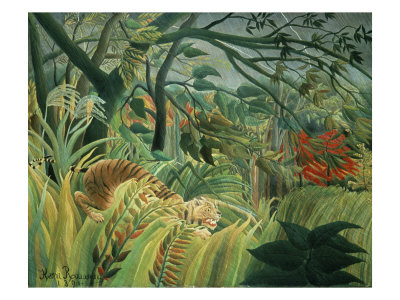
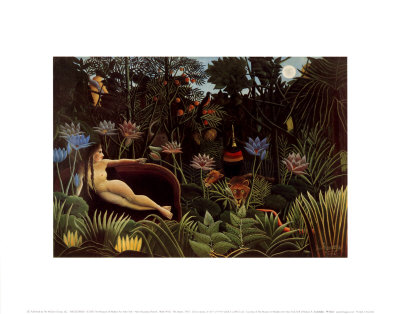
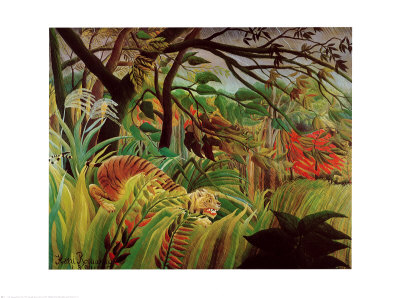
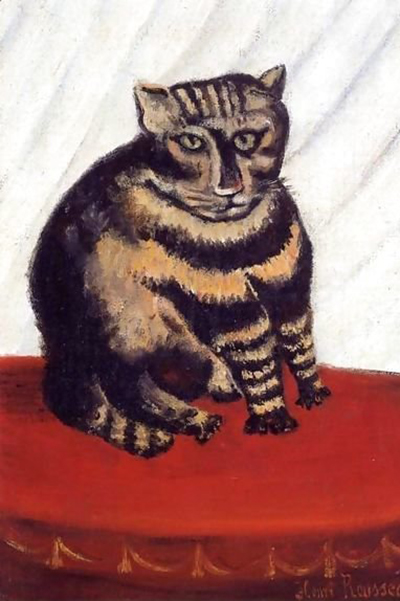
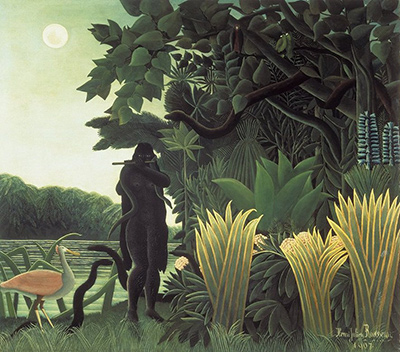
The world of naïve art reveals a fascinating paradox where artists who lack formal training often possess a profound intuition that defies academic rules, yet this phenomenon manifests differently across cultural boundaries. While Western naïve art, often associated with figures like Henri Rousseau, draws upon the structured yet rebellious framework of European realism, Japanese naïve traditions emerge from a distinct philosophical soil that prioritizes flat planes, symbolic abstraction, and a direct connection to nature. Understanding the technical divergences between these two traditions allows us to appreciate how different cultural histories shape the unique visual language of the untrained artist.
The Philosophy of the Untrained Hand
In the West, the naïve artist is frequently viewed as an outsider who bypasses the rigorous academy to capture the raw, unfiltered experience of the world. The Western approach often retains the illusion of depth and perspective, even when distorted, because the artist's mental framework remains embedded in European visual culture. They might paint a cityscape with simplified forms but still strive for a recognizable horizon line and volumetric lighting. Conversely, Japanese naïve art is deeply rooted in the concept of wabi-sabi and the influence of traditional ukiyo-e prints, which often eschew linear perspective entirely in favor of flattened compositions that emphasize the pattern of the surface over the illusion of space. This fundamental difference in worldview dictates how the brush or pencil moves across the canvas, creating a visual vocabulary that feels inherently different to the Western eye.
The Treatment of Space and Depth
When examining the technique of space, the divergence becomes stark. Western naïve painters, despite their lack of formal education, often retain a subconscious understanding of three-dimensional space inherited from centuries of Renaissance training. They may compress the background or exaggerate the foreground, but the goal remains the representation of a tangible, inhabited world where light falls on objects and shadows are cast. The technique involves a struggle to balance the primitive simplification of form with the need to suggest volume and atmospheric presence. In contrast, Japanese naïve traditions frequently embrace a two-dimensional plane, treating the picture surface as a flat window into a spiritual or symbolic realm rather than a photographic window. Artists in this tradition might overlap objects without worrying about the logic of depth, allowing the composition to breathe with a sense of infinite space that exists outside the physical boundaries of the paper.
The Role of Line and Form
The distinction in how line is used is perhaps the most immediate technical difference visible to the viewer. In Western naïve art, lines often define the edge of an object to separate it from the background, serving a delineating function that mirrors the contours of the real world. Even when these lines are thick and unskilled, they usually follow the natural curvature of the subject, aiming to capture the essence of the form's existence in space. Japanese naïve techniques, however, often utilize line for its own sake or to establish a rhythmic pattern rather than to define volume. A single continuous line might wind through a composition like a river, connecting disparate elements without necessarily outlining a specific object. This technique creates a sense of unity and movement that is distinct from the Western focus on individual form. The artist treats the line as a calligraphic stroke, valuing the energy of the gesture over the precision of the outline, resulting in images that feel more dynamic and less static than their Western counterparts.
Material Choices and Mark-Making
The physical materials chosen by artists in both traditions also play a crucial role in shaping the final aesthetic. Western naïve painters often work with large canvases, brushes of varying sizes, and heavy impasto techniques that create a tactile texture on the surface, mimicking the roughness of the natural world they depict. The application of paint is often thick and deliberate, adding a layer of physical presence that engages the viewer's sense of touch. In the Japanese tradition, the choice of materials is frequently more versatile, ranging from small sheets of rice paper or washi to bamboo mats, and from delicate brushes to thick sticks. The technique here often involves dry-brushing, stippling, or the use of inks that bleed slightly, creating a sense of fluidity and spontaneity. The resulting work may lack the heavy, solid presence of a Western oil painting, instead offering a lighter, more ethereal quality that invites the viewer to engage with the image mentally rather than physically.
Key Technical Divergences
To synthesize the observations made above, one can categorize the primary technical distinctions into specific actionable areas for analysis or replication. The following points highlight the core contrasts:
- Western naïve art typically utilizes thick impasto to create a tangible, three-dimensional texture that mimics physical reality.
- Japanese naïve traditions often rely on thin washes and dry-brushing to achieve a translucent, flat surface that emphasizes pattern over depth.
- Western compositions frequently adhere to a horizon line to establish a spatial relationship between foreground and background.
- Japanese compositions often abandon the horizon line in favor of a collage-like arrangement of elements floating on a void.
- Western artists tend to use lines to strictly outline objects, defining their boundaries against the background.
- Japanese artists often use lines rhythmically to connect elements or suggest flow, rather than merely defining static forms.
- The Western palette often seeks to capture the specific light and shadow of a particular moment in time.
- The Japanese palette may prioritize symbolic color relationships over realistic lighting conditions, using flat areas of hue.
The Legacy of Influence and Comparison
Comparing these two techniques highlights the rich tapestry of global artistic expression and challenges the notion that naïve art is a monolithic phenomenon. The Western tradition often struggles with the tension between simplification and realism, whereas the Japanese tradition seems more at home in the tension between symbol and reality. However, this does not mean one is superior to the other; rather, they offer different ways of seeing and interpreting the world. The Western approach often feels like a story told with a sense of place and time, while the Japanese approach feels like a moment frozen in a timeless cycle. By studying both, we gain a deeper appreciation for the human capacity to create meaning without technical perfection, realizing that the "naïve" quality is not a deficit of skill but a surplus of authentic vision.